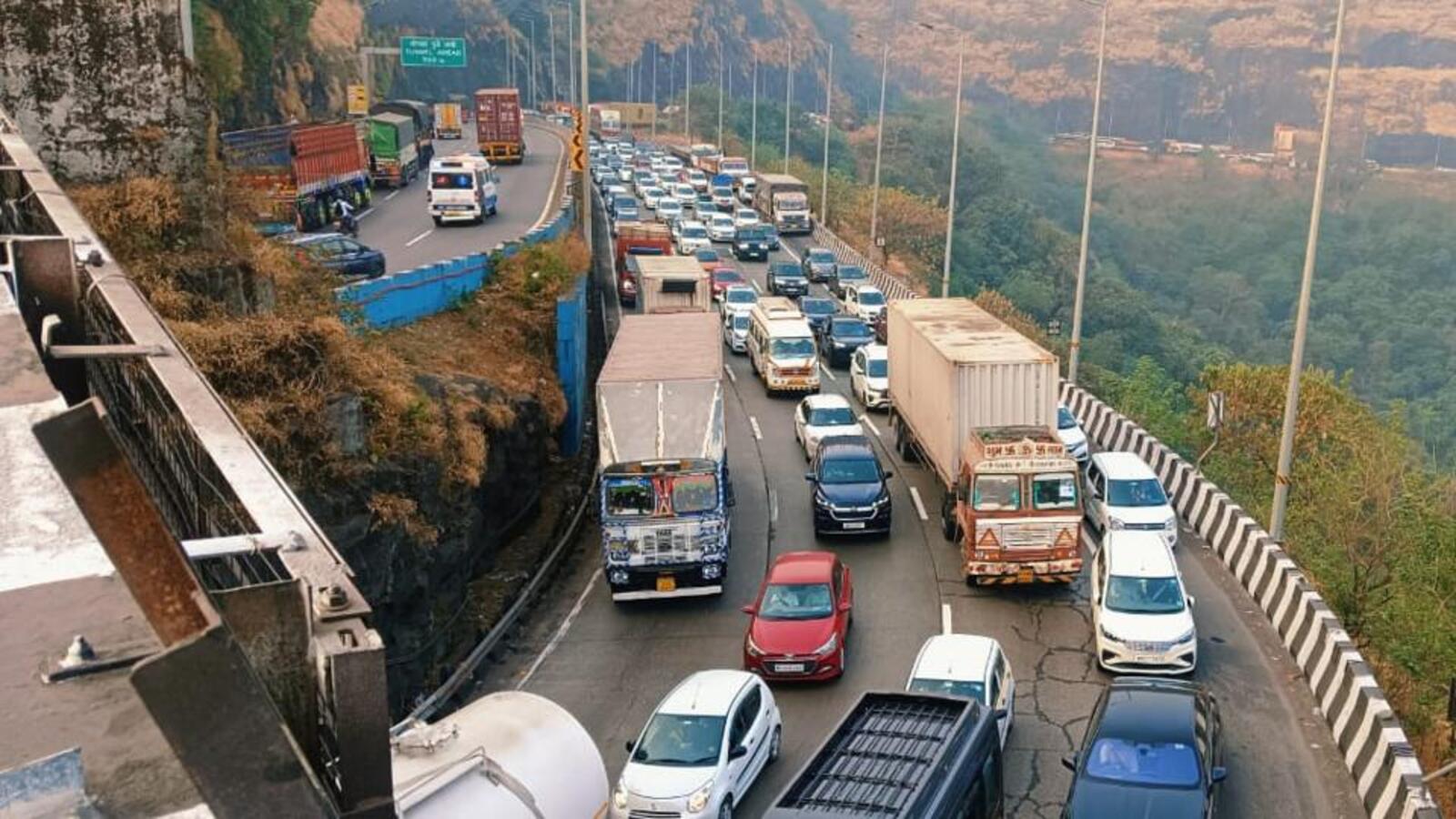
Pune Mumbai Highway Crisis Strands Thousands Overnight
A hazardous materials accident on the Mumbai–Pune Expressway late Tuesday triggered one of the corridor’s longest traffic shutdowns in recent years, underscoring critical gaps in emergency response planning on India’s busiest intercity highway. An overturned tanker carrying a highly flammable industrial gas near the Khandala ghat section brought vehicular movement to a standstill for more than 12 hours, leaving thousands of commuters stranded overnight.
The incident occurred in the tunnel-heavy stretch near the Western Ghats, a zone already prone to weather-related and gradient-driven risks. Authorities halted traffic in both directions after detecting a continuous gas leak, citing explosion hazards and public safety concerns. The resulting congestion extended beyond 25 kilometres at its peak, affecting private vehicles, intercity buses, freight movement, and emergency logistics between Mumbai and Pune. For a corridor that supports daily commuter flows, industrial supply chains, and regional tourism, the disruption exposed how a single-point failure can paralyse a metropolitan economy. Urban mobility experts noted that the expressway, despite being a flagship infrastructure asset, lacks adequate redundancy and rapid hazardous-material containment systems particularly in ecologically sensitive and topographically complex zones.
Passengers reported spending the night inside vehicles without access to basic amenities such as drinking water, sanitation, or medical assistance. Long-distance bus services, including state-run fleets, were immobilised for hours, raising concerns around passenger safety protocols during prolonged highway shutdowns. Urban planners argue that people-first infrastructure must factor in not just speed and capacity, but resilience, comfort, and emergency preparedness. From an environmental and safety standpoint, the incident also renews scrutiny of hazardous cargo movement through densely trafficked urban corridors. The Mumbai–Pune Expressway gas accident highlights the absence of designated hazardous-material time windows, specialised lay-bys, and real-time communication systems for motorists during emergencies. Experts say such gaps increase both climate risk exposure and human vulnerability, especially in regions susceptible to landslides and tunnel-related incidents.
Emergency response teams eventually stabilised the tanker and initiated controlled clearance operations, but officials acknowledged that normal traffic flow could only resume after extended safety assessments. The delay, while necessary, revealed coordination challenges among multiple agencies operating on a critical urban artery. As India invests heavily in expressways, tunnels, and high-speed corridors, planners and policymakers face a pressing question: how to balance infrastructure expansion with safety, resilience, and equitable mobility. The Mumbai–Pune Expressway gas accident serves as a reminder that future-ready cities require not just faster roads, but smarter systems designed to protect lives, livelihoods, and the environment when failures occur.