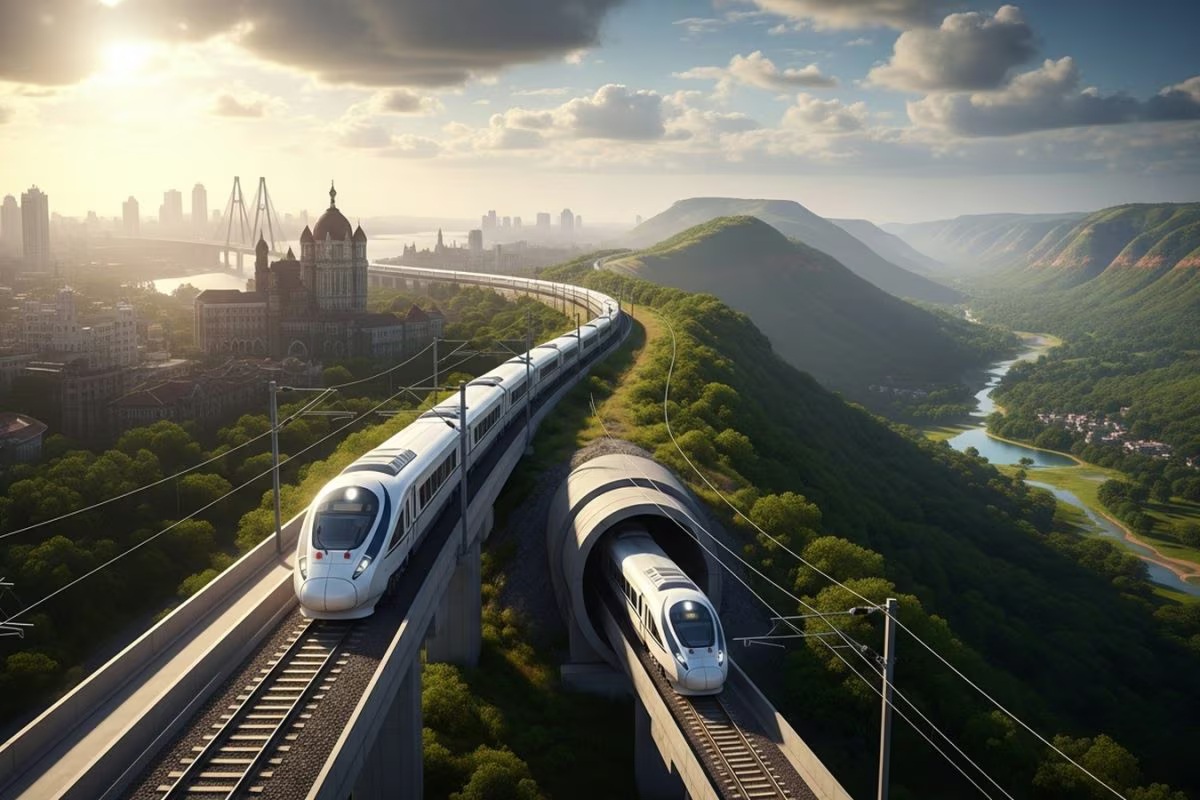
India is moving toward a major overhaul of its passenger rail network, unveiling plans for seven new high-speed rail corridors linking key economic and urban centres. The initiative, announced as part of the Union Budget 2026–27, aims to improve travel efficiency while promoting environmentally sustainable mobility across metropolitan and regional hubs.
The proposed routes will connect financial, industrial, and technology centres, including Mumbai–Pune, Pune–Hyderabad, Hyderabad–Bengaluru, Hyderabad–Chennai, Chennai–Bengaluru, Delhi–Varanasi, and Varanasi–Siliguri. According to urban infrastructure analysts, these corridors are expected to reduce travel times substantially, supporting intercity commerce and easing pressure on congested highways. Urban planners and transportation experts note that high-speed rail can have ripple effects beyond commuting. Faster connectivity between economic nodes can stimulate regional real estate markets, drive industrial clustering, and enable cities to absorb growing urban populations more sustainably. Officials indicate that aligning corridor development with existing urban transit networks will be critical to prevent displacement and ensure equitable access.
The Budget also highlighted complementary measures aimed at modernising freight movement. A dedicated East–West freight corridor, stretching from Dankuni in West Bengal to Surat in Gujarat, is planned to streamline cargo transport, reducing logistics costs and industrial supply chain bottlenecks. Plans to operationalise 22 new national waterways over five years are expected to integrate multimodal transport solutions, with analysts predicting significant reductions in carbon emissions from traditional road freight. Sustainable urban development remains a core consideration. Initiatives promoting eco-tourism and nature-based travel, including trekking and wildlife-focused trails in key states, suggest an effort to balance economic growth with environmental stewardship. By prioritising low-impact tourism infrastructure, authorities aim to protect ecological corridors while generating employment in rural and semi-urban regions.
Financial and infrastructure experts highlight the potential of these corridors to enhance long-term economic resilience. High-speed rail investments not only provide immediate connectivity improvements but can also catalyse industrial growth in emerging cities, reduce urban sprawl pressures, and strengthen regional labour mobility. However, successful implementation will depend on integrated urban planning, careful land acquisition strategies, and robust sustainability frameworks. As India embarks on this ambitious transport modernisation, the new rail corridors and complementary logistics projects represent a strategic pivot toward greener, faster, and more inclusive urban mobility. The developments are poised to reshape intercity connectivity while laying the foundation for more climate-resilient and economically balanced urban regions.