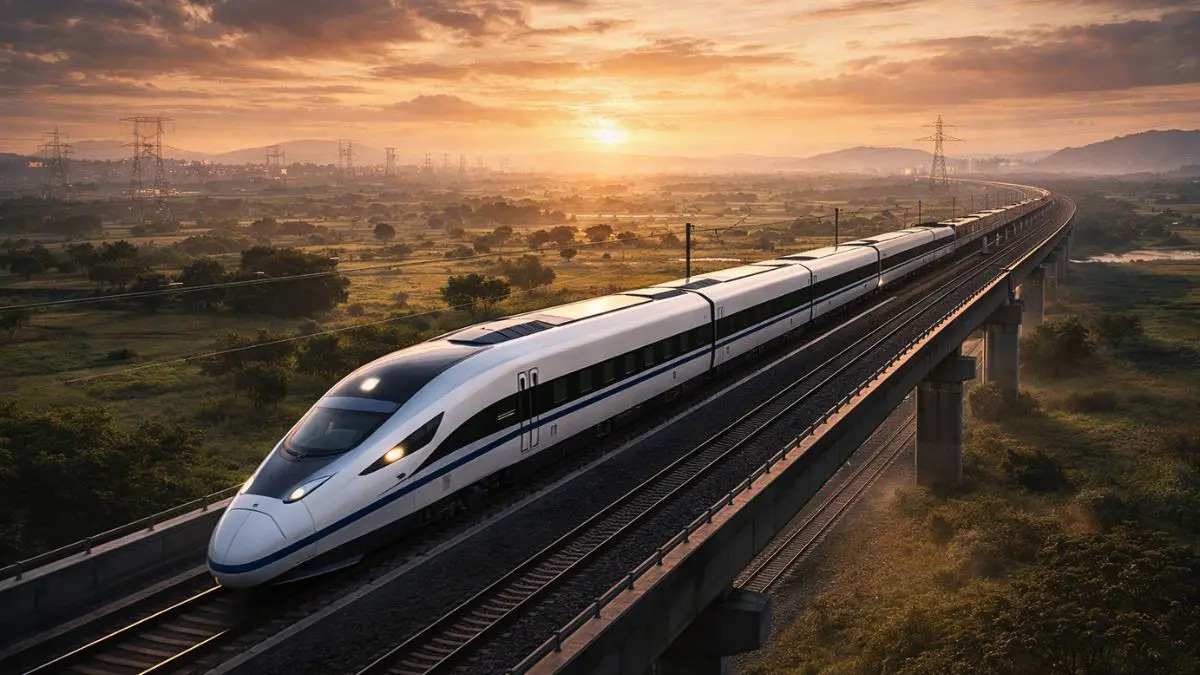
Mumbai Pune High Speed Train To Sharply Cut Travel Time
A proposed high-speed rail connection between Mumbai and Pune could compress travel time between the two cities to under an hour, reshaping one of India’s most intensively used urban corridors. The plan, outlined by senior railway officials as part of the Union Budget 2026 framework, positions the Mumbai–Pune link as a strategic investment in faster intercity mobility with wide implications for labour markets, housing patterns, and regional economic integration.
The corridor is expected to be designed for train speeds of up to 350 kmph, placing it in the same category as other planned high-speed rail projects across the country. While alignments, land acquisition strategy, and execution timelines remain under evaluation, policymakers have identified the Mumbai–Pune stretch as a priority due to its dense commuter flows and economic significance. The two cities function as a single extended urban ecosystem. Mumbai’s role as a financial and logistics hub intersects with Pune’s concentration of manufacturing, technology, education, and defence-linked industries. Daily movement between the regions already strains highways and conventional rail services, with current travel times ranging from three to four hours depending on congestion and service availability. A sub-hour rail journey could alter commuting behaviour, making same-day business travel routine and expanding employment catchments without requiring residential relocation.
Urban planners note that such connectivity can redistribute growth pressure away from saturated city cores if paired with thoughtful land-use planning. Faster rail links often trigger real estate activity around stations, increasing both opportunity and risk. Without safeguards, this can inflate land prices and displace lower-income residents. With coordinated zoning, however, transit-oriented development can support compact, mixed-use neighbourhoods that reduce car dependency and emissions. The Mumbai Pune high speed rail proposal sits within a larger national push outlined in the 2026 budget, which prioritises capital expenditure on transport infrastructure. Railways have been allocated close to ₹3 lakh crore, covering project completion, new corridors, and station redevelopment. Maharashtra alone is set to receive a substantial share of this outlay, reflecting its role as a growth engine with heavy infrastructure demand.
Officials also indicated that additional high-speed corridors linking major economic clusters across western and northern India are under active consideration. Together, these investments signal a shift toward shorter intercity travel times as a tool for productivity gains rather than merely passenger convenience. For the Mumbai–Pune region, the success of the Mumbai Pune high speed rail will ultimately depend on execution discipline, environmental clearances through sensitive terrain, and integration with local transport networks. As planning advances, the focus will need to move beyond speed alone toward resilience, affordability, and equitable access factors that will determine whether faster rails translate into more liveable and sustainable cities.