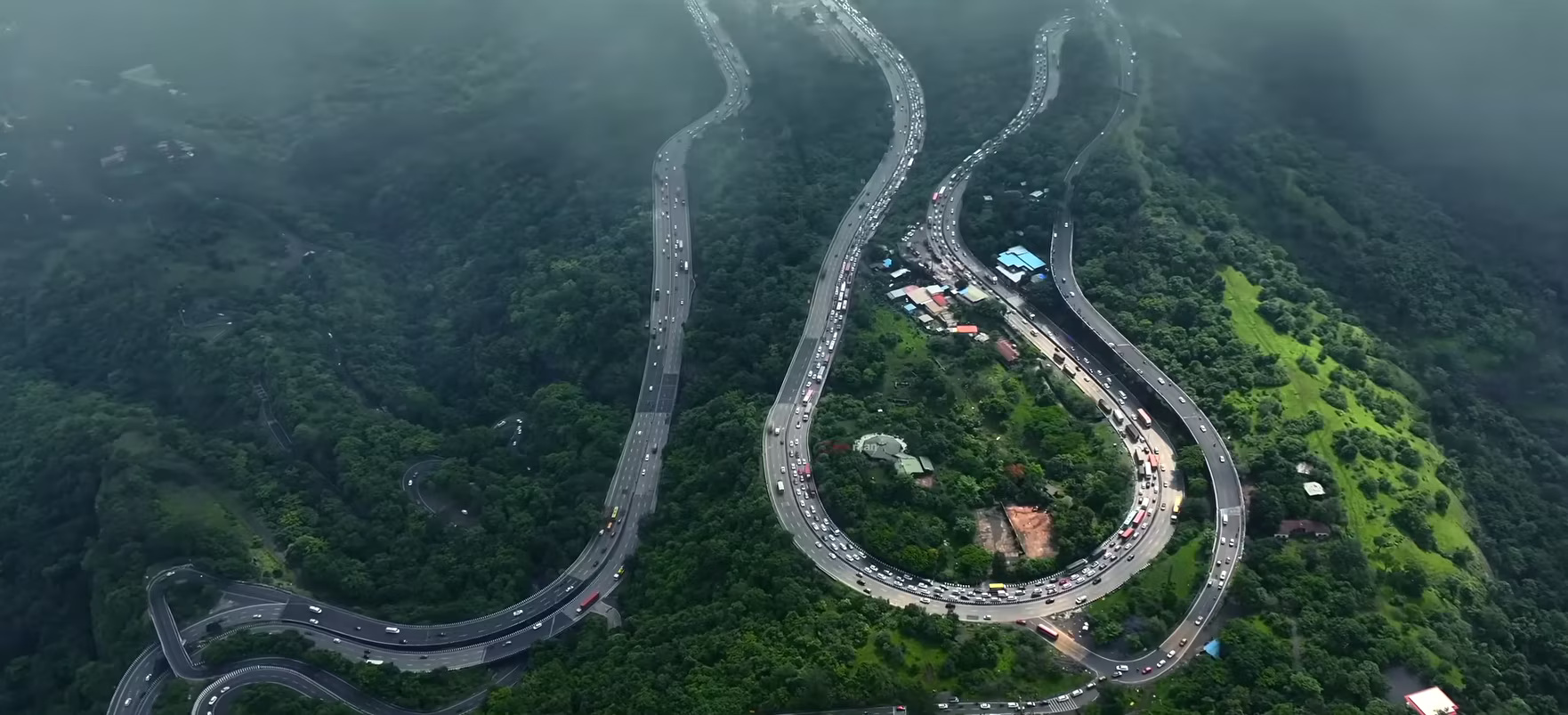
A long-delayed section of the Pune–Mumbai Expressway is finally set to open to traffic in early May, closing a critical gap in one of Maharashtra’s most important intercity corridors. The new alignment near the Lonavla ghat section is expected to significantly cut travel time and improve road safety, addressing a long-standing bottleneck that has affected daily commuters, logistics operators and regional economic flows between the state’s two largest urban centres.
The project, commonly referred to as the expressway’s “missing link”, has reached its final stage after years of complex engineering work through challenging terrain. According to officials associated with the Maharashtra State Road Development Corporation, construction is now nearly complete, with only finishing works, safety validations and system checks underway ahead of the planned public opening on May 1. The timing aligns with Maharashtra Day, lending symbolic weight to the launch of a project that has been under public scrutiny for delays. The missing link was conceived to bypass the accident-prone ghat section of the existing expressway, which is characterised by sharp curves, steep gradients and frequent congestion. Urban transport experts note that the current alignment not only slows traffic but also increases fuel consumption and emissions due to prolonged idling and stop-start movement. By offering a straighter and more predictable route, the new stretch is expected to reduce travel time between Pune and Mumbai by at least half an hour while improving overall driving conditions.
Construction delays were largely attributed to repeated weather disruptions in the ecologically sensitive ghat region. Extended monsoon spells brought heavy rainfall and high winds, forcing work stoppages to ensure worker safety and structural integrity. Infrastructure specialists say such delays highlight the growing impact of climate variability on large construction projects, particularly those located in hilly or coastal environments. One of the defining features of the Pune–Mumbai Expressway missing link is a high-elevation cable-stayed bridge spanning a deep valley, built alongside two long tunnels that together form the backbone of the new alignment. These structures were executed using specialised equipment and sequential construction methods to minimise geological disturbance. Officials involved in oversight say safety considerations were prioritised over speed, given the expressway’s role as a high-speed corridor.
From an economic standpoint, the opening of the missing link is expected to benefit freight movement, tourism and daily intercity travel, strengthening ties between the Pune industrial belt and Mumbai’s financial and commercial districts. Real estate analysts also point to improved accessibility potentially influencing development patterns in satellite towns along the corridor. As final inspections continue, the expressway project underscores a broader challenge for India’s infrastructure push: delivering faster connectivity while adapting design and timelines to increasingly unpredictable weather. The success of the missing link will ultimately be measured not only by reduced travel time, but by long-term safety, resilience and operational efficiency.
Pune – Mumbai Expressway Upgrade Nears Completion