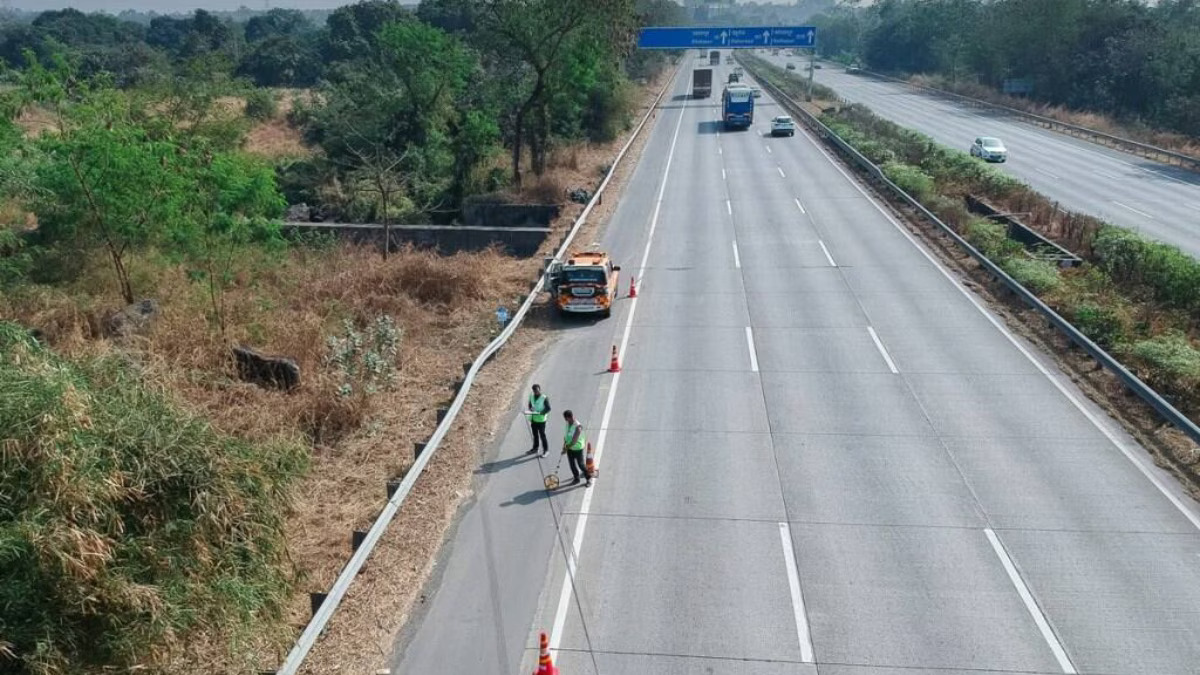
Pune Mumbai Expressway Shutdown Tests Emergency Readiness
A prolonged shutdown of the Mumbai–Pune Expressway this week underscored the growing risks facing India’s high-density transport corridors as industrial logistics intensify across urban regions. Traffic resumed fully after a 32-hour closure triggered by the overturning of a chemical tanker in the Khandala ghat section, a critical stretch linking the Mumbai Metropolitan Region (MMR) with Pune’s manufacturing and technology hubs.
The incident occurred on the downhill Pune–Mumbai carriageway near a tunnel zone, where a tanker transporting a large volume of propylene gas overturned during evening traffic hours. The cargo an industrial chemical widely used in plastics and refining posed an immediate threat due to its flammable nature and tendency to spread at ground level rather than disperse upward. Authorities halted traffic in both directions to prevent ignition risks, effectively severing one of western India’s busiest economic arteries. For nearly two days, freight movement, daily commuting, and intercity bus services were disrupted, exposing how dependent regional productivity has become on a limited number of high-capacity road links. Urban transport analysts note that even short-term failures on the expressway can ripple across supply chains, housing markets, and labour mobility between Mumbai, Navi Mumbai, Raigad, and Pune.
Emergency responders prioritised containment over vehicle recovery, isolating the site and cooling the surrounding area to prevent vapour build-up. Industry safety specialists were brought in to manage the leak after standard response equipment proved inadequate for the chemical involved, given its higher pressure characteristics compared to conventional fuel gases. Authorities eventually opted to remove the risk by transferring the remaining cargo into secure tankers before attempting to clear the vehicle. Officials overseeing the operation defended the extended closure, citing the proximity of the spill to a tunnel and the impossibility of safely diverting traffic through the ecologically sensitive ghat terrain. Monitoring equipment reportedly detected hazardous gas levels well beyond the immediate crash site, reinforcing the need for wide safety perimeters.
Beyond the immediate emergency, the episode has renewed scrutiny of how hazardous materials are routed through densely trafficked urban corridors. Urban planners argue that expressways originally designed for passenger mobility are now carrying far greater industrial risk, without a corresponding upgrade in specialised response infrastructure or alternative freight routes. The suspension of toll collection during recovery was intended to offset commuter inconvenience, but transport economists say the larger cost lies in lost productivity and delayed goods movement across Maharashtra’s most economically active belt. As cities pursue climate-resilient and people-first infrastructure, the incident highlights the need for stronger protocols governing hazardous cargo movement, better emergency preparedness along expressways, and long-term investment in safer logistics corridors that reduce reliance on single, high-risk routes.