Pune Mumbai Expressway Gridlock Exposes Emergency Gaps
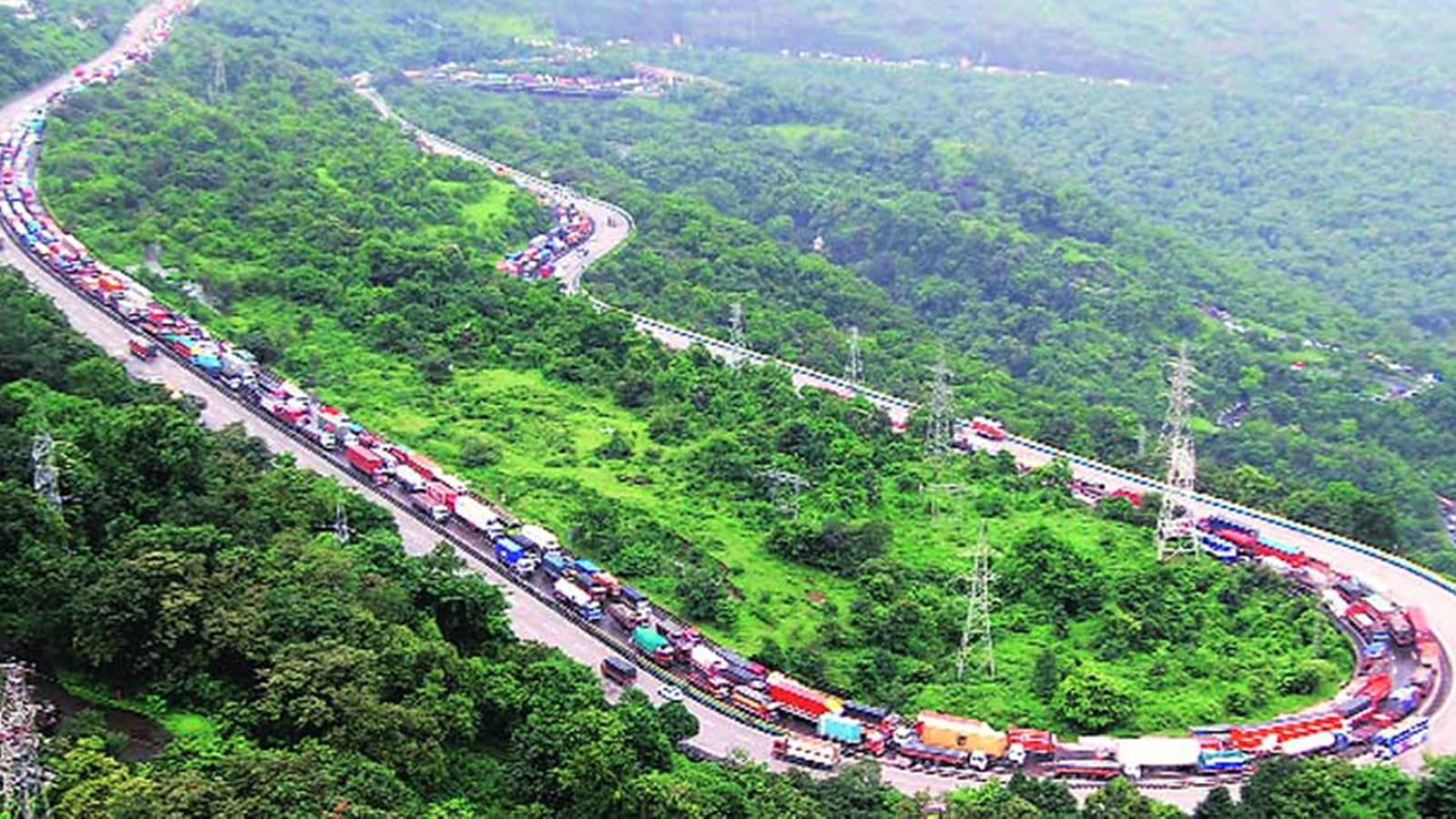
A major traffic breakdown on the Mumbai–Pune Expressway on Tuesday evening brought one of India’s busiest economic corridors to a standstill, leaving thousands of commuters stranded for hours and raising fresh concerns over emergency preparedness on critical urban infrastructure. The disruption followed the overturning of a gas tanker near a tunnel stretch in Raigad district, forcing authorities to halt traffic movement in both directions as a safety precaution.
The Mumbai Pune Expressway, a vital connector between India’s financial capital and its industrial hinterland, remained clogged well into the night. Vehicles heading towards Pune were backed up for several kilometres near toll points, while congestion on the Mumbai-bound side stretched deep into adjoining stretches of the highway network. For many travellers, the journey turned into an overnight ordeal, with limited access to basic amenities such as drinking water, food, and sanitation. Officials familiar with the situation said the tanker was carrying a highly flammable industrial gas, prompting an immediate shutdown of traffic to prevent secondary accidents. While emergency teams were deployed swiftly, a prolonged leak delayed clearance operations, preventing traffic from being restored for several hours. Temporary diversions proved insufficient to absorb the traffic load, especially given the expressway’s high evening volume.
Urban transport experts say the incident highlights a deeper structural issue facing rapidly urbanising regions like the Mumbai Metropolitan Region. The expressway is not merely a highway; it is a critical economic artery supporting daily commuting, freight movement, tourism, and regional real estate growth. When such corridors fail, the ripple effects extend beyond inconvenience, impacting productivity, fuel efficiency, and emergency response capacity. From a climate and sustainability perspective, prolonged traffic standstills also worsen vehicular emissions, undermining regional clean-air goals. Urban planners point out that highways designed decades ago are now operating under traffic volumes far beyond their original capacity, without commensurate upgrades in lay-bys, emergency access lanes, or real-time traffic management systems.
Commuter accounts circulating online described vehicles remaining stationary for hours, with families and elderly passengers forced to wait overnight inside cars and buses. Transport analysts note that the absence of designated emergency support zones along long expressway stretches amplifies human distress during such incidents.As Mumbai and Pune continue to expand as interconnected economic centres, infrastructure resilience is emerging as a critical governance challenge. Experts argue that future expressway planning must integrate hazardous material transport protocols, digital traffic monitoring, and climate-resilient design to prevent single-point failures.For policymakers, the episode serves as a reminder that urban infrastructure investment must prioritise not just speed and capacity, but safety, redundancy, and people-first design essential ingredients for sustainable metropolitan growth.