Pune Mumbai Expressway Exposes Tourism Traffic Gaps
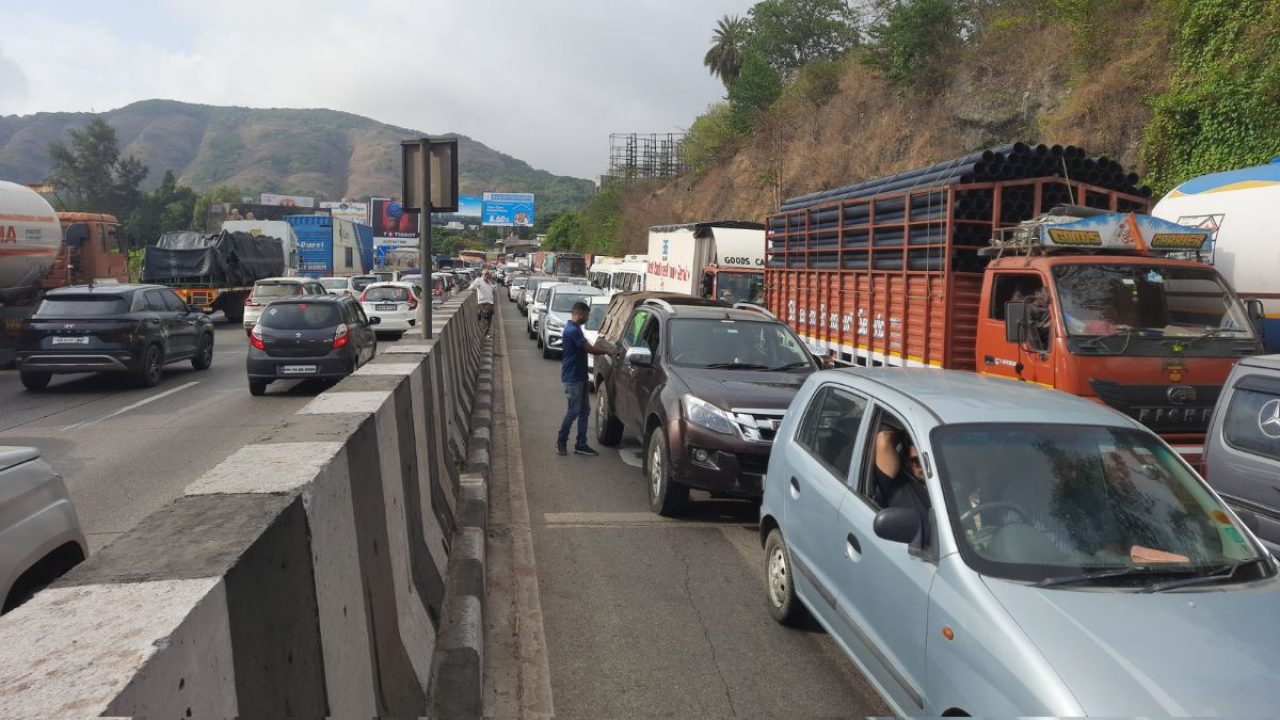
A sharp surge in holiday travel brought the Pune–Mumbai Expressway to a near standstill over the extended Republic Day weekend, exposing once again how fragile India’s busiest intercity corridors remain during peak leisure periods. Long queues, slow-moving traffic, and hours-long delays were reported across key sections of the highway, particularly along the ghat stretch leading into the Lonavla region. The congestion was not the result of an accident or weather disruption but of volume. With an additional public holiday extending the weekend, tens of thousands of private vehicles moved simultaneously towards hill destinations, overwhelming road capacity designed for far lower daily loads. The episode underscores a recurring challenge for metropolitan regions where tourism demand, private car dependence, and limited alternative mobility converge.
Traffic bottlenecks were most acute in the steep ghat segments, where reduced vehicle speeds quickly cascaded into kilometre-long queues. Authorities implemented short-term traffic diversions and lane reallocations to prevent complete gridlock, temporarily prioritising one-directional flows to manage pressure points. Despite these interventions, delays stretched for hours, affecting commuters, freight movement, and emergency response times. From an urban systems perspective, the Pune Mumbai Expressway traffic episode highlights the limits of infrastructure-led mobility solutions when travel behaviour remains unchanged. While the expressway has significantly reduced travel time under normal conditions, long weekends routinely push it beyond operational capacity. Transport planners note that such spikes often three to four times higher than weekday volumes are becoming more frequent as disposable incomes rise and short-distance tourism grows.
The economic implications extend beyond inconvenience. Delays on the expressway disrupt logistics schedules, increase fuel consumption, and elevate vehicular emissions in ecologically sensitive zones. Hill regions such as Lonavla already face environmental stress from unregulated tourist inflows, with congestion compounding air quality and noise concerns. Urban sustainability experts argue that unmanaged leisure travel can quietly erode climate resilience goals, even when core city centres remain relatively unaffected.Notably, Pune city itself experienced limited traffic spillover, suggesting that congestion is increasingly concentrated along leisure corridors rather than within urban cores. This pattern raises important questions for regional planning: how to manage episodic but predictable travel surges without resorting to reactive traffic controls.
Policy responses under discussion include advance travel advisories, dynamic toll pricing during peak windows, improved real-time traffic communication, and stronger last-mile public transport links to tourist hubs. In the longer term, experts point to the need for reliable regional rail connectivity and staggered holiday travel incentives to reduce pressure on highways. As intercity travel rebounds and weekend tourism becomes a permanent feature of urban life, the Pune Mumbai Expressway traffic situation serves as a timely reminder that infrastructure capacity must be matched with smarter demand management. Without it, even flagship corridors risk becoming chokepoints rather than connectors.