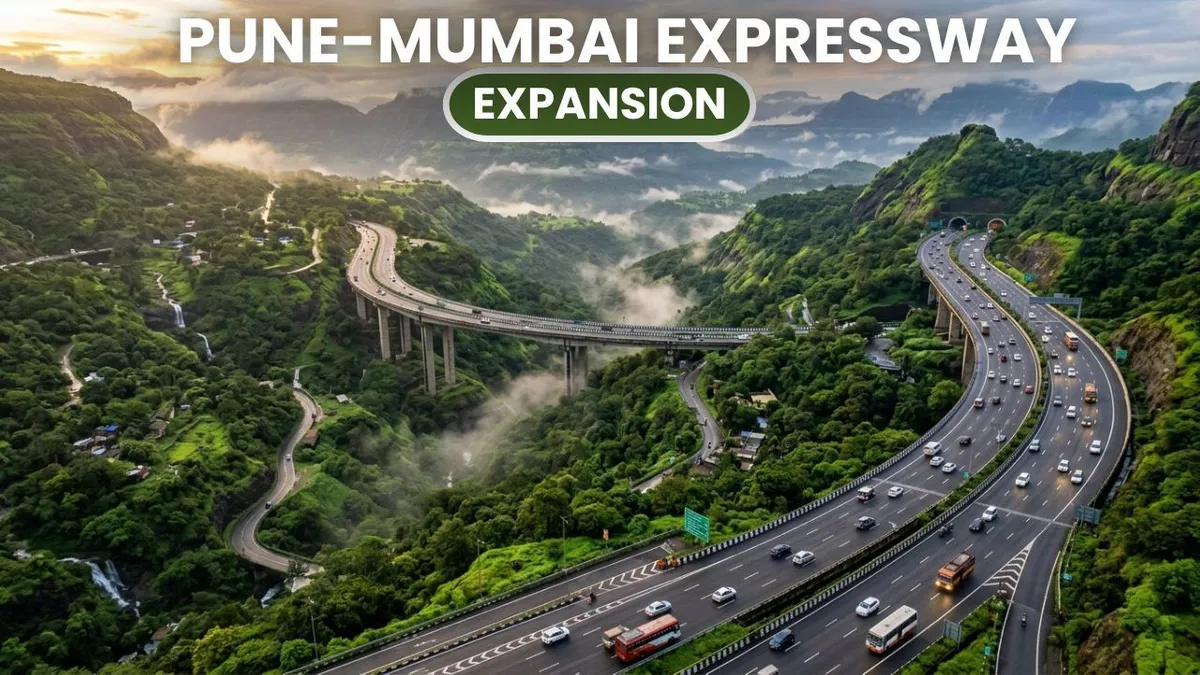
A major highway expansion aimed at easing congestion on the heavily used Mumbai–Pune corridor is moving closer to construction, with the Union government preparing to begin work on the first phase of an alternative expressway alignment in Raigad district. The initial section, estimated at around ₹5,000 crore, is expected to form part of a larger high-speed road network linking Mumbai, Pune and Bengaluru, potentially transforming intercity logistics and regional mobility.
Transport authorities indicate that the first package will cover the stretch between Pagote and Chowk. This segment is expected to connect with the proposed Outer Pune Ring Road, creating a new high-capacity road link that could divert freight and long-distance traffic away from the existing Mumbai–Pune Expressway. Officials involved in national highway planning say land has already been secured for a wide corridor capable of supporting up to 16 lanes in the future. The planned alignment is designed to run near the Jawaharlal Nehru Port Trust (JNPT) area before extending towards Pune’s peripheral road network. Once operational, the corridor is expected to provide a faster route for port-bound cargo and reduce pressure on the current expressway, which remains one of India’s busiest road links.
The proposed Mumbai Pune expressway expansion is part of a broader strategy to strengthen long-distance road connectivity across western and southern India. Government planners are simultaneously evaluating two additional construction packages that would extend the new highway beyond the Pune Ring Road towards Bengaluru. The proposed alignment could cover more than 200 kilometres across Maharashtra and Karnataka. Transport economists suggest that improved road capacity between major industrial centres could significantly reshape freight movement patterns. Mumbai’s port infrastructure and Pune’s manufacturing and technology hubs generate heavy logistics demand, and the new corridor could allow cargo traffic to bypass urban bottlenecks more efficiently.
Officials estimate that once the full corridor is completed, road travel between Pune and Bengaluru could drop to roughly four hours. Travel time between Mumbai and Bengaluru may also be reduced to around five hours, depending on traffic conditions and final alignment details. The project also aims to address long-standing congestion issues on the current Mumbai–Pune Expressway. Authorities believe the Mumbai Pune expressway expansion could shift a large share of freight vehicles to the new route, easing peak-hour traffic on the existing highway and improving safety for passenger vehicles.
Parallel efforts are also underway to upgrade the older Mumbai–Pune highway, which continues to handle significant regional traffic. Infrastructure planners have prepared a separate development proposal worth roughly ₹8,000 crore to modernise the corridor after safety concerns were raised about accident risks on certain stretches. Urban infrastructure specialists note that large highway projects increasingly require careful environmental and mobility planning. Integrating new expressways with ring roads, logistics hubs and mass transit corridors is considered essential to ensure that faster highways do not simply shift congestion closer to expanding cities. As construction planning progresses, the expressway expansion could become one of the most consequential transport investments shaping mobility between India’s western and southern economic corridors in the coming decade.
Pune Mumbai Expressway Expansion Plan Enters Construction Stage