Pune Mumbai Expressway Crisis Exposes Infrastructure Gaps
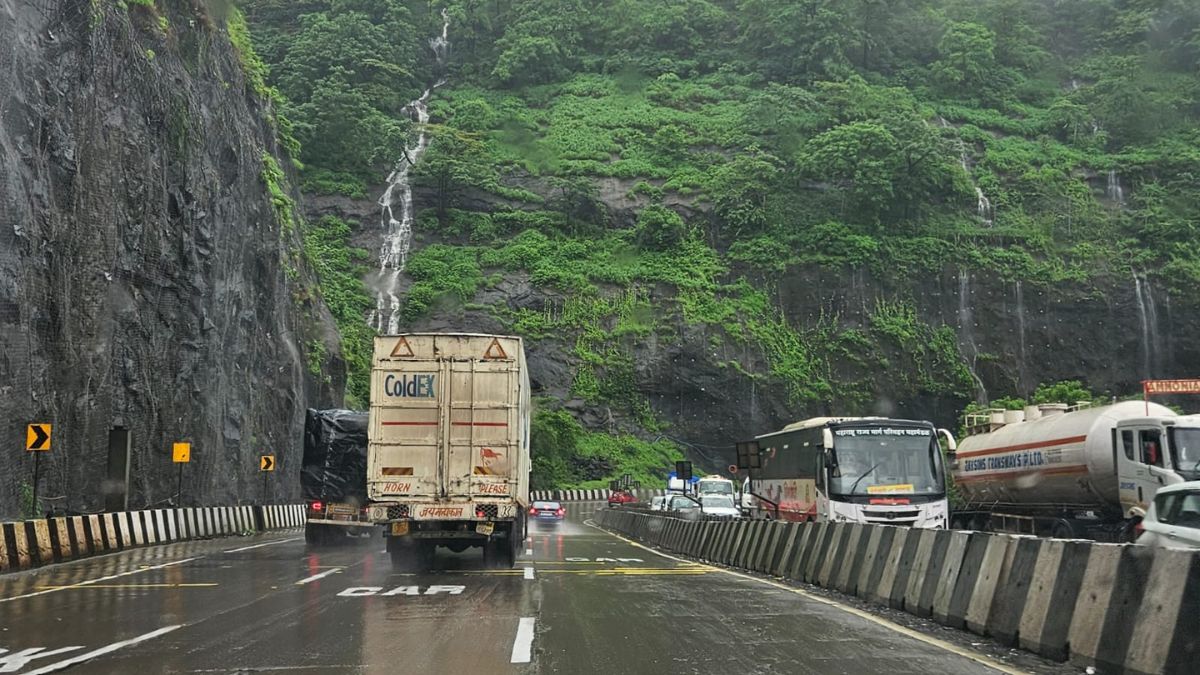
A hazardous materials accident on the Mumbai–Pune Expressway this week triggered one of the corridor’s longest traffic disruptions in recent years, highlighting structural vulnerabilities in India’s most critical intercity infrastructure. The incident, which unfolded in the Khandala ghat section, brought vehicle movement to a near standstill for over 31 hours, affecting thousands of commuters, logistics operators, and essential supply chains between Maharashtra’s two largest urban economies. The disruption began after a gas tanker overturned inside a tunnel stretch of the expressway, leading authorities to suspend traffic for extended safety checks.
With limited diversion capacity and no emergency exit points along long access-controlled stretches, vehicles accumulated rapidly on both sides of the corridor. Drone visuals circulating widely showed dense queues of private cars, buses, and freight trucks stretching across multiple kilometres of hilly terrain, underscoring the scale of congestion. For commuters, the impact went beyond delays. Many remained stranded overnight without access to drinking water, sanitation, or food. Public transport services were halted, while deliveries of perishables such as milk and vegetables into Mumbai’s metropolitan region were disrupted. Urban mobility experts note that such prolonged stoppages expose the absence of basic resilience planning on high-speed corridors that carry both daily commuters and regional freight. The Mumbai Pune Expressway is often cited as a benchmark project, being India’s first six-lane, access-controlled concrete highway.
Yet the incident revealed a critical gap between road design and emergency preparedness. With traffic sealed in both directions and no intermediate exit ramps, even Pune-bound vehicles experienced severe delays despite partial diversions. Officials faced challenges managing a hazardous gas leak while balancing public safety and traffic restoration.Infrastructure analysts point out that as urban regions expand outward and intercity travel intensifies, expressways must evolve beyond throughput-focused design. Emergency turnarounds, controlled escape routes, and rapid evacuation infrastructure are increasingly viewed as essential components, especially along corridors passing through ecologically sensitive or topographically constrained zones like the Western Ghats. The economic implications are also significant. Extended expressway shutdowns affect industrial supply chains linking Pune’s manufacturing clusters with Mumbai’s ports and consumption markets.
Logistics operators estimate that each hour of disruption translates into cascading costs across warehousing, fuel consumption, and inventory planning. Normal traffic movement resumed only after the tanker was cleared in the early hours of Thursday, but the episode has reignited debate on how India’s transport infrastructure accounts for low-probability, high-impact events. Urban planners argue that future upgrades must integrate safety, redundancy, and human-centric planning alongside speed and capacity. As climate volatility, freight volumes, and urban density increase, the expressway’s paralysis offers a cautionary lesson. Resilient mobility infrastructure, experts say, will depend not just on engineering strength, but on anticipating failure and planning humane, efficient responses when it occurs.