Pune Mumbai Expressway Congestion Exposes Governance Gaps
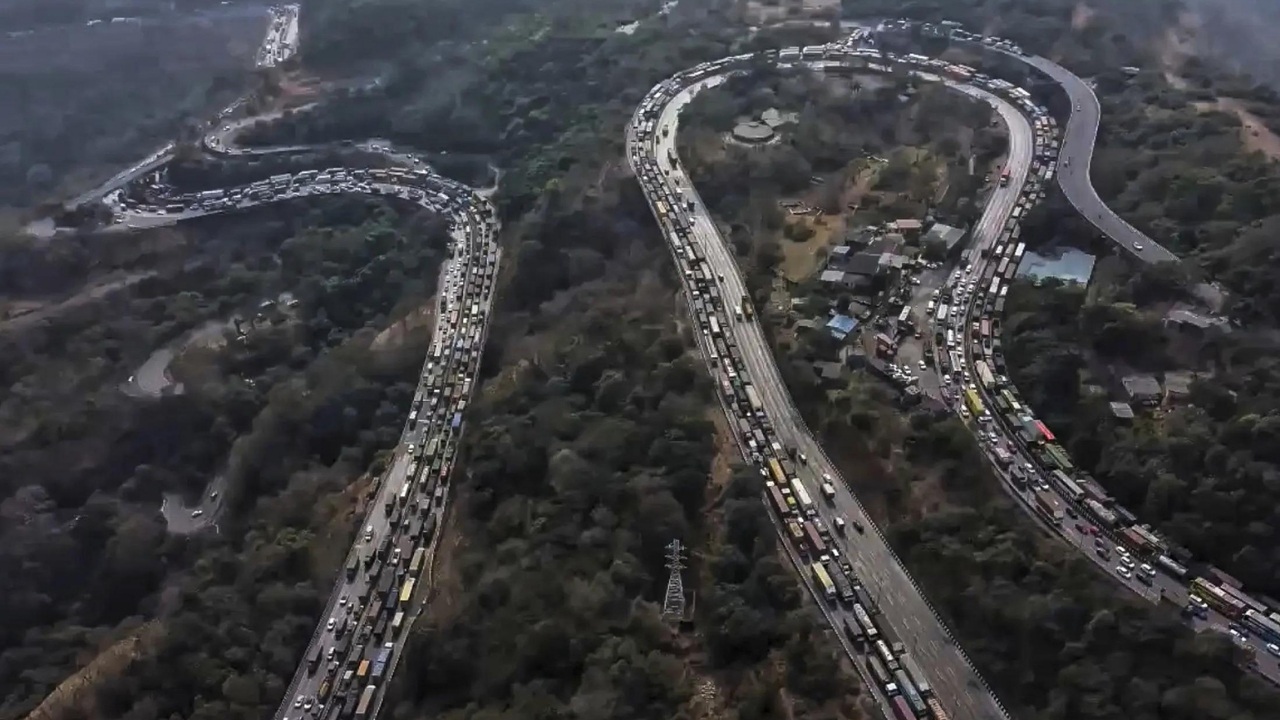
Recurring congestion on the Mumbai Pune Expressway has once again drawn attention to deeper governance and infrastructure gaps on one of India’s most critical intercity corridors. The six-lane access-controlled highway, linking the state’s financial capital with its manufacturing and education hub, has witnessed prolonged traffic standstills in recent months, particularly during weekends and holiday peaks. Beyond commuter frustration, the disruptions raise questions about enforcement, design capacity and long-term mobility planning in fast-urbanising regions.
Urban mobility specialists note that the Mumbai Pune Expressway was conceived for traffic volumes far lower than what it currently carries. Vehicle ownership across the Mumbai Metropolitan Region and Pune district has grown steadily, while logistics traffic has intensified with the expansion of warehousing and industrial clusters along the corridor. Yet, enforcement mechanisms, incident response systems and lane discipline have not scaled at the same pace. A Pune-based real estate developer and civic activist has formally urged the state administration to acknowledge these systemic weaknesses and adopt a phased corrective framework. According to planning professionals familiar with the proposal, the first phase focuses on immediate enforcement upgrades including stricter speed regulation, automated monitoring, and dedicated tow-away teams to quickly clear stalled vehicles. Such measures, they argue, could significantly reduce the cascading delays caused by minor breakdowns or accidents.
The second phase addresses operational redesign. This includes rationalising entry and exit points near high-growth nodes, redesigning bottleneck curves, and creating safer pull-off zones for heavy vehicles. Transport economists point out that frequent stoppages not only increase fuel consumption and emissions but also undermine the expressway’s role as a reliable economic artery connecting labour markets and supply chains. The final phase is more structural, calling for parallel mobility investments. These range from improving regional rail capacity between Mumbai and Pune to accelerating work on alternative road corridors that can absorb overflow traffic. Sustainable transport planners stress that without credible modal alternatives, simply widening highways risks locking cities into higher carbon emissions and land-use inefficiencies.
For the real estate and infrastructure sectors, the implications are significant. Delays on the Mumbai Pune Expressway directly affect logistics costs, housing market attractiveness in peripheral zones, and the feasibility of decentralised employment hubs all critical to balanced urban growth. In climate terms, persistent congestion translates into higher vehicular emissions, undercutting state and municipal commitments to cleaner air and resilient urban systems. State transport officials have acknowledged the need for coordinated action, though timelines for comprehensive reform remain unclear. As Maharashtra continues to urbanise rapidly, experts argue that the expressway’s challenges should be treated as a planning signal rather than an isolated traffic problem. The coming months will test whether policy responses move beyond short-term fixes toward integrated mobility solutions that support economic productivity, environmental responsibility and safer travel for millions who depend on this corridor every year.