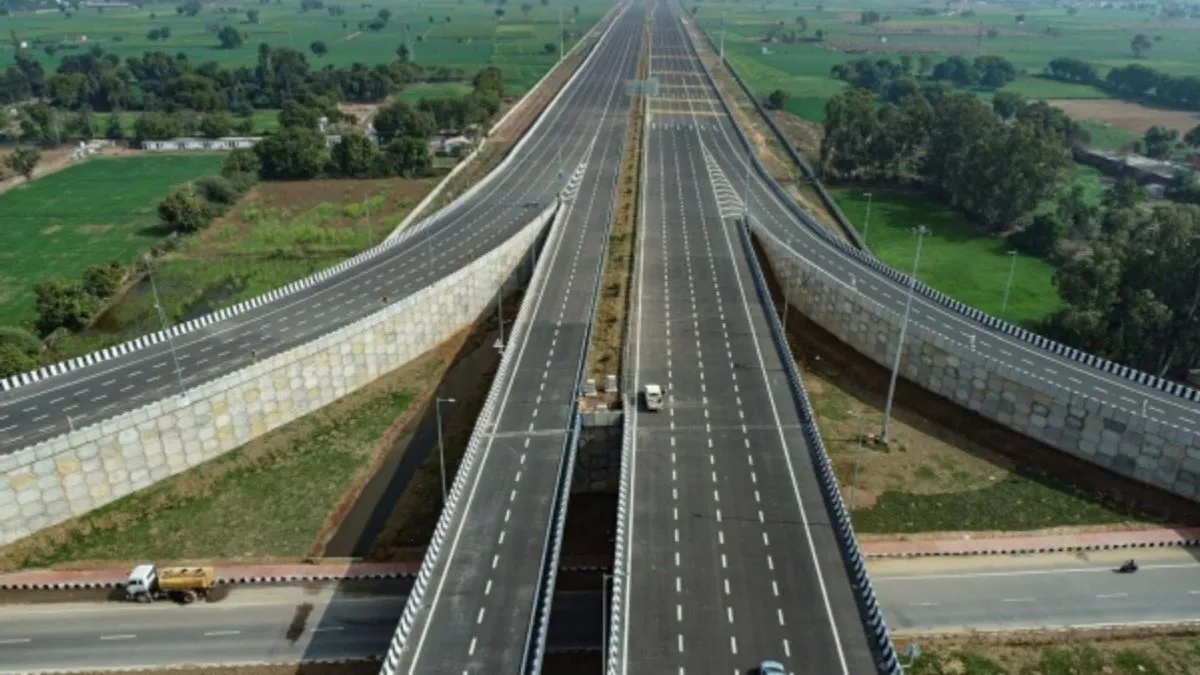
A proposed four-lane corridor linking the Mumbai metropolitan region to Shirur in Pune district has received initial state-level clearance, signalling a major shift in how intercity traffic may be distributed across western Maharashtra. The planned Nerul–Shirur route is positioned as a strategic alternative to the saturated Mumbai–Pune Expressway, with implications for logistics efficiency, industrial growth, and regional mobility resilience.
Urban planners say the project reflects a growing recognition that existing infrastructure between the two cities is operating beyond safe capacity, particularly during disruptions. Periodic closures on the expressway often triggered by accidents or weather events—have exposed the fragility of relying on a single dominant corridor. The proposed alignment aims to introduce redundancy into the system, a principle increasingly central to climate-resilient transport planning. The Nerul–Shirur route is expected to pass through emerging growth nodes including Uran, Karjat, and parts of Pune’s eastern belt such as Pabal and Shirur. These areas have seen rising land-use transitions, from agrarian economies to logistics parks, warehousing clusters, and mid-income housing developments. By improving east–west connectivity, the project could accelerate decentralisation of economic activity away from congested urban cores.
Industry stakeholders point to potential gains for manufacturing and supply chains, particularly in the Chakan–Talegaon industrial belt. Faster and more predictable travel times for freight movement could lower operational costs, while also reducing the concentration of heavy vehicles on existing highways. This may, in turn, improve road safety outcomes and commuter experience along current routes. A key engineering component of the Nerul–Shirur route involves a proposed ghat section through the Sahyadri ranges. While this could significantly shorten travel distances, it also raises environmental considerations. Experts note that infrastructure in ecologically sensitive zones must balance mobility needs with biodiversity protection, slope stability, and water flow management. Regulatory approvals at the national level will likely hinge on detailed environmental impact assessments and mitigation strategies.
From an urban development perspective, the corridor may influence real estate patterns across peri-urban Pune and Navi Mumbai. Improved accessibility typically drives demand for residential and commercial projects, but planners caution against unregulated sprawl. Transit-oriented development, supported by integrated land-use planning, will be essential to ensure that growth remains inclusive and resource-efficient.
The Nerul–Shirur route also aligns with broader efforts to strengthen intra-state connectivity, linking Mumbai not just with Pune but further to Marathwada and southern Maharashtra. Such corridors can play a critical role in distributing economic opportunity more evenly across regions. As the project moves from in-principle approval to detailed planning and clearances, its long-term success will depend on execution quality, environmental safeguards, and integration with existing transport networks. If implemented thoughtfully, it could redefine how one of India’s busiest intercity corridors functions—shifting from congestion-prone dependency to a more balanced and resilient mobility system.
Pune Mumbai Corridor Gains Alternate Highway