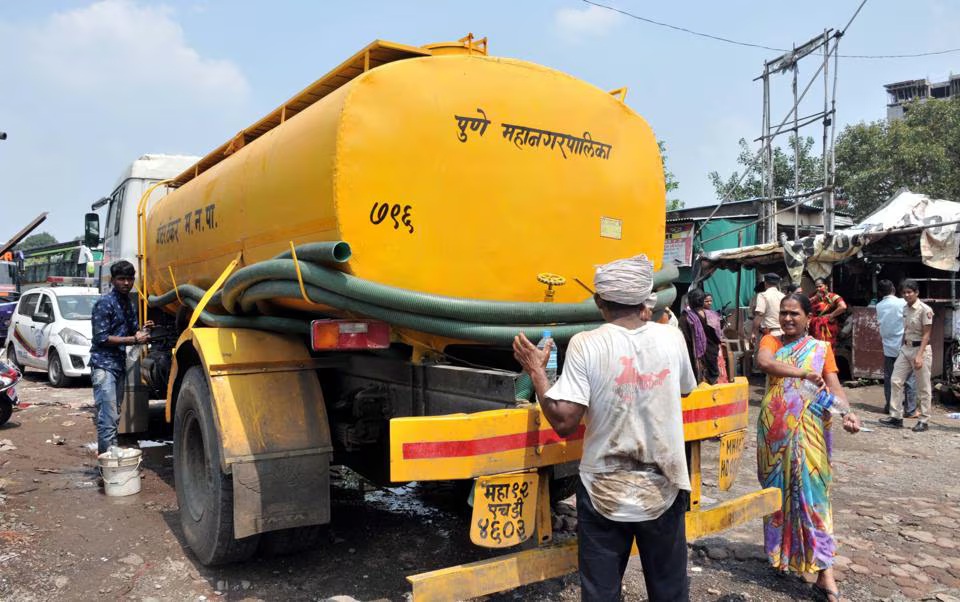
Pune Moshi Residents Face Contaminated Water Crisis
Pune’s Moshi neighbourhoods are grappling with a sustained water quality crisis, raising health and civic concerns for local residents. Multiple housing societies have reported receiving yellowish, foul-smelling water over the past several weeks, with some cases linked to gastrointestinal issues. The contamination has prompted residents to demand immediate corrective action from the Pimpri Chinchwad Municipal Corporation (PCMC), highlighting systemic challenges in urban water management.
Housing complexes across Moshi report that municipal water, sourced primarily from Andra dam, frequently arrives discoloured and odorous. Residents note that despite repeated complaints, the problem persists, forcing many to rely on private water tankers for daily needs. “Even after cleaning storage tanks, the water quality remains poor, making it unsafe for drinking or cooking,” said a resident from a major cooperative housing society. Such recurring contamination not only threatens public health but also imposes economic costs on households and raises questions about the resilience of Pune’s water infrastructure.
A senior PCMC water department official acknowledged complaints from several societies and explained that purification methods are adjusted according to raw water quality. When water levels drop or untreated effluents enter the supply chain, the treatment process may alter water colour temporarily. However, officials insist that potable standards are maintained before distribution. Experts in urban water management note that surface water sources like Andra dam are highly sensitive to seasonal variability, population growth, and upstream effluent discharge. These factors, if unchecked, can exacerbate both contamination and supply shortages.
The situation has escalated into potential civic unrest, with resident associations issuing ultimatums and threatening protests if remedial measures are not implemented promptly. Analysts point out that water scarcity and contamination often intersect with broader urban pressures, including rapid real estate expansion, population density, and ageing infrastructure. Ensuring reliable, safe water supply in such contexts requires a combination of upstream source protection, enhanced treatment technologies, and transparent governance mechanisms. Urban planners argue that recurring contamination in Moshi underscores the need for climate-resilient water systems that anticipate fluctuations in dam inflows, seasonal runoff, and wastewater management. Strengthening monitoring protocols and decentralising treatment capacities could reduce both health risks and dependency on expensive alternatives. Meanwhile, residents await timely interventions, highlighting the delicate balance between urban growth, civic infrastructure, and public health.