


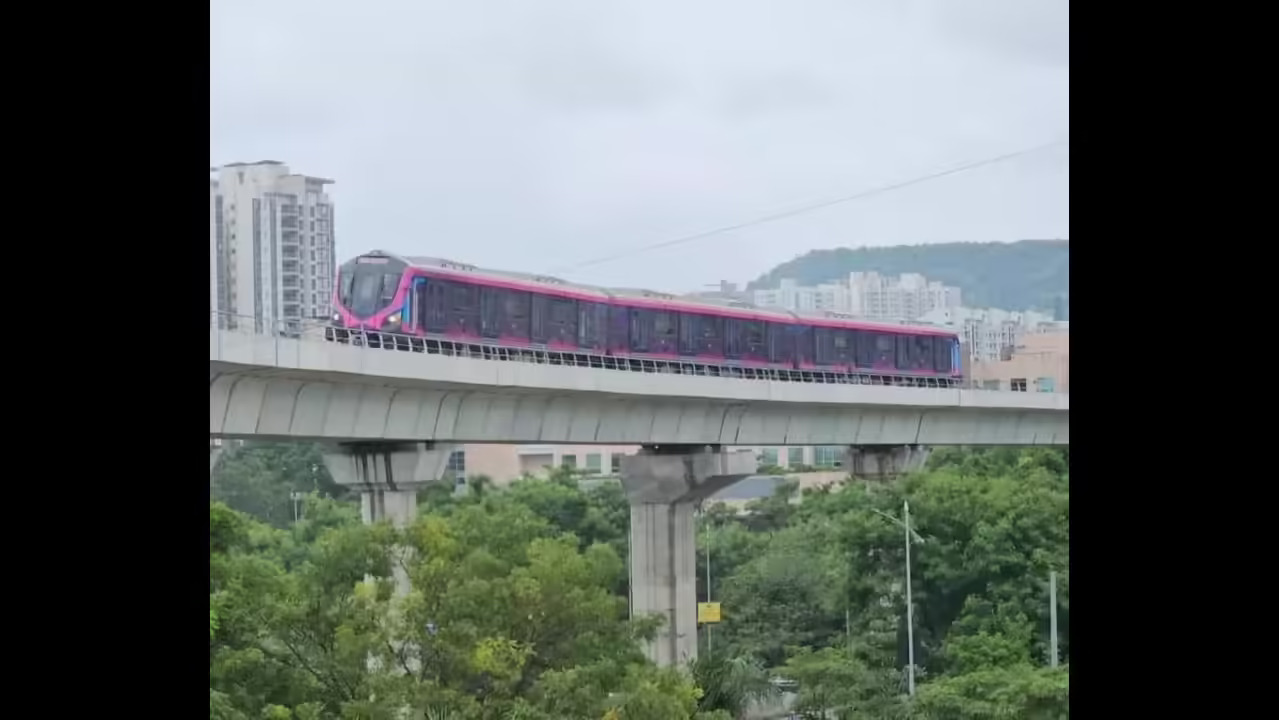
The Pune Metropolitan Region is set for a sweeping transformation in public transport and road infrastructure with the unveiling of a revised Comprehensive Mobility Plan (CMP). Covering an area of 2,250 sq km, the blueprint proposes an integrated transport system designed to meet the needs of one of India’s fastest-growing urban regions while aligning with sustainability and zero-carbon goals.
The CMP recommends an additional 312 km of Metro and Metro-Lite corridors, significantly extending beyond the operational and under-construction lines. This expansion aims to improve connectivity across the Pune and Pimpri Chinchwad municipal areas and link emerging urban centres with the proposed Purandar airport via Metro, railway, and road networks. Officials say this integration will be pivotal in reducing dependence on private vehicles and curbing emissions. The plan also addresses one of the region’s most pressing issues—road congestion—by identifying 552 km of missing link roads and proposing 438 km of road widening to eliminate choke points. Alongside, the public transport backbone is expected to be strengthened with an increase in the city bus fleet to 4,000 vehicles, including new clean-energy buses, and the addition of 80.5 km of Bus Rapid Transit System (BRTS) corridors and 46.3 km of High Frequency Bus Corridors.
Non-motorised mobility forms a crucial element of the CMP. The plan outlines the creation of 341 km of footpaths and 230 km of cycle tracks within Pune Municipal Corporation limits, complemented by 266 km of footpaths and 170 km of cycle tracks in Pimpri Chinchwad. Sixteen key pedestrian crossings will be grade-separated to enhance safety and accessibility. The freight and logistics sector has also been factored into the blueprint, with proposals for 14 truck terminals, seven logistics hubs, and 26 multi-modal transport hubs across the metropolitan region. Urban transport planners believe these measures will not only streamline goods movement but also decongest arterial roads.
The CMP’s estimated investment stands at ₹1.33 lakh crore, to be implemented in three phases through 2054. Experts have welcomed the scale and vision of the plan but caution that early and sustained execution is essential. With daily traffic in the metropolitan region already nearing critical levels, they warn that delays could undermine the plan’s benefits. Transport specialists stress that funding allocation, transparent governance, and community engagement will be key to success. For residents, the promise of seamless Metro travel, safer roads, and enhanced walkability could redefine urban life—provided the ambitious vision translates into timely action.
Also Read : Pune to Add Five New Police Stations for Better Urban Policing
