


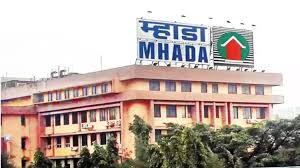
After nearly four months of uncertainty, Pune’s public housing pipeline is set to move forward as the city’s housing authority prepares to conduct a long-pending lottery for more than 4,000 homes on February 10. The draw, delayed repeatedly due to administrative and electoral constraints, is expected to determine allotments for over two lakh applicants seeking subsidised housing across the Pune metropolitan region.
The timing is significant. The lottery is scheduled immediately after election-related restrictions lapse, allowing the housing board to resume stalled civic processes. For thousands of middle- and lower-income households, the draw represents more than a procedural milestone it offers clarity in a housing market where affordability, access, and predictability have become increasingly strained. The homes were offered under inclusionary and integrated housing frameworks intended to embed affordability within larger urban developments. Such schemes are central to Maharashtra’s approach to managing rapid urbanisation, particularly in cities like Pune where employment growth has outpaced the supply of formal, reasonably priced housing. Applications for the homes opened in September, but uptake was initially muted, prompting deadline extensions. The more persistent challenge, however, emerged during the verification phase. Officials involved in the process say the scale of applications running into several lakhs exposed the limitations of legacy digital systems and manual scrutiny methods. These bottlenecks prevented the authority from completing checks before election codes came into force, freezing the process multiple times.
The repeated pauses triggered public frustration. Applicants raised concerns online about the prolonged holding of booking deposits, with some questioning whether public housing agencies should be held to stricter timelines and financial accountability standards. Urban governance experts note that such delays, while procedural, can erode trust in state-led housing programmes, particularly among first-time buyers who rely heavily on public sector delivery. From a city-planning perspective, the draw carries broader implications. Public housing allocations influence settlement patterns, transport demand, and infrastructure loads. Delays in allotment can slow household formation and push families toward informal or peripheral housing options, increasing commute times and environmental costs. Conversely, timely and transparent allotments help stabilise neighbourhoods and support more compact, resource-efficient urban growth. Senior officials overseeing the process have indicated that operational readiness has been prioritised to avoid further slippage. The authority has also acknowledged that future housing programmes will need stronger digital infrastructure, better inter-agency coordination during election cycles, and clearer communication with applicants to reduce uncertainty.
As Pune continues to expand as a knowledge and manufacturing hub, the pressure on affordable housing systems is unlikely to ease. The outcome of this draw will be closely watched not just by applicants, but by urban planners and policymakers assessing how effectively public housing mechanisms can respond to the realities of a fast-growing, climate-sensitive city. For now, February 10 marks a reset point. Whether it also becomes a turning point for more resilient and citizen-centric housing delivery will depend on what follows next.
Also Read: CREDAI Green Drive Expands Beyond Construction Sites
Pune MHADA Lottery Brings Relief to Buyers
