


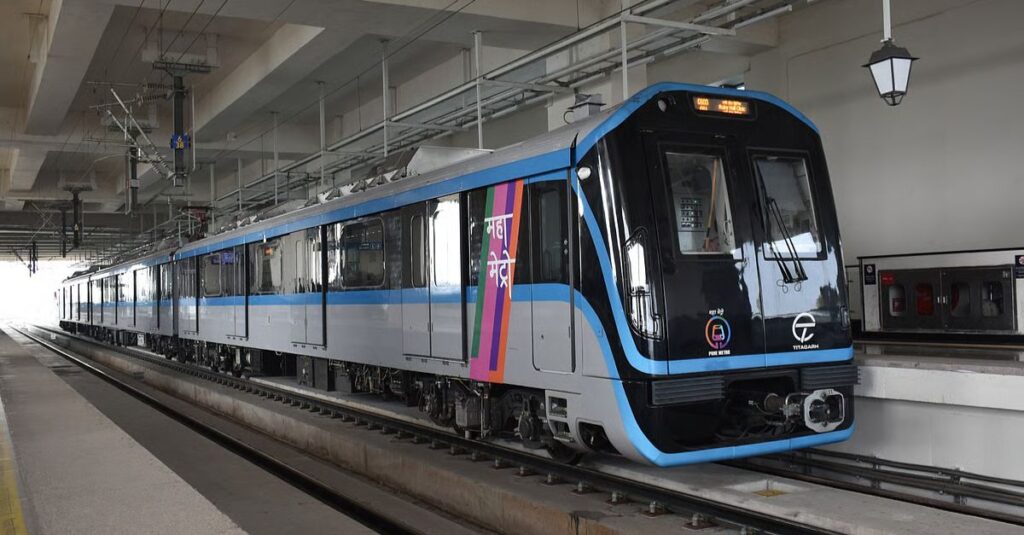
Pune Metro gears up for its biggest operational test yet as officials trial a plan to run trains every three minutes between District Court and Swargate during the upcoming Ganeshotsav. With lakhs of devotees expected in the city centre, the move aims to keep streets decongested, ensure safer mobility, and encourage citizens to opt for eco-friendly public transport over private vehicles.
The newly operational corridor connecting District Court to Swargate will, for the first time, serve passengers during the festival season. Key stations such as Kasba, Mandai and Swargate are positioned near some of the most prominent Ganesh mandals. This proximity allows devotees to bypass traffic snarls, avoid parking hassles, and access the heart of the celebrations through the Metro’s seamless connectivity. Officials explained that the plan includes extending Metro operations until 2 AM to accommodate late-night visitors, a significant step towards enhancing the city’s sustainable mobility network. Each rake has the capacity to carry 900 commuters, which, coupled with the increased frequency, is expected to substantially reduce pressure on city roads. Experts say this measure will play a crucial role in keeping carbon emissions in check during one of the most crowded periods in Pune’s annual calendar.
Transport planners highlight that festivals present unique mobility challenges in fast-growing cities. For Pune, where private two-wheelers and cars dominate road space, the Metro’s ability to move thousands of people efficiently underscores its role as a green lifeline. By reducing dependence on private vehicles during Ganeshotsav, the Metro not only minimises traffic disruptions but also contributes to a safer, more gender-inclusive travel experience with well-lit, secure stations and surveillance-backed operations. MahaMetro authorities have stated that the current trials are designed to assess signalling efficiency, track load capacity, and passenger management systems under festive peak demand. Early reports suggest the system has responded positively, raising hopes that the higher frequency could become a model for future city events or even regular service improvements.
Observers believe that the integration of the Metro with Pune’s cultural fabric will gradually shift public perception towards mass rapid transit as the default mode of mobility. With each kilometre of track and each frequency upgrade, the city edges closer to building a transport ecosystem that is equitable, sustainable, and aligned with India’s larger net-zero commitments. As Pune readies itself for the Ganesh festival, the Metro’s proactive steps signal more than convenience—they mark a shift in how modern Indian cities can merge tradition with sustainability, ensuring that large gatherings are celebrated without compromising urban efficiency or environmental responsibility.
Also Read : Pune Purandar Airport Project Gains Boost As 951 Farmers Grant Consent
