


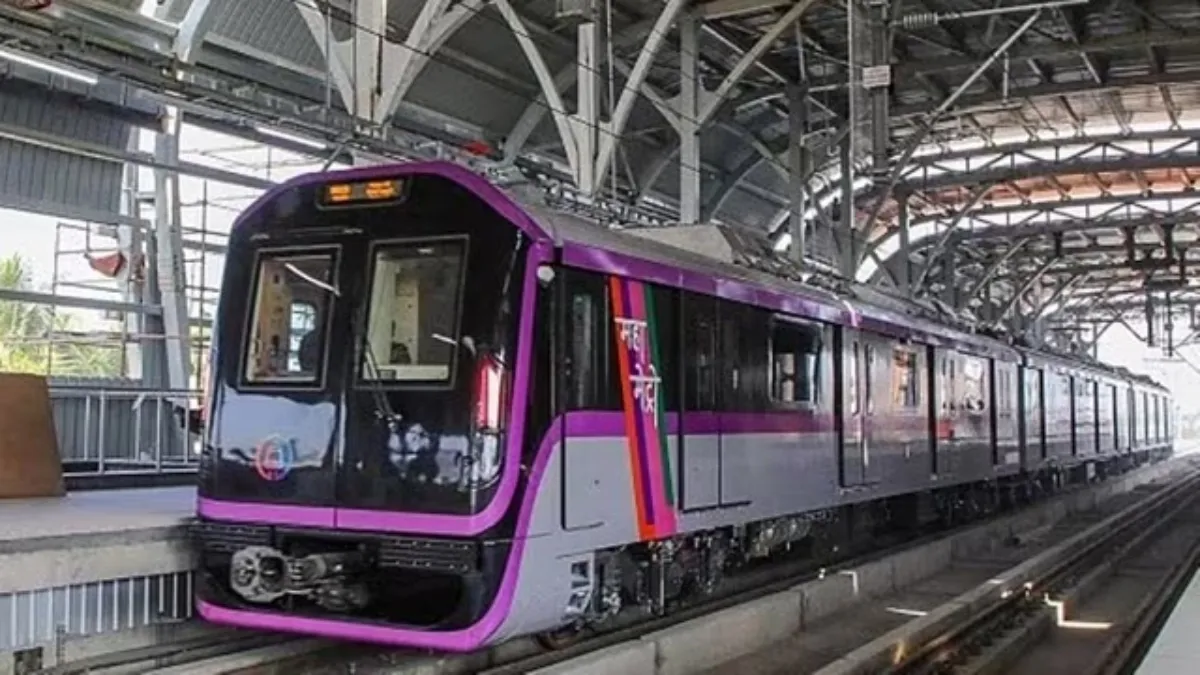
Pune’s Metro network is seeing a steady rise in patronage, with daily ridership figures climbing to an average of 2.53 lakh in September compared to 2.24 lakh in August. The increase has also sharpened the focus on last-mile connectivity, as commuters across the city are pressing for stronger feeder bus services to ensure seamless and affordable travel.
Data from metro operators shows that over 75 lakh passengers travelled in September across both operational stretches—Vanaz to Ramwadi and PCMC to Swargate. Officials have said that more people are choosing the Metro to avoid the city’s worsening traffic congestion, erratic rains, and deteriorating road conditions, but stress that demand for better integration with local bus routes is crucial to sustain this momentum. Currently, feeder buses run on over 10 routes, linking locations such as Yerawada to Lohegaon Airport and Kalyaninagar to Magarpatta. However, commuters point out that many busy neighbourhoods still lack connections to nearby Metro stations, forcing them to rely on costly autorickshaw rides or personal vehicles. The absence of adequate parking facilities at several stations has only worsened the problem.
Passengers from Aundh, Bhau Patil Road, and Warje have been particularly vocal in highlighting gaps in feeder services. Many residents have stated that autorickshaw drivers often overcharge for short-distance travel to metro stations, and regular bus links would not only bring relief but also encourage greater adoption of public transport. Students from Garware College have similarly requested buses connecting their campus area to Dandekar Bridge for better accessibility. Officials from Pune Mahanagar Parivahan Mahamandal Limited (PMPML) and Maha Metro have confirmed that discussions are underway to expand services in phases. According to senior transport officials, the aim is to introduce feeder buses from more stations, reconfigure existing routes, and synchronise schedules to reduce waiting times.
City leaders and local representatives have also stepped in to bridge these gaps. Recent initiatives have seen feeder buses introduced from Nal Stop Metro station to Rajaram Bridge, covering Karvenagar and parts of Karve Road where metro services are yet to extend. There are also proposals for buses linking Vanaz station to Warje, expected to benefit residential clusters such as Atulnagar. Transport experts note that sustained ridership growth will depend heavily on last-mile solutions, including feeder buses, bicycle-sharing, and dedicated parking facilities. Strengthening these links not only improves commuter convenience but also reduces dependency on private vehicles, directly cutting down congestion and vehicular emissions.
The Metro has already begun transforming travel habits in Pune, but the demand for expanded feeder services underlines the need for a fully integrated, eco-friendly public transport ecosystem. As the city prepares for further Metro expansion, the emphasis on connectivity will determine how far it succeeds in reshaping urban mobility.
Also Read: Mumbai Metro Line 3 Final Phase Opening October 8 Completing First Underground Corridor
