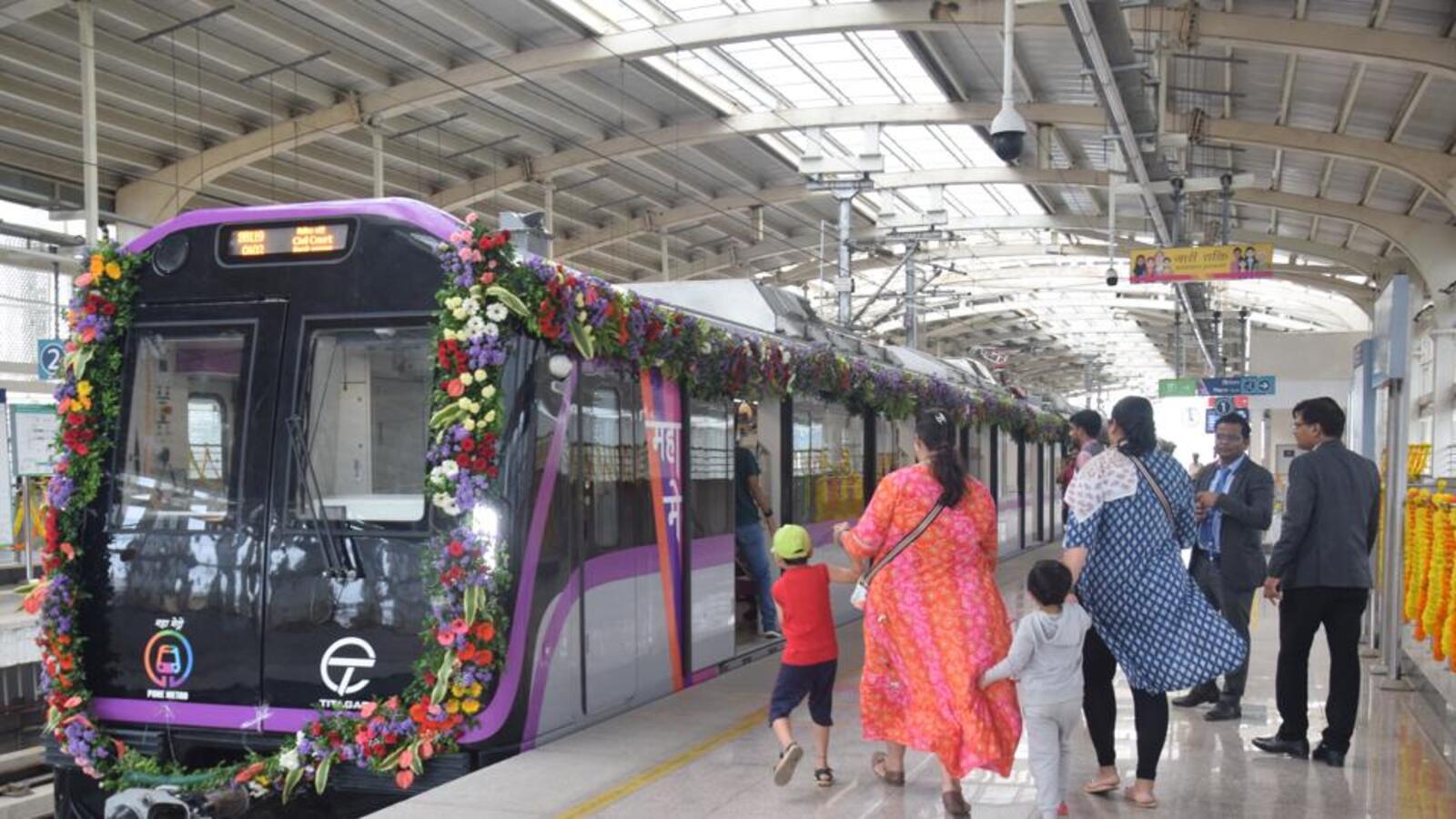
Pune Metro Ridership Plunges to 12000 During Diwali Week Slowdown
Pune witnessed a dramatic fall in Metro ridership during the Diwali week, with passenger numbers plunging from an average of 2.36 lakh per day to nearly 12,000 on the day of Lakshmi Puja. The week-long slump, attributed to festive travel and institutional closures, has temporarily dented the city’s public transport momentum.
According to Pune Metro officials, the sharp decline in daily commuters was anticipated but still marked one of the lowest operational weeks since the launch of full services. During the festival period, citizens preferred private or intercity travel as many headed to their hometowns, leading to a near-empty metro network across the city’s major corridors.
The fall in passenger footfall was not limited to Pune Metro alone. The city’s bus transport system, PMPML, also reported a visible drop in ridership, highlighting how deeply seasonal migration and festive travel patterns influence urban mobility trends in Indian cities. Officials noted that public transport demand typically declines during long holiday periods when schools, colleges, and corporate offices remain closed.Despite the temporary dip, experts say the pattern is cyclical rather than structural. Urban transport planners believe the city’s growing reliance on public transit, particularly among working professionals and students, will help ridership rebound swiftly. “Seasonal drops are expected in Tier-1 and Tier-2 cities during major festivals. The focus should remain on improving last-mile connectivity and building a consistent user experience,” said an urban transport expert associated with the project.
Encouragingly, post-Diwali ridership data shows early signs of recovery. As schools and offices reopened, passenger counts rose steadily through the following week. Officials expect figures to return to normal levels around 2.3 to 2.4 lakh passengers per day by early November, assuming consistent operations and favourable weather conditions.From a sustainability perspective, the incident underscores how festival-linked urban mobility behaviour can disrupt city-level efforts toward carbon-neutral public transport. Authorities are now exploring measures to encourage citizens to opt for greener travel even during festive periods, including parking restrictions in core areas and awareness drives promoting public transport’s environmental benefits.
For Pune, which has invested significantly in mass transit infrastructure, ensuring steady ridership is key to maintaining operational viability and reducing dependence on private vehicles. With ridership recovering post-festival, officials remain optimistic that the Metro will continue to play a central role in building a sustainable, accessible, and inclusive city transport ecosystem.While Diwali temporarily dimmed the Metro’s numbers, Pune’s ongoing urban transition signals a long-term shift toward cleaner, smarter mobility.