


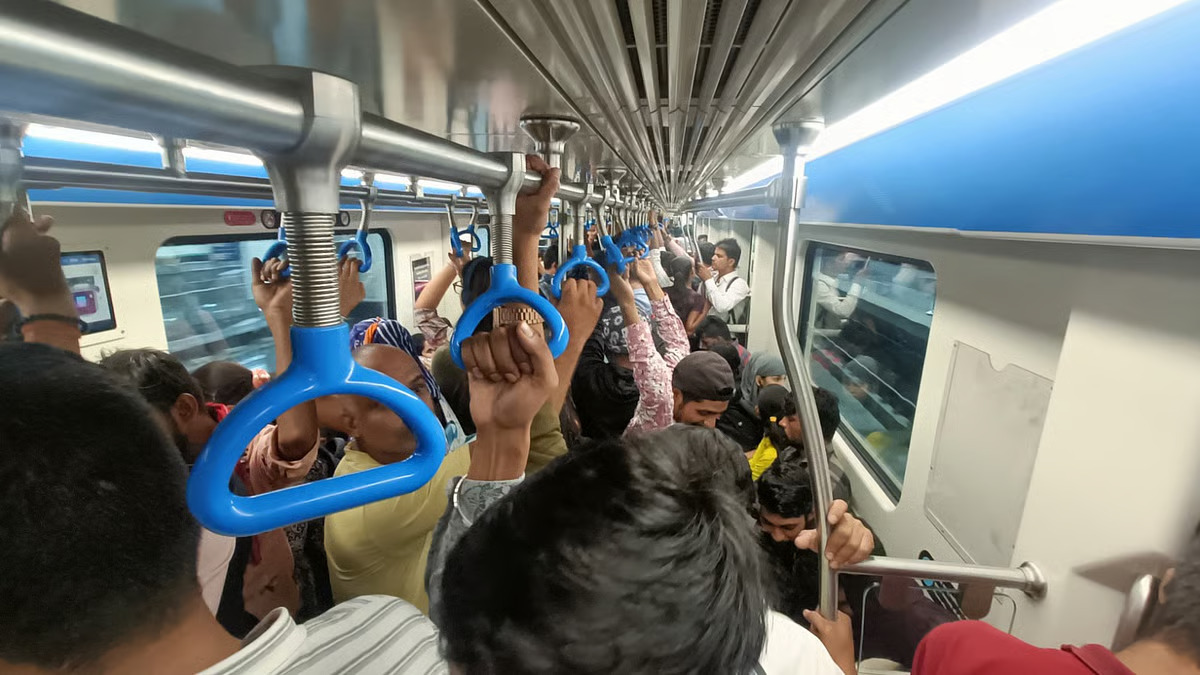
Pune’s public transport landscape witnessed a remarkable shift during the Ganesh Festival as the Pune Metro recorded its highest-ever single-day ridership of 3.68 lakh passengers. Officials confirmed that 2.01 lakh commuters travelled on the Pimpri–Swargate line, while 1.67 lakh used the Vanaz–Ramwadi route, underscoring the metro’s growing dominance as the city’s preferred mode of transport.
The surge highlights how Pune Metro is steadily becoming a reliable alternative to the city’s faltering bus system. Over the years, services by Pune Mahanagar Parivahan Mahamandal Limited (PMPML) have drawn criticism for frequent breakdowns, poor frequency, and rising fares. In contrast, the metro offers a clean, air-conditioned and punctual journey, shielding commuters from traffic snarls and unpredictable delays. This has made it the go-to choice during high-demand occasions such as Ganeshotsav. Festival days often put additional strain on urban mobility, with thousands of devotees pouring into the city’s central districts for darshan. In anticipation, Pune Metro issued advisory routes for pilgrims, encouraging those from Pimpri Chinchwad to alight at Kasba Peth for convenient access to prominent Ganesh mandals. Similarly, travellers from Vanaz and Ramwadi were advised to disembark at Pune Municipal Corporation, Chhatrapati Sambhaji Udyan or Deccan Gymkhana stations for seamless access on foot.
Officials also urged passengers to adopt digital solutions to ease congestion at ticket counters. The One Pune Card, WhatsApp-based ticketing, and QR-based entry have been positioned as tools to reduce queues and ensure smoother station management. Priority access was also recommended for elderly passengers, women and persons with special needs, with escalators and lifts designated for their use. The metro’s success during Ganeshotsav has also reignited debates about the urgent need for Pune to strengthen its sustainable transport ecosystem. Experts suggest that over-reliance on conventional buses, which remain vulnerable to road traffic and fuel inefficiency, will no longer serve a growing metropolis like Pune. Instead, integrated mobility models – where metro rail, e-buses, bicycles and pedestrian pathways work in tandem – are being viewed as the way forward.
Festival commuters echoed this sentiment. Many described the metro as not just a faster alternative but also a safer and eco-friendly mode of travel. The reduction in private vehicles on city roads during peak festival hours has also had a visible impact, with less congestion and reduced emissions around central Pune. For a city grappling with air pollution and traffic gridlocks, the numbers from this year’s Ganesh Festival tell a compelling story. Pune Metro has not only carried record ridership but has also demonstrated how modern, efficient, and sustainable mobility can transform urban living. Whether this momentum translates into a long-term modal shift away from private vehicles and unreliable buses remains to be seen, but for now, the metro has emerged as Pune’s transport lifeline during its most celebrated festival.
Also Read : Delhi To Meerut Soon In 30 Minutes With Namo Bharat Metro
