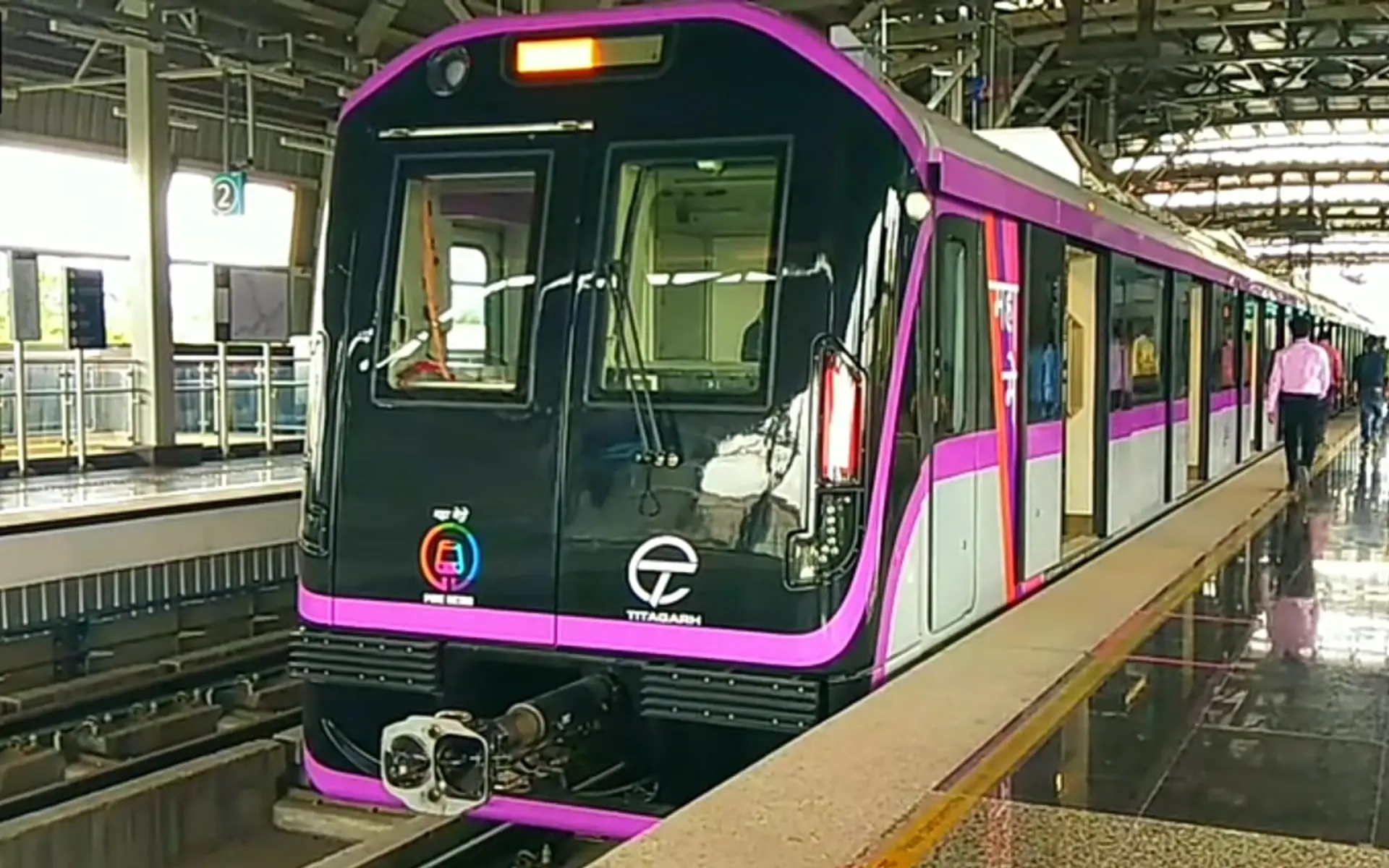
Pune is preparing to operationalise its long-awaited 23-km elevated metro link between Hinjawadi and Shivajinagar, with phased passenger services expected to begin by late April 2026, subject to final safety clearance. The corridor is poised to alter commuting patterns in one of India’s busiest IT clusters while reshaping mobility economics across the western growth belt.
The project, executed by the Pune Metropolitan Region Development Authority, connects the Hinjawadi IT Park home to thousands of technology and business process employees to Shivajinagar, a key interchange node in central Pune. Trial operations covering signalling, traction power, braking systems and platform integration have been completed, according to officials overseeing the project. The line is now awaiting inspection and approval from the Commissioner of Metro Rail Safety before commercial operations can commence.
With civil works nearing completion, transport analysts describe the corridor as a structural intervention in a zone long associated with peak-hour bottlenecks. Hinjawadi’s road network currently handles a high concentration of private vehicles and company-operated buses, contributing to extended travel times, fuel consumption and emissions. The new Pune Metro corridor is expected to offer a predictable alternative that reduces reliance on personal vehicles.
Urban planners note that improved connectivity between employment hubs and the city core has broader implications for land use and real estate markets. Residential catchments along the alignment may witness renewed interest as commute reliability improves. At the same time, experts caution that last-mile connectivity including feeder buses, pedestrian pathways and cycling infrastructure will determine the corridor’s long-term success. From an environmental perspective, modal shift is central. Elevated metro systems, when powered through increasingly cleaner energy mixes, can significantly lower per-capita transport emissions compared to private car travel. In a city grappling with air quality stress and rising vehicular ownership, sustained ridership on the Pune Metro network could contribute to climate resilience targets.
The phased opening strategy is designed to allow systems stabilisation while gradually expanding coverage across stations. Industry observers say this approach reduces operational risk and enables demand calibration during the initial months. For businesses in Hinjawadi, improved access may expand labour pool flexibility, enabling employees from central and eastern Pune to commute more efficiently. For daily commuters, time savings translate into improved work-life balance and reduced travel uncertainty.
As Pune continues to expand outward, the Hinjawadi–Shivajinagar link signals a shift from road-dependent growth to rail-oriented urban development. The coming months will test whether the Pune Metro can convert infrastructure investment into sustained ridership, integrated planning and measurable congestion relief outcomes that will define the city’s next phase of urban transformation.
Pune Metro Phase Three Nears Launch