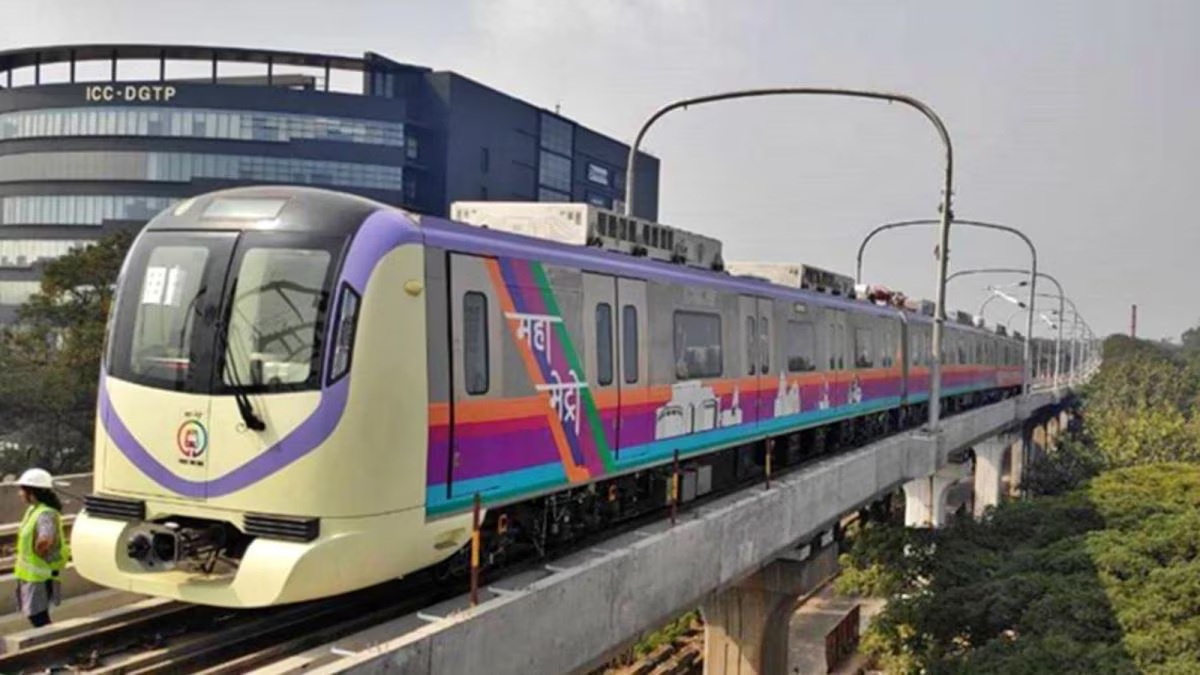
Pune Metro Phase 2 Work Begins With Double Decker Lines
Pune’s urban rail network has entered a decisive new phase as preparatory work begins on Pune Metro Phase 2, marking a significant expansion of rapid transit toward emerging residential and industrial belts along the city’s eastern and southern periphery. The Maharashtra Metro Rail Corporation Limited (MahaMetro) has moved forward with planning for two elevated corridors featuring double-decker infrastructure — a layered mix of road and metro alignment — aimed at easing congestion on the Pune-Solapur corridor and supporting sustainable urban mobility.
The two new stretches, designated Line 4B (Hadapsar to Loni Kalbhor) and Line 4C (Hadapsar to Saswad Road Railway Station), will span approximately 11.1 km and 5.6 km respectively, with a combined total of 14 elevated stations. The stacked design places a vehicular flyover at ground level and the metro track above, an approach that maximises use of constrained urban corridors and accommodates future multimodal connectivity.Urban planners highlight that this infrastructure typology reflects Pune’s growing need to integrate commuter rail with existing road arteries in fast-urbanising areas beyond the city core. The selected alignment connects key employment nodes such as Phursungi’s IT parks, transit hubs like Hadapsar Bus Depot, and expanding residential clusters in Loni Kalbhor and Saswad, facilitating inclusive access to affordable public transport in areas historically reliant on private vehicles and buses.
The project has cleared significant administrative milestones. The detailed project report was approved by the Pune Municipal Corporation in early 2024, followed by clearance from the Maharashtra government’s infrastructure committee in late 2025. With Union government vetting pending, MahaMetro has initiated tenders for detailed design consultancy, signalling readiness to transition from planning to early construction phases.Industry analysts stress that linking metro expansion with road traffic management — through double-decker structures — can help reduce travel times and cut emissions by encouraging mode shift away from private vehicles. However, design and construction will need to address noise, air quality impacts, and seamless last-mile connectivity to realise these gains across Pune’s metropolitan region.The Phase 2 corridors form part of a broader Pune mobility vision that aligns with the city’s Comprehensive Mobility Plan, integrating new lines with existing metro corridors and future transit modes. Earlier Phase 2 approvals included key routes such as the Kharadi–Khadakwasla line and the Nal Stop–Manikbaug spur, collectively aiming to knit together peripheral growth zones with Pune’s central business districts.
As construction scales up, authorities and urban advocates will be watching how these extensions affect local travel behaviour, urban form, and environmental performance. The next critical steps include securing central clearances, finalising design contracts, and aligning investments for equitable, climate-resilient transport infrastructure that serves Pune’s evolving urban geography.