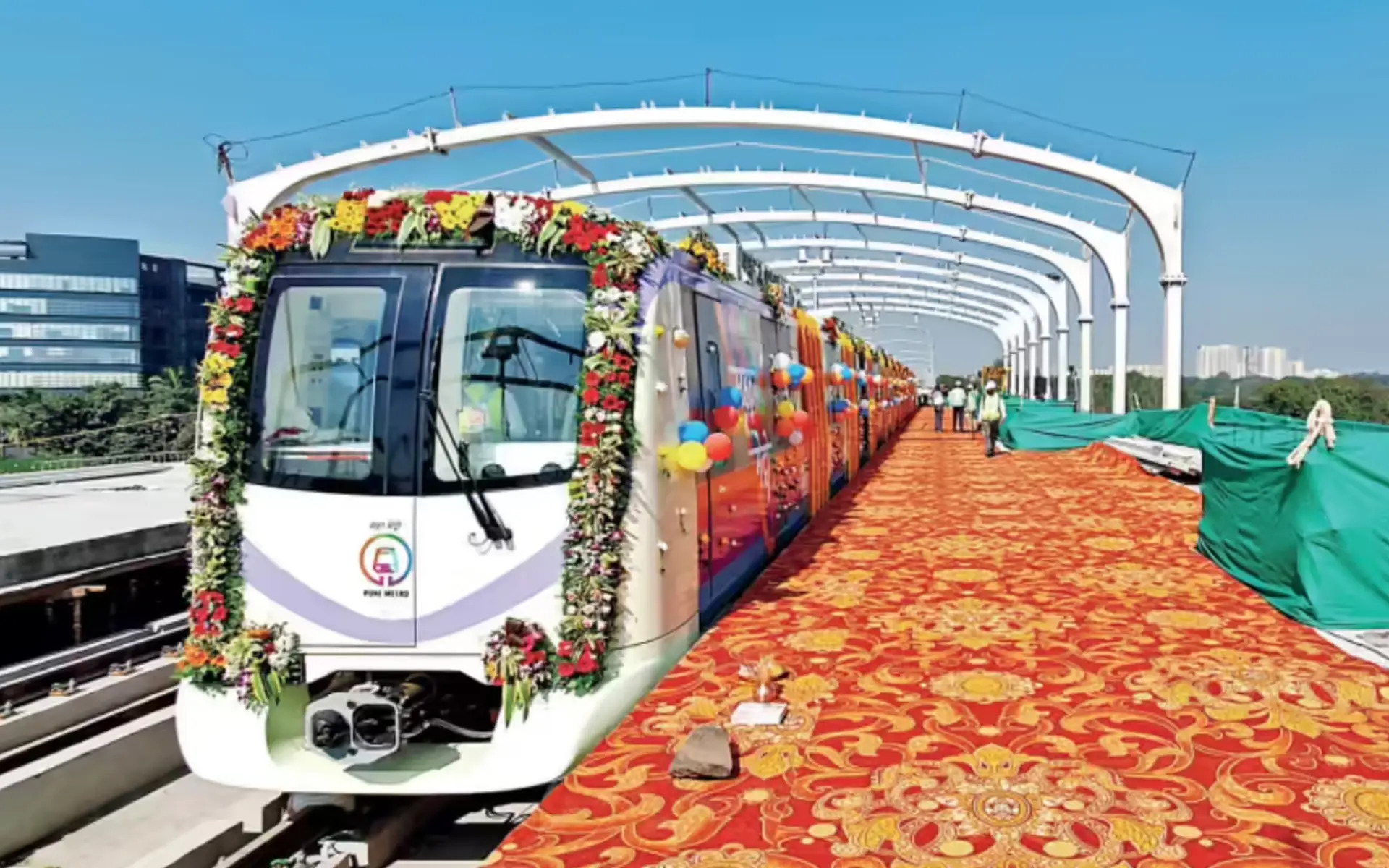
Maharashtra Metro Rail Corporation has initiated the next critical step in expanding Pune’s rapid transit network, inviting bids for detailed design consultancy services linked to Pune Metro Phase 2. The tender, issued earlier this month, marks the transition of the city’s proposed southern and south-eastern corridors from planning approvals into technical execution, a shift that urban planners say will shape travel patterns in Pune’s fast-growing peripheral zones.
The consultancy package covers the station-level design of 14 elevated metro stations across two new corridors Hadapsar to Loni Kalbhor and Hadapsar to Saswad Road. Together, these routes are intended to serve residential clusters, industrial belts, and logistics hubs that have seen sustained population and employment growth but remain poorly connected by high-capacity public transport. According to tender documents, the assignment spans 48 months from the issuance of the letter of acceptance and focuses exclusively on station design, excluding viaduct structures within station limits. Industry experts note that this separation reflects a growing emphasis on constructability, lifecycle efficiency, and integration with local urban infrastructure, rather than treating stations as purely structural elements.
Urban mobility specialists point out that stations increasingly determine a metro system’s social and environmental impact. Design choices influence pedestrian safety, universal accessibility, energy consumption, and last-mile integration factors that are now central to evaluating public transport investments in Indian cities. For Pune, where daily commute times have risen sharply over the past decade, station planning will directly affect whether new metro lines meaningfully shift commuters away from private vehicles. The two corridors were approved by the city’s municipal body in early 2025 and are expected to be implemented by the regional development authority. The Hadapsar–Loni Kalbhor stretch extends over 11 km with 10 stations, while the Hadapsar–Saswad Road line spans just over 5.5 km with four stations. Both corridors pass through zones earmarked for mixed-use development under regional plans, making coordinated transit-oriented planning a priority.
Transport economists say the timing is significant. With Pune’s metropolitan region expanding beyond traditional municipal limits, Phase 2 of the metro is seen as a test case for aligning regional growth with sustainable transport infrastructure. Poorly integrated stations could lock in car dependency for decades, while well-designed nodes could support compact development and reduce emissions. The bid submission window closes in early March, with a pre-bid meeting scheduled mid-February. Officials familiar with the process suggest that consultant selection will weigh experience in dense urban contexts and climate-responsive design. As Pune Metro Phase 2 moves into the design phase, attention will increasingly shift from route approvals to execution quality particularly how stations connect neighbourhoods, support inclusive mobility, and accommodate the city’s long-term climate and growth pressures.