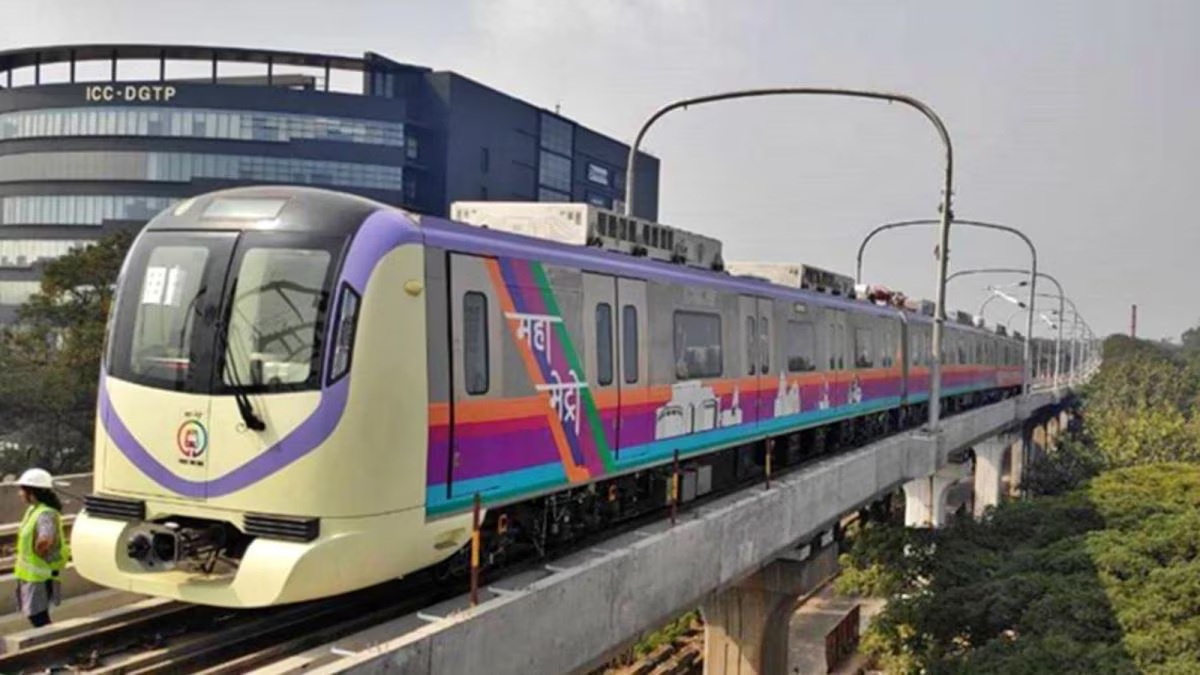
Pune Metro Phase 2 Work Begins With Double Decker Lines
Work has commenced on a 4.7-kilometre elevated corridor along Pune’s congested Nagar Road, where a double decker Metro flyover will integrate a six-lane roadway with a Metro line above. The project, beginning at Ramwadi and extending towards Tuljabhavani Nagar, aims to ease daily gridlock while expanding rapid transit access to the city’s fast-growing residential and IT districts.
Nagar Road is one of Pune’s most critical east–west connectors, linking the central city to Viman Nagar, Kharadi and the airport corridor. Over the past decade, rapid commercial development and housing growth have strained its capacity, leading to prolonged peak-hour delays and rising vehicular emissions. Urban planners say the double decker Metro flyover model reflects a shift towards vertical infrastructure solutions in land-constrained corridors where widening at grade is no longer viable. The lower deck will carry a six-lane elevated road with a minimum clearance of 5.5 metres to safely support the Metro viaduct above. Engineers involved in the project indicate that the structure has been designed for future widening to eight lanes, should traffic demand increase. Stations will be positioned above the roadway, with integrated platforms and concourse levels to streamline passenger movement without expanding the road footprint.
The alignment will include four new stations serving Viman Nagar, Somnathnagar, Kharadi Bypass and Tuljabhavani Nagar, with interchange provision for a proposed airport spur near Viman Nagar. Officials suggest that improved last-mile connectivity to employment hubs could reduce private vehicle dependence in a corridor that currently sees high daily car and two-wheeler volumes. The double decker Metro flyover concept has already been deployed on select stretches such as Karve Road and Ganeshkhind Road, signalling a broader design approach for Phase II Metro expansion. The Ramwadi extension forms part of a larger network growth plan approved last year, including links towards Bhakti Shakti, Katraj and Chandni Chowk.
Beyond congestion relief, infrastructure analysts note that such stacked corridors can influence land values and development intensity along transit routes. If integrated with pedestrian access, feeder buses and non-motorised transport, the corridor could support more compact, transit-oriented growth patterns in eastern Pune. However, experts caution that construction management will be critical to avoid prolonged disruption to existing road users and utilities. For a city grappling with rapid population growth and rising mobility demand, the success of the Nagar Road intervention may shape how Pune balances roadway expansion with sustainable public transport. The coming years will determine whether vertical integration can deliver both faster commutes and a measurable reduction in urban congestion.