


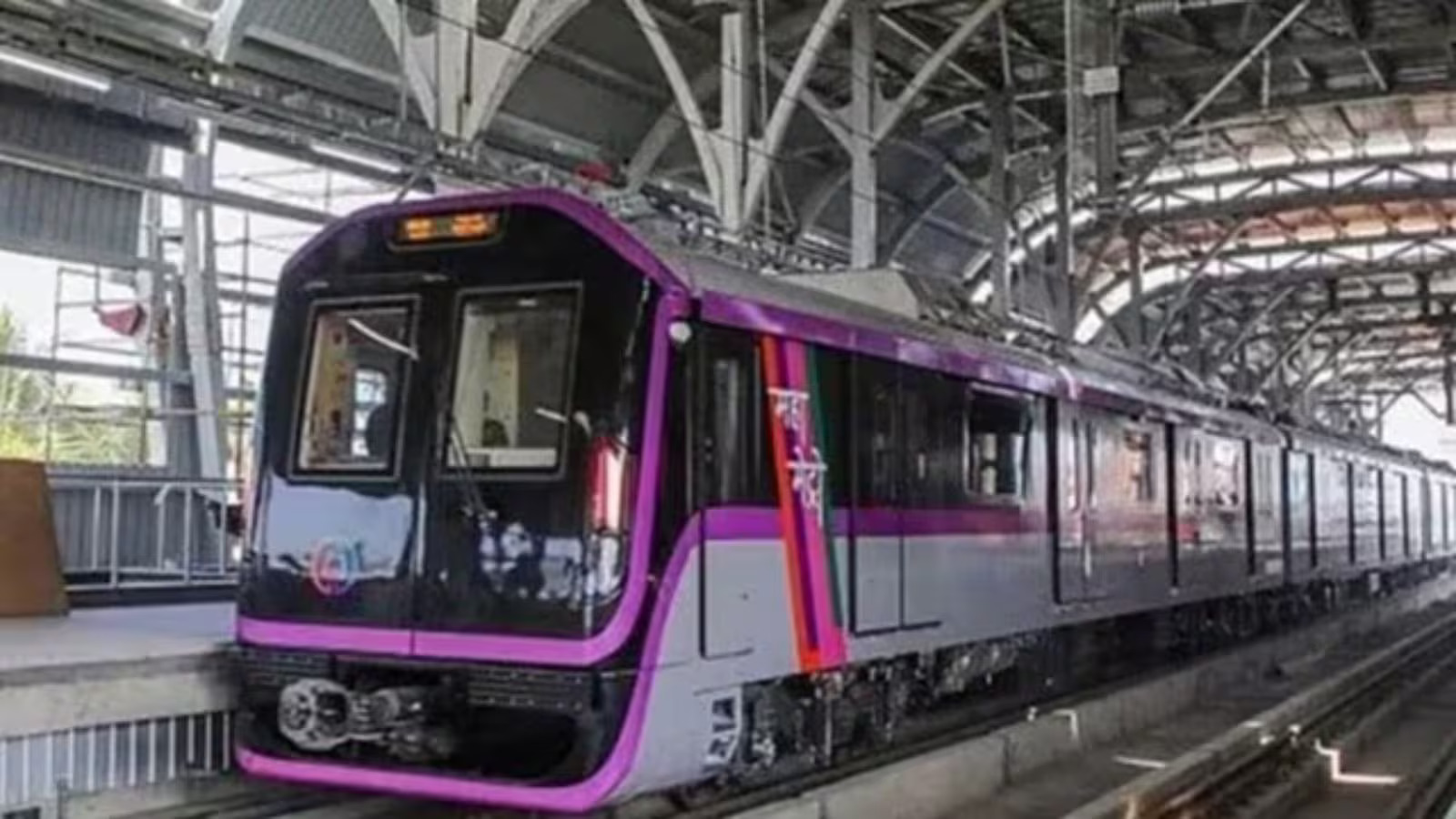
Pune Metro has recorded an unprecedented surge in passenger traffic, crossing over 5.45 lakh riders in just two days, triggered by traffic diversions imposed due to the annual Sant Tukaram and Sant Dnyaneshwar Palkhi processions. The religious event, locally known as the Wari, forced the closure of key arterial roads across central Pune and corridors connecting to Pimpri-Chinchwad, leaving citizens to rely heavily on the metro network for their daily commutes.
On Friday, June 20, the metro recorded its highest-ever single-day ridership with 3.19 lakh passengers. Of these, 1.50 lakh commuters travelled on Line 1 (PCMC to Swargate) and 1.68 lakh used Line 2 (Vanaz to Ramwadi). The high-volume ridership continued into Saturday, June 21, with 2.26 lakh passengers using the service—an almost two-fold increase from the metro’s average daily ridership. The Civil Court to Swargate stretch, which opened earlier this year, played a pivotal role in this spike, particularly as many Warkaris and their families were housed in the central parts of the city. The newly inaugurated segment helped bridge transit gaps between religious halts and residential zones, leading many first-time users to experience the metro.
Metro officials said the data shows both a behavioural shift among urban commuters and the growing credibility of metro services during high-demand events. “The Wari has become a real-world testbed for the utility of public transport in crisis and congestion scenarios. The metro has proven its worth as a sustainable and dependable mobility option for both residents and visitors,” an official stated. The Peth areas of central Pune, traditionally known for narrow lanes and high pedestrian activity, were closed to private vehicles during the two days. This redirection nudged commuters towards public transportation and led to metro stations near key city landmarks witnessing unprecedented footfalls. Many Warkaris were also seen purchasing tickets and exploring different parts of the city using the metro, some for the very first time.
According to Pune Metro’s public relations department, this year’s ridership during Wari outperformed last year’s highest single-day record of 1.99 lakh, set on June 30, 2023. Officials attributed the increase to improved connectivity, growing confidence in metro services, and aggressive awareness campaigns conducted prior to the Wari. Commuters have lauded the system for its speed and convenience. One commuter from Kothrud, who travelled to Kalyani Nagar on Friday, shared that the metro ride helped him bypass the usual traffic chaos. “It was fast, stress-free, and reliable. The stations were clean, and the frequency was well maintained,” he noted.
While Warkaris traditionally rely on foot processions and shared modes of transport, the metro provided an inclusive and climate-resilient alternative this year. Public transport experts noted that high visibility events like the Wari are ideal occasions to demonstrate the scalability and sustainability of mass rapid transit systems in Indian cities. Urban transport analysts have also observed that such spikes in usage offer vital data points for planning future expansions. With Pune Metro Phase 2 projects underway, officials are optimistic that similar commuter migration from private to public transport can be encouraged with improved reach and integration.
Despite being in its early years of operation, Pune Metro is increasingly becoming a crucial tool in the city’s mobility infrastructure. As the city continues to grapple with vehicular congestion and air quality issues, experts believe such systems are essential to achieving zero-carbon urban mobility targets. The success of the metro during the Wari procession has also sparked fresh interest among city planners and civic authorities to consider more strategic alignments of metro routes around major urban events and high-density zones.
The coming months will determine whether Pune Metro can sustain and build on this momentum. For now, its successful handling of commuter demand during Wari 2024 offers a hopeful blueprint for the future of public transport in Indian tier-1 cities.
Also Read : Air India Cuts 118 Weekly Narrow Body Flights on 19 Routes
