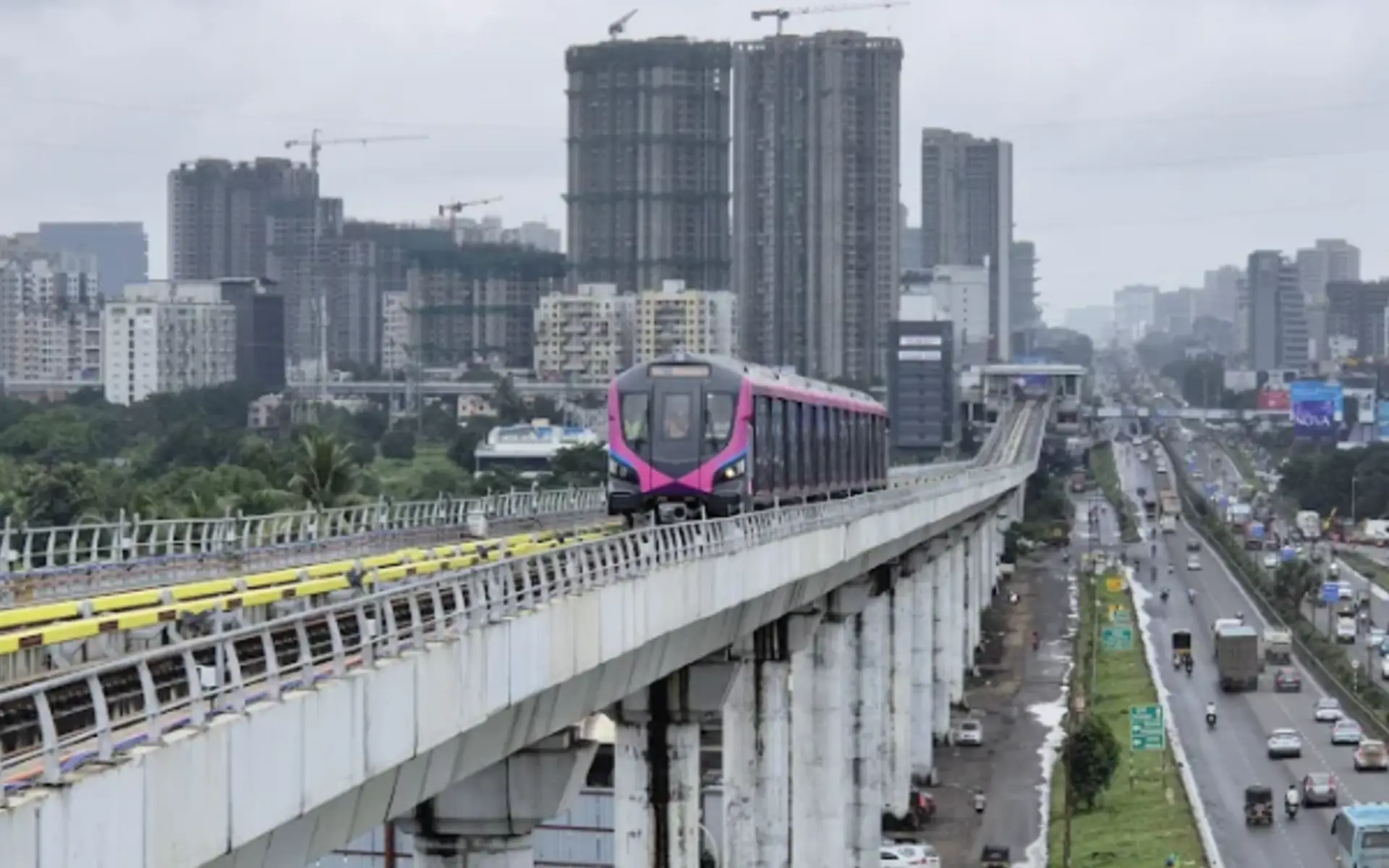
Pune’s long-anticipated metro link between Hinjawadi and Shivajinagar has entered its final pre-launch phase, with trial runs and system validations nearing completion ahead of a targeted May 2026 opening. The corridor is expected to transform daily commuting patterns across one of the city’s busiest economic stretches, connecting a major IT hub with central Pune.
Officials overseeing the project indicate that critical safety certifications and signalling integrations—often the final hurdles in metro commissioning—have been successfully concluded. With physical construction largely complete and operational systems stabilised, the Pune Metro Line 3 corridor is now positioned for regulatory clearances before passenger services begin.Urban mobility experts view this development as a pivotal step in addressing Pune’s long-standing dependence on road-based transport, particularly along the Hinjawadi axis. The corridor has seen exponential growth in both employment and residential density over the past decade, leading to severe congestion and extended travel times. By offering a high-capacity, time-efficient alternative, the metro line is expected to rebalance commuter flows and reduce pressure on arterial roads.
The initial phase will operationalise a set of key stations linking employment centres, educational institutions, and residential clusters. While full corridor completion will follow in stages, this phased rollout is designed to deliver early benefits to a significant share of daily commuters. Transport planners note that such staggered openings are increasingly common in large transit projects, enabling partial utilisation while remaining sections are finalised.A notable feature of the Pune Metro Line 3 project is its implementation under a public-private partnership model. This structure, still relatively uncommon in India’s metro ecosystem, is intended to distribute financial risk and improve execution efficiency. Industry observers suggest that the project’s performance could influence how future urban transit systems are financed and delivered across other Indian cities.
However, the broader impact of the corridor will depend on last-mile connectivity and integration with other modes of transport. Without seamless links to buses, shared mobility, and pedestrian infrastructure, the full potential of metro systems often remains underutilised. Experts emphasise the need for transit-oriented development policies around stations to encourage mixed-use growth and reduce reliance on private vehicles. From a sustainability standpoint, the metro expansion aligns with efforts to lower urban carbon emissions by shifting commuters towards mass transit. Reduced vehicular congestion can also improve air quality and urban health outcomes—an increasingly urgent priority for rapidly growing cities.
For Pune’s workforce, particularly those travelling to and from Hinjawadi, the upcoming launch represents more than just a new transport option. It signals a shift in how the city is planning its future—moving towards integrated, high-capacity mobility systems that support both economic growth and environmental resilience. As the project approaches its final approvals, attention will now turn to operational readiness, fare structures, and commuter adoption—factors that will ultimately determine the long-term success of this critical urban infrastructure investment.