


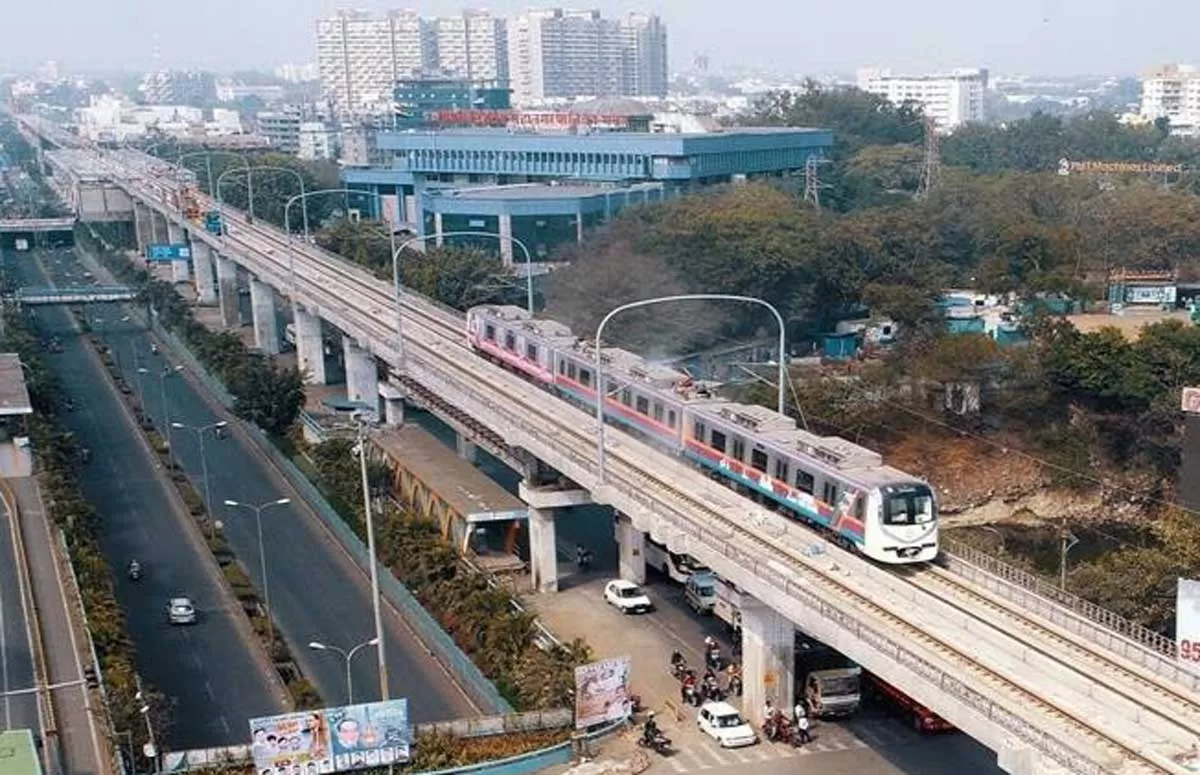
Pune marked Ganesh Chaturthi this year with a transport milestone, as Metro Line 3 carried out its maiden trial run beyond Hinjewadi, signalling a crucial step in reshaping the city’s urban mobility landscape. The test run, conducted between Mann Depot and Balewadi Stadium, represents the first movement of a trainset outside depot limits, laying the foundation for an eco-friendly transport corridor that will eventually connect Hinjewadi and Shivajinagar.
The 23.3-kilometre Hinjewadi–Shivajinagar line, developed under a Public-Private Partnership, is designed to integrate the city’s technology hubs with its civic core, offering 23 stations along the stretch. Once operational, the line is expected to ease congestion on arterial roads and cut travel time significantly, giving commuters a sustainable and reliable alternative to private vehicles. The corridor is scheduled for partial operations by September 2025, with full commissioning targeted for March 2026.
Also Watch: An Exclusive Interview with Sanjeev Jaiswal (IAS), CEO MHADA
Experts describe the trial as a breakthrough moment for Pune’s urban planning. The movement of the three-car Metropolis train reflects progress in a project that embodies both modern engineering and environmental responsibility. Powered by a 750 V DC third rail system, the trains can achieve a maximum speed of 85 km/h, carrying up to 1,000 passengers per trip. Their design is aligned with global standards of energy efficiency, helping the city move closer to its long-term vision of net-zero carbon mobility.
The line’s construction has been touted as a model for integrated development. The rolling stock is being manufactured in India, strengthening the domestic industrial ecosystem while adhering to sustainable production practices. Officials highlight that the Metro’s East–West connectivity will not only provide relief to the city’s roads but also reduce the carbon footprint of thousands of daily commutes. This aligns directly with Pune’s broader aspiration to build an equitable, low-emission urban transport framework that prioritises public mobility over car dependency.
