


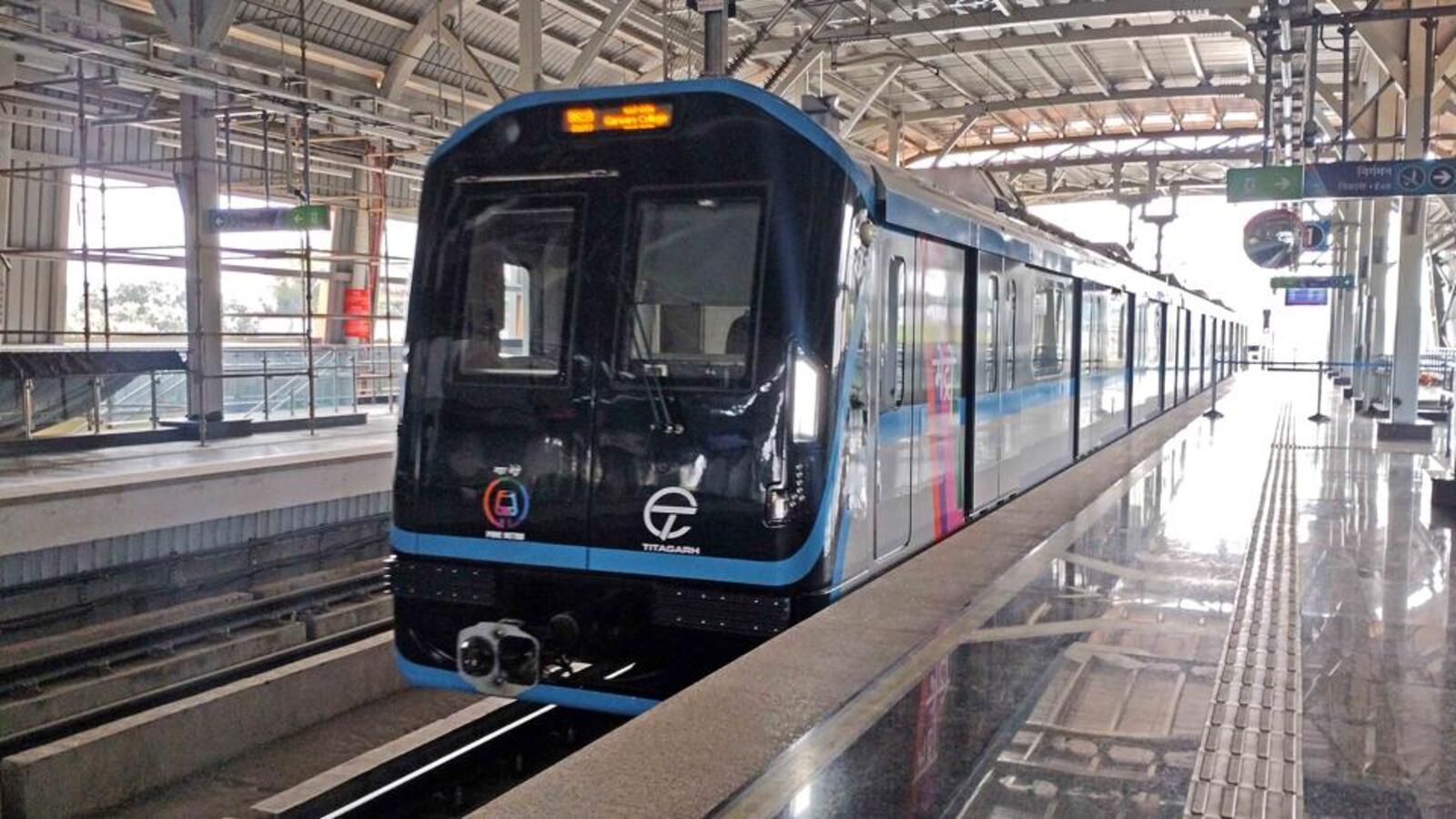
Pune Metro expansion to improve daily commute
Pune’s metro commuters are set to experience a faster and more efficient travel system as Maha Metro looks to enhance train frequency, coinciding with the third anniversary of Phase 1’s launch. The urban transit system is exploring the feasibility of running trains every six minutes during peak hours, a move that aims to accommodate the growing number of daily passengers. Currently, the Metro operates at a seven-minute frequency during rush hours, but with an increasing ridership of 1.5 lakh daily, officials believe that shorter intervals will significantly improve passenger convenience.
Maha Metro’s ambitious expansion began with the launch of the Vanaz-Garware College and PCMC-Phugewadi routes on March 6, 2022, when trains ran at 30-minute intervals. Since then, the network has evolved, and with the full-scale operation of the Vanaz-Ramwadi and PCMC-Swargate corridors from October 2024, footfall has surged. The metro service now runs until 11 pm, attracting more commuters seeking a reliable alternative to road congestion. To meet the proposed frequency enhancement, Maha Metro plans to add two additional rakes to its current fleet of 20. Officials, while finalising operational details, stress the necessity of these additional rakes to sustain the revised schedule.
The rising demand for Pune’s metro services highlights the city’s growing reliance on sustainable mass transit solutions. Regular commuters welcome the move, citing overcrowding on routes such as Ramwadi during peak hours. Many also emphasise the need for better last-mile connectivity, as a lack of feeder buses and auto services at metro stations remains a persistent concern. Parking shortages at several stations further hinder seamless accessibility, underscoring the need for integrated urban transport planning. The demand for an improved multimodal network has never been more pressing, as a well-connected metro system has the potential to curb Pune’s traffic congestion and reduce vehicular emissions.
Despite these advancements, gaps remain in the network’s infrastructure. Two critical stations—Khadki and Range Hills—are yet to be operational, delaying complete corridor connectivity. Maha Metro officials cite land acquisition challenges as the primary reason behind Khadki’s delayed completion, though it is expected to be functional by next month. However, the Range Hills station faces a longer wait, with construction likely to extend for another eight months. Negotiations with defence authorities are ongoing to facilitate the remaining work. As Maha Metro works towards optimising its services, its success in addressing these gaps will be crucial in shaping Pune’s future as a metro-reliant city.
