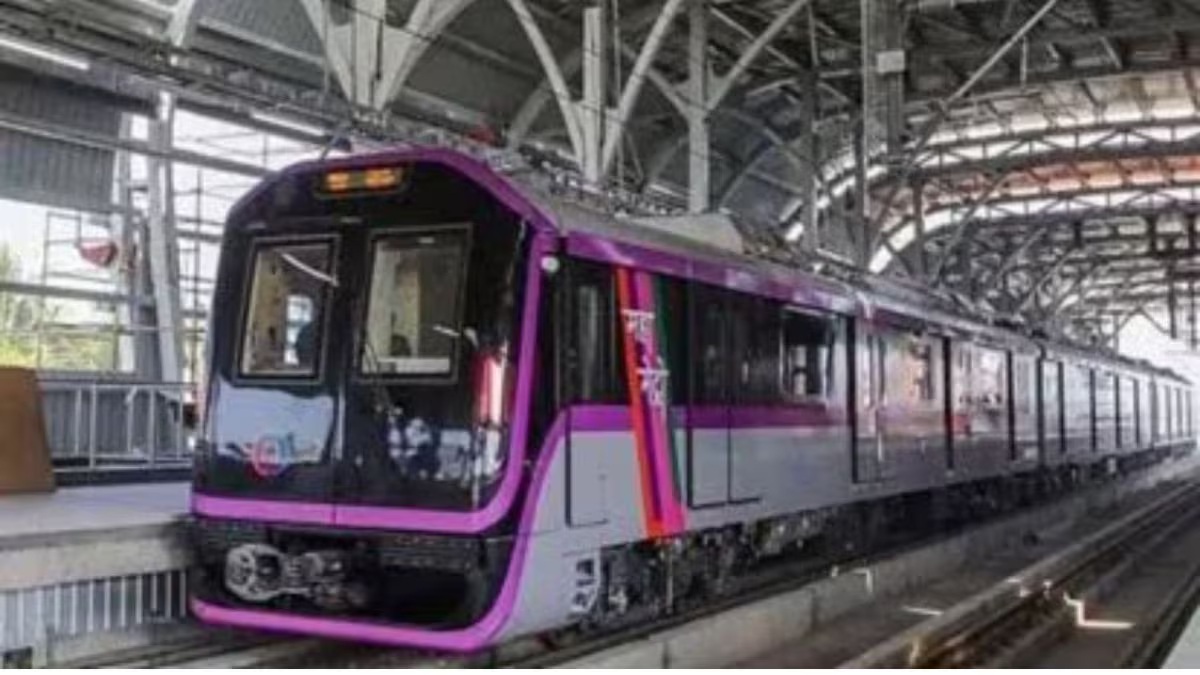
Pune’s expanding Metro network has reached an unexpected pause point. Despite operational coverage across two key corridors, average daily usage has hovered near two lakh passengers for several months, signalling structural challenges in how urban transit integrates with the city’s broader mobility ecosystem. Data from transport authorities shows that after a temporary surge during the festive season in late 2025, Pune Metro ridership returned to pre-festival levels and has since stabilised without meaningful growth. While seasonal spikes are typical for mass transit systems, the inability to convert occasional riders into daily commuters raises questions about last-mile accessibility, station-area planning, and multimodal coordination in one of India’s fastest-growing urban regions.
Urban mobility experts point to weak last-mile connectivity as the central constraint. Feeder bus services exist on paper across several stations, but limited frequency, irregular schedules, and route gaps reduce their usefulness for time-sensitive commuters. For many residents, particularly office-goers and airport-bound travellers, the uncertainty surrounding feeder availability negates the Metro’s time-saving advantage. Auto-rickshaws, often expected to fill this gap, have not emerged as a reliable solution. Shared mobility frameworks introduced around stations have seen inconsistent adoption, with commuters citing fare unpredictability and refusal for short-distance trips. This informal friction has disproportionately affected women, elderly riders, and first-time Metro users, undermining the inclusivity goals of public transport investments.
Station-area infrastructure presents another barrier. Several central-city stations lack organised two-wheeler and bicycle parking, forcing commuters to depend on informal or overcrowded facilities. Even terminal stations, designed as anchors for park-and-ride usage, remain constrained by limited land availability. Urban planners note that without integrated station precinct development, Metro systems struggle to shift private vehicle users at scale. From a climate and sustainability lens, the plateau in Pune Metro ridership represents a missed opportunity. Each unshifted commuter trip keeps pressure on road congestion, air quality, and carbon emissions in a city already grappling with vehicle-led growth. Transport economists argue that ridership growth is as much about reliability and ease as it is about network length.
Officials involved in Metro operations indicate that efforts are underway to redesign feeder routes and expand bus fleets, though public transport agencies continue to face resource constraints. Coordination between Metro authorities, municipal transport operators, and traffic regulators remains critical to unlocking latent demand. As Pune prepares for further corridor expansions and transit-oriented development zones, the current ridership stagnation offers an early lesson. Infrastructure alone does not deliver sustainable mobility outcomes. Seamless connections, predictable services, and people-first station design will determine whether Pune Metro ridership evolves from a milestone figure into a true urban mobility backbone.