


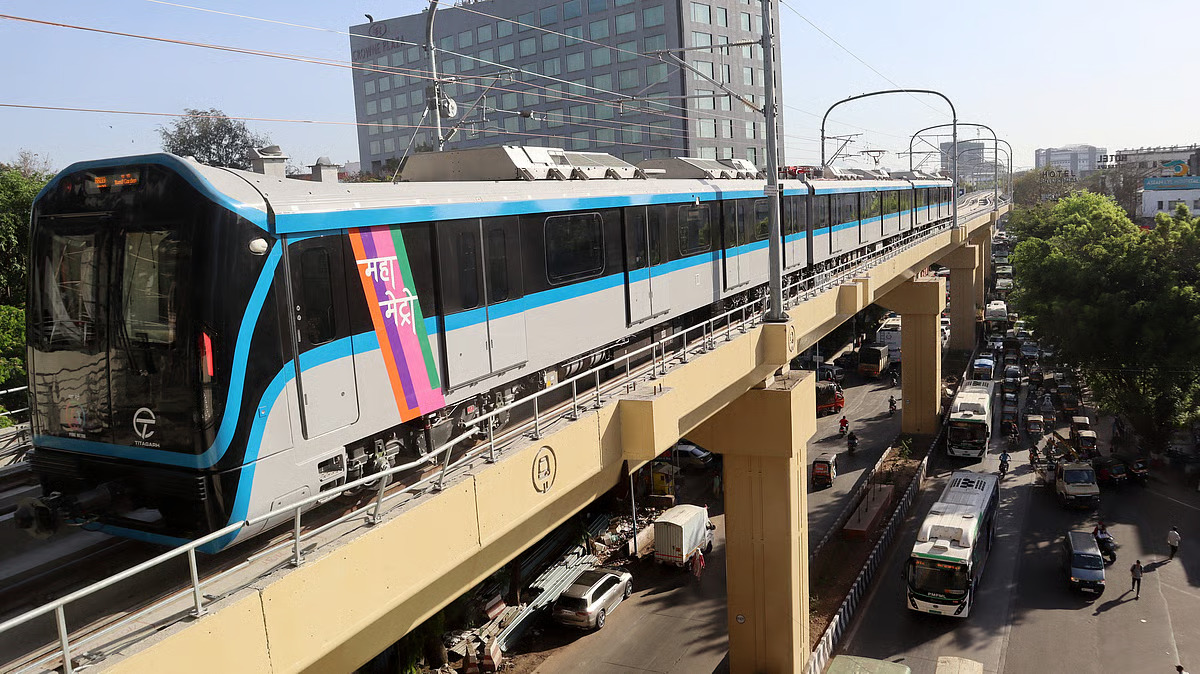
Pune Metro, serving the Pune and Pimpri-Chinchwad urban corridors, has achieved a significant operational milestone, carrying over 10 crore passengers since its launch in March 2022. The network’s expansion across multiple phases has not only enhanced urban mobility but also offered residents a sustainable, eco-friendly, and efficient alternative to road transport, helping reduce vehicular congestion and emissions in the rapidly growing city.
Officials from Maharashtra Metro Rail Corporation (Maha-Metro) highlighted that the metro has steadily transformed commuting patterns in Pune, offering reliable travel options for daily commuters. The network initially connected the Pimpri-Chinchwad Municipal Corporation (PCMC) area to key city zones, and the first phase saw a daily ridership of around 20,000–30,000. With each subsequent expansion, ridership has consistently increased, reflecting public confidence in the metro as a convenient and time-efficient transport mode. The second phase, which extended the line from Phugewadi to Civil Court and from Garware College to Ruby Hall Clinic in August 2023, boosted daily ridership to approximately 1 lakh–1.1 lakh passengers. The East-West corridor, spanning Ruby Hall Clinic to Ramwadi, launched in March 2024, further increased daily commuters to 1.2–1.3 lakh. Most recently, the opening of the underground section connecting District Court to Swargate in September 2024 pushed ridership to an estimated 1.6–2 lakh passengers daily.
Experts emphasise that Pune Metro’s growth aligns with broader sustainable urban transport goals, as the city works towards reducing dependency on private vehicles and curbing carbon emissions. By offering a high-capacity, rapid transit system, the metro contributes to creating gender-neutral, safe, and equitable urban travel options while supporting zero-net carbon initiatives. The phased expansion strategy has been central to the metro’s success, with meticulous planning for integration with existing public transport networks, including buses and suburban trains. Officials have also prioritised accessibility, station safety, and passenger convenience, ensuring the metro’s services remain attractive for a diverse demographic, from office commuters to students.
Looking ahead, Maha-Metro plans to complete the remaining phases of the network, including extended routes and additional feeder connections, which are expected to further enhance connectivity across Pune and Pimpri-Chinchwad. Authorities are also evaluating technology upgrades and operational improvements to handle increasing passenger demand efficiently while maintaining sustainability standards. As Pune continues its trajectory towards becoming a green and smart city, the metro’s achievements highlight the critical role of modern mass transit in shaping environmentally conscious, inclusive, and resilient urban ecosystems.
Also Read: BMC Launches Tenders For Battery Powered Vehicle Dust Suppression Systems To Reduce Pollution
