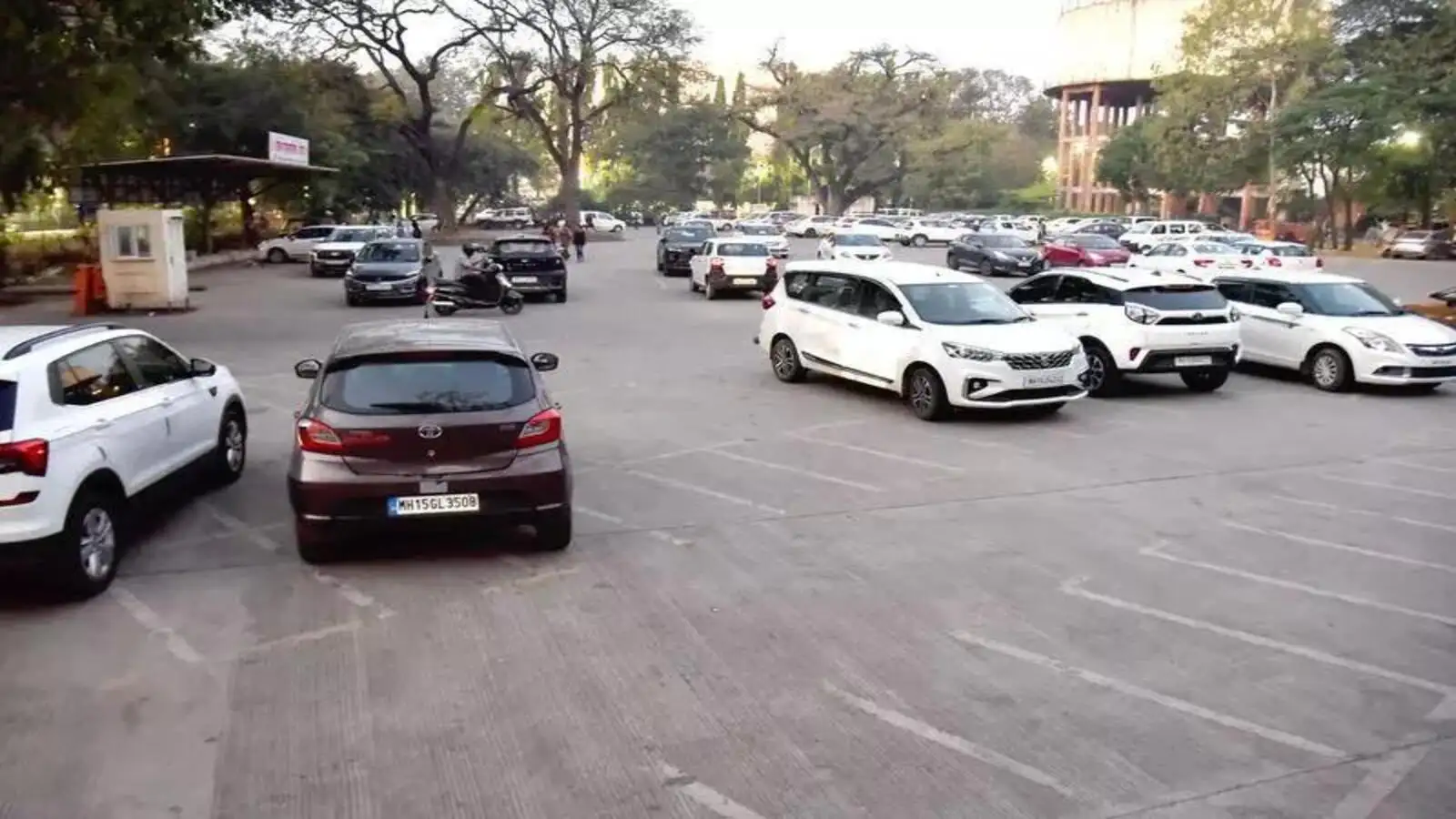
Pune’s expanding metro network is facing a familiar urban challenge at one of its busiest stops, where the absence of planned parking infrastructure is undermining last-mile connectivity and discouraging daily ridership. At Nal Stop, a key interchange along the city’s metro corridor, commuters report mounting difficulties in accessing the station due to inadequate two-wheeler parking and the complete absence of designated space for cars.
The issue has taken on greater urgency as metro usage grows among office-goers, students, and older residents seeking a reliable alternative to congested roads. While the metro was designed to reduce dependence on private vehicles, the lack of organised parking near Nal Stop has resulted in vehicles spilling onto surrounding streets, narrowing carriageways and intensifying peak-hour congestion along Karve Road and adjacent neighbourhoods. Urban mobility experts point out that Pune’s travel patterns differ from cities with dense bus or suburban rail coverage. A large share of commuters rely on two-wheelers for short distances to reach mass transit. Without structured parking at stations like Nal Stop, the metro’s promise of seamless, low-emission mobility remains only partially realised. Several regular users say the daily uncertainty around finding a safe parking spot often pushes them back to using personal vehicles for the entire journey.
Local residents have also raised concerns about the impact on neighbourhood liveability. Unregulated parking around the station has reduced road capacity, disrupted pedestrian movement, and increased the risk of minor accidents. Residents argue that station-area planning did not adequately anticipate the volume of feeder traffic, particularly in a zone with limited open land and high commercial activity. Civic activists have described the situation as symptomatic of a broader gap between transit construction and integrated transport planning. They note that multiple metro stations across the city face similar constraints, suggesting a systemic issue rather than a location-specific oversight. Without addressing last-mile access, they warn, public investment in metro infrastructure may not translate into proportional gains in ridership or emissions reduction.
Officials associated with metro operations have acknowledged that parking shortages have been flagged repeatedly and have indicated that land allocation for parking falls under the jurisdiction of civic authorities. Municipal officials, in turn, have confirmed that proposals are under consideration to identify suitable plots for structured parking catering to both two-wheelers and cars near the station. Urban planners say solutions could include multi-level parking, shared use of nearby vacant plots, or integrating feeder services such as e-rickshaws and cycle tracks. As Pune positions the metro as a cornerstone of its sustainable mobility strategy, addressing access constraints at high-footfall stations like Nal Stop will be critical to ensuring that public transport remains convenient, inclusive, and capable of scaling with the city’s growth.
Pune Metro Access Hit by Parking Gaps