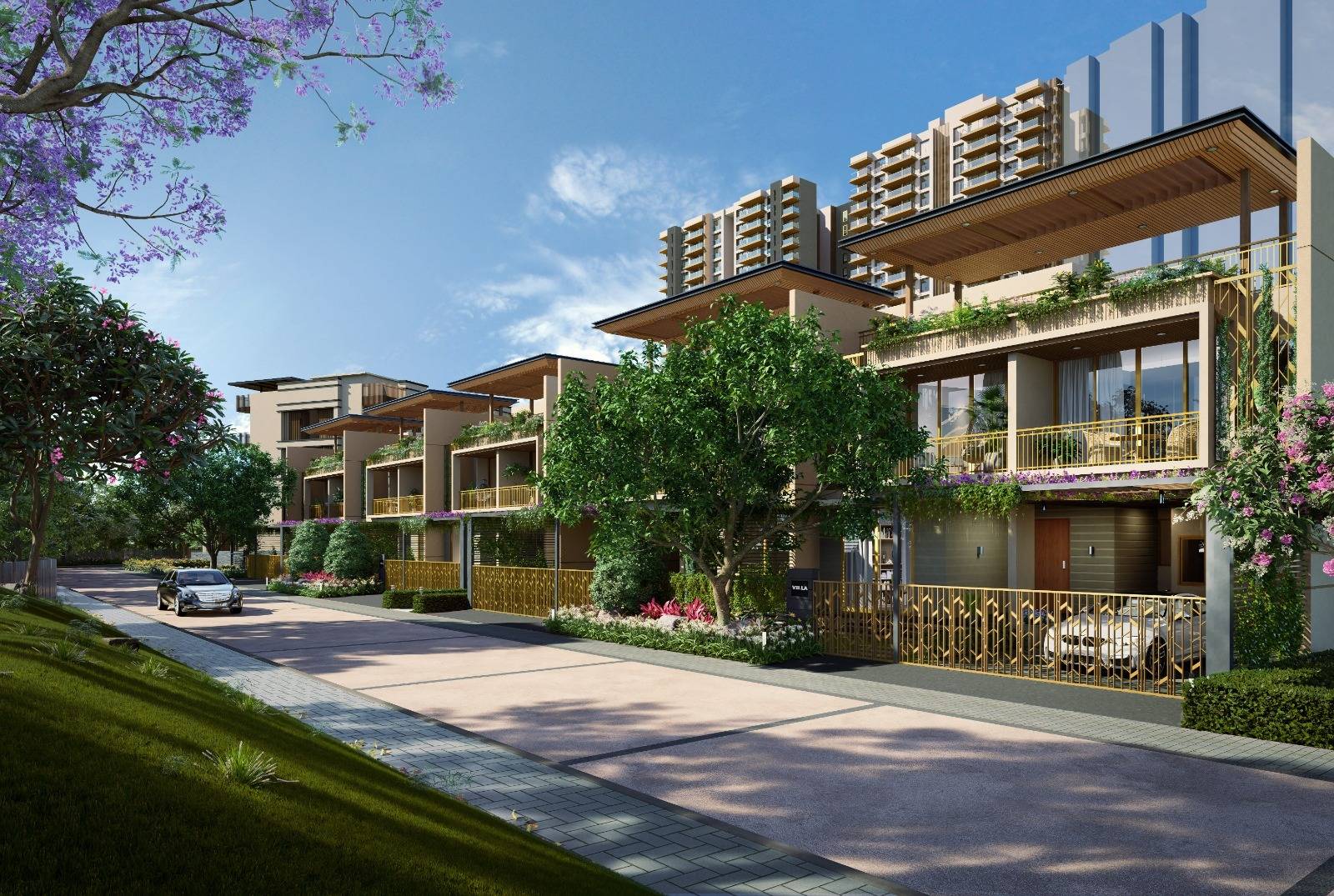
Shapoorji Pallonji Real Estate has introduced a limited collection of 25 luxury villas and villaments in Pune’s Hadapsar Annexe, signalling a strategic shift toward low-density housing in one of the city’s fastest-growing corridors. With prices starting at ₹4.7 crore and rising beyond ₹6.6 crore, the launch reflects rising appetite for expansive, land-linked homes among high-income buyers. The development, positioned within a mature mango orchard, departs from Pune’s prevailing high-rise residential model. Instead of maximising vertical density, the project restricts supply to 13 standalone villas and 12 hybrid units that combine features of villas and apartments. Unit sizes range from roughly 3,400 sq ft to over 5,600 sq ft, underscoring a growing preference for large-format residences that integrate private gardens, terraces and double-height interiors.
The move comes as premium homebuyers increasingly seek privacy and open green environments within urban boundaries. Real estate analysts say Pune’s post-pandemic housing cycle has favoured larger homes, especially in peripheral growth zones where land parcels allow for lower floor-area intensity. The luxury villas segment, while niche, has shown resilience amid broader moderation in mid-income housing. Hadapsar Annexe has emerged as a high-potential micro-market due to its proximity to established commercial hubs such as Magarpatta, Amanora and SP Infocity. Planned infrastructure including a proposed ring road, metro connectivity and a multi-level flyover corridor is expected to improve accessibility across East Pune. Long-term connectivity proposals linked to a new international airport near Saswad may further influence property valuations, though timelines remain subject to regulatory clearance.
Urban planners note that boutique luxury villas raise complex land-use questions. While low-density formats preserve on-site greenery and reduce built-up congestion, they also consume larger land parcels per household. In fast-growing cities like Pune, balancing exclusivity with equitable land distribution remains a policy challenge. Experts argue that integrating water recycling, solar generation and tree preservation into such projects can offset some environmental trade-offs. Industry observers suggest that scarcity-driven launches with fewer than 30 units are designed to create differentiated positioning in an increasingly competitive premium market. Limited inventory, combined with brand reputation, often appeals to high-net-worth individuals seeking both lifestyle value and long-term capital appreciation.
The broader implication for Pune’s housing landscape is a gradual diversification of supply typologies. As infrastructure extends outward and land availability tightens in core zones, developers are experimenting with formats that blend green cover with urban proximity. Whether luxury villas become a sustained trend will depend on regulatory clarity, infrastructure execution and how effectively projects align with climate-responsive design principles in a city facing rising heat stress and groundwater pressures.