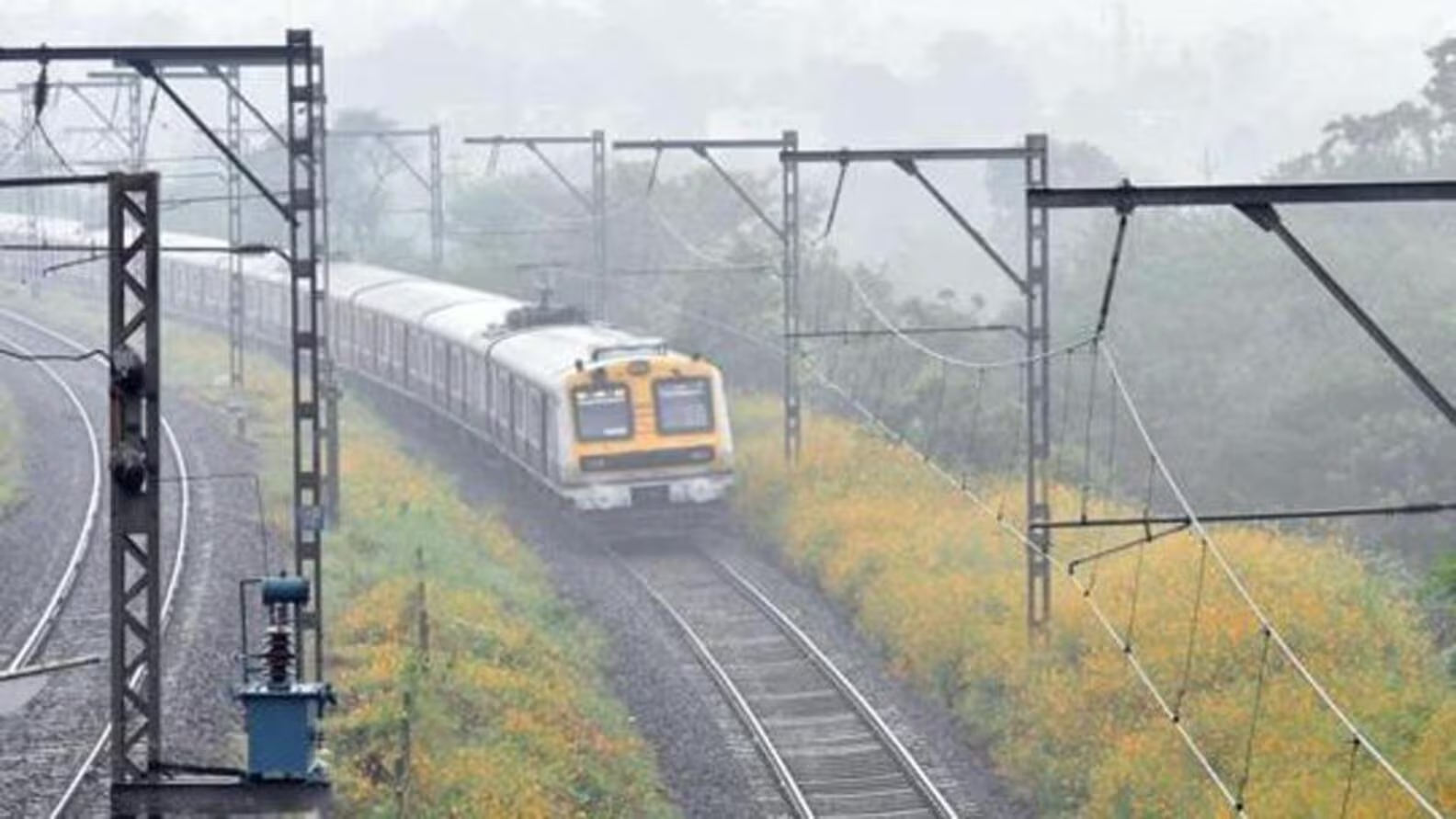
Train speeds on the Pune–Lonavla corridor are set to rise to 130 kmph by mid-2026 as railway authorities intensify infrastructure upgrades along the busy suburban and intercity stretch. The move is expected to trim travel time modestly while strengthening operational safety on one of western Maharashtra’s most critical commuter routes. The 152 track-kilometre section between Pune and Lonavla currently permits a maximum speed of 110 kmph. Railway engineers are replacing overhead catenary and contact wires and installing Automated Tensioning Devices (ATDs) to enable higher speeds with greater stability. Of the total stretch, more than 130 track kilometres have already undergone upgradation, with the remaining work scheduled for completion by June 2026.
The Pune Lonavla rail upgrade is part of a broader push by Indian Railways to modernise key corridors connecting major economic centres. The section not only serves daily suburban commuters but also forms a vital link for long-distance trains traversing the Mumbai–Pune–Bengaluru axis. Railway officials indicate that ATDs will maintain consistent tension in overhead equipment across seasonal temperature variations, a critical factor in ensuring safe high-speed operations. Stable tension reduces the risk of wire sagging or snapping, thereby enhancing reliability during peak summer and monsoon months.
While the anticipated time saving of four to five minutes may appear incremental, mobility experts note that cumulative gains across multiple services each day can improve timetable efficiency and network capacity. For thousands commuting between Pune’s employment hubs and the residential clusters of the hill station town, even minor reductions can translate into meaningful daily time savings. The Pune Lonavla rail upgrade also aligns with broader sustainability objectives. Faster, dependable rail services can encourage modal shift away from private vehicles on the Mumbai–Pune Expressway corridor, reducing congestion and lowering carbon emissions. Transport planners argue that incremental speed enhancements, when paired with punctuality improvements, strengthen rail’s competitiveness as a low-emission alternative.
Execution has largely been planned during scheduled maintenance blocks, often on weekends, to minimise passenger inconvenience. Industry observers say such phased implementation reflects a balancing act between capacity enhancement and uninterrupted service on high-density routes. As urban expansion intensifies across the Pune metropolitan region, reliable intercity rail connectivity is emerging as a critical backbone for inclusive growth. With real estate development spreading towards the western ghats and satellite towns, transport resilience will shape commuting patterns and economic productivity.
If delivered on schedule, the upgraded corridor will mark another step in incremental but steady railway modernisation reinforcing the role of rail infrastructure in building climate-conscious, future-ready cities.
Pune Lonavla Rail Upgrade Targets 130 Kmph