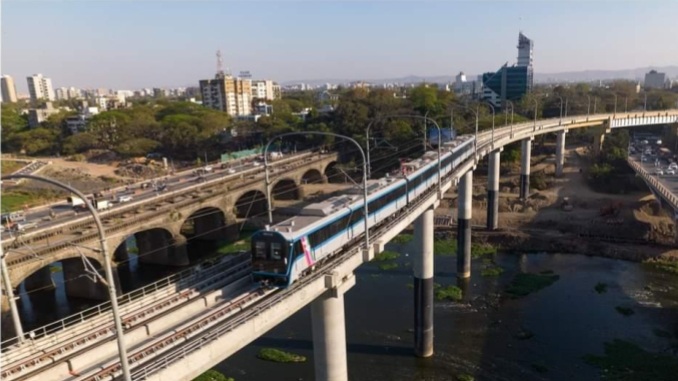
Pune is moving closer to reshaping its eastern and south-eastern transit network with the planned rollout of Phase 2 of its metro system, covering nearly 17 km across Hadapsar, Loni Kalbhor, and Saswad Road. The expansion aims to strengthen public transport access in fast-growing residential and industrial hubs while alleviating road congestion and supporting climate-resilient mobility.
Phase 2 will deliver two distinct corridors. The first, linking Hadapsar to Loni Kalbhor, will span 11.35 km and incorporate 10 stations strategically positioned to serve densely populated and developing neighbourhoods. Key stops include Hadapsar Bus Depot, Stud Farm, Manjari Phata, and Loni Kalbhor, reflecting the city’s intention to integrate emerging residential clusters with existing transport nodes. Urban planners highlight that such connectivity is essential to reduce reliance on private vehicles, curb emissions, and ensure equitable access for daily commuters.
The second corridor will connect Hadapsar to Saswad Road railway station over 5.57 km with four elevated stations, including Fursungi IT Park and Saswad Road. Analysts note that this line is particularly important for industrial commuters, as the Fursungi-Saswad belt has witnessed rapid commercial and residential growth. The corridor’s design is expected to accommodate peak-hour commuter flows, promoting a more sustainable modal shift from road to rail. Authorities have initiated the recruitment of detailed design consultants, a critical stage that will determine station layouts, structural engineering solutions, and passenger circulation patterns. Experts suggest that careful integration with existing roads and urban infrastructure will be necessary to maintain efficient mobility while preserving surrounding environmental and social assets.
The expansion comes amid rising urbanisation pressures in eastern Pune, where rapid residential development has outpaced public transport availability. By linking previously underserved suburbs to core city nodes, Phase 2 could improve access to jobs, reduce travel times, and enhance the city’s resilience to traffic congestion and pollution. Economic analysts emphasise that such infrastructure upgrades can also catalyse local commercial growth, encourage responsible real estate development, and support the city’s broader zero-carbon transport ambitions. While the tendering process marks the official transition from planning to implementation, urban affairs observers caution that careful monitoring of project timelines, construction standards, and environmental safeguards will be crucial. Once operational, the Hadapsar–Loni Kalbhor and Hadapsar–Saswad corridors are poised to set benchmarks for inclusive, climate-conscious urban transit expansion in Pune.