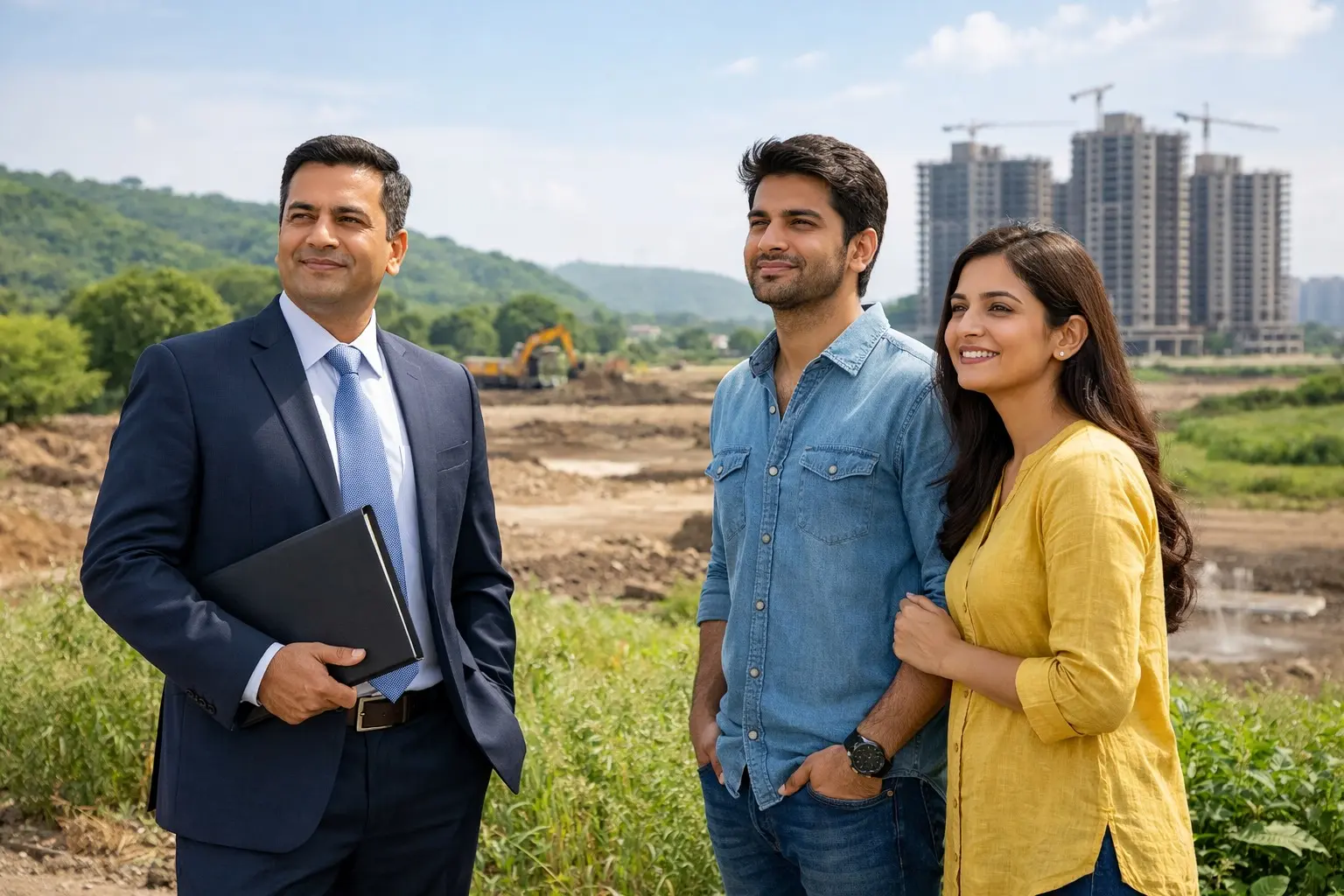
A significant land transaction in Pune has underscored continued developer confidence in the city’s residential market, with a local real estate firm acquiring a parcel valued at around ₹3 billion. The deal points to sustained momentum in land banking as builders position themselves to meet future housing demand in one of India’s fastest-growing urban regions.
The newly acquired site is expected to be developed into a residential project, contributing to the city’s expanding housing inventory. The Pune land acquisition reflects a broader trend where developers are actively securing strategically located parcels in anticipation of steady end-user demand, particularly from professionals employed in the technology and services sectors. Real estate analysts indicate that such investments are typically guided by long-term growth projections rather than immediate market cycles. Pune’s relatively stable property market, supported by employment generation and infrastructure improvements, continues to attract capital despite periodic fluctuations in sales velocity. The current Pune land acquisition aligns with this approach, where land procurement serves as a pipeline for future project launches.
From an urban planning perspective, the location and scale of land transactions play a critical role in shaping city expansion. As Pune’s core areas become denser, peripheral zones are witnessing increased developer interest. This outward growth, while enabling new housing supply, also places pressure on civic infrastructure. Experts emphasise that land development must be accompanied by parallel investments in transport networks, water systems, and social infrastructure to ensure balanced urbanisation. The economic implications of such deals extend beyond real estate. Land acquisitions of this scale generate downstream activity in construction, design, and allied industries, creating employment opportunities across skill levels. They also contribute to local government revenues through development charges and property taxes, which can be reinvested into urban infrastructure.
However, the environmental dimension of expanding city boundaries is becoming increasingly significant. Urban planners caution that unchecked development on the outskirts can lead to the loss of natural landscapes and increased carbon footprints due to longer commuting distances. Integrating sustainable design practices—such as energy-efficient buildings, water conservation systems, and adequate green cover—will be essential to mitigate these impacts.
The deal also reflects a competitive land market, where developers are seeking to secure parcels ahead of anticipated price appreciation.
As infrastructure projects, including road expansions and transit corridors, improve connectivity, land values in emerging areas are expected to rise, further intensifying acquisition activity.
Looking ahead, the success of developments arising from this Pune land acquisition will depend on timely execution, pricing strategies, and alignment with evolving buyer preferences. As Pune continues to grow, the challenge for developers and policymakers alike will be to ensure that new projects contribute to a more inclusive, well-serviced, and environmentally resilient urban landscape.
Pune Land Deal Signals Rising Real Estate Activity