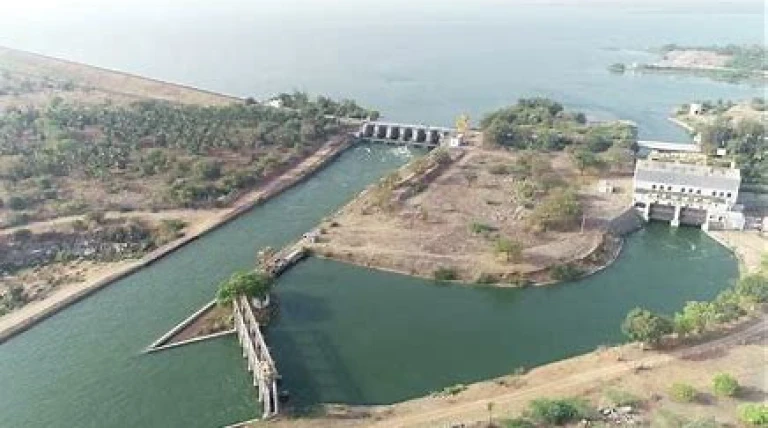
A long-delayed upgrade to the Kukadi left bank canal network has moved from promise to execution, offering renewed certainty to farm economies across parts of Pune, Ahilyanagar, and Solapur districts. State authorities have approved a large-scale rehabilitation package for the ageing irrigation system, with construction activity now visible on several high-risk stretches. For regions repeatedly hit by erratic water supply, the intervention marks a turning point for agricultural planning and rural incomes.
Commissioned in the late 1970s, the Kukadi irrigation system spans roughly 250 kilometres and supports thousands of hectares of cultivation. Over time, structural fatigue, unlined sections, and repeated breaches led to extensive water losses. Tail-end villages, particularly in Junnar and Ambegaon tehsils, bore the brunt—often receiving water too late or not at all. The consequences were visible in delayed sowing cycles, declining yields, and growing debt stress among small and marginal farmers. The current works focus on concrete lining and targeted restoration of vulnerable canal segments, backed by a sanctioned outlay of about ₹240 crore. Officials overseeing the project say the objective is to curb seepage, stabilise flow volumes, and restore predictability across the command area.
Tendering has been completed for major packages, and execution is planned within a tight one-year window to minimise disruption to irrigation schedules.
For agricultural markets, the implications are significant. Reliable water access allows farmers to shift from low-risk, low-return crops to higher-value produce, improving household incomes and stabilising local supply chains. Economists tracking rural regions note that irrigation certainty also supports allied sectors from agri-logistics to food processing creating a multiplier effect beyond farm gates.
Environmental planners see additional benefits. Reduced leakage limits unintended waterlogging and soil degradation, while efficient conveyance lowers the overall demand on reservoirs. In a climate-stressed region, such efficiency gains are increasingly critical to balancing agricultural needs with urban and ecological water requirements. The Kukadi left bank canal upgrade also highlights the importance of maintenance in public infrastructure. For decades, incremental repairs were deferred, compounding losses and social frustration. The current push reflects a broader shift towards asset renewal rather than emergency fixes principle urban planners argue is equally relevant for city water networks and peri-urban growth corridors.
Farm representatives, while welcoming the work, emphasise the need for continuous monitoring. Quality lapses at this stage could lock in problems for another generation. Officials acknowledge the concern and say inspection protocols and phased testing will be key before full-scale water releases resume. As work progresses, attention will turn to operational readiness and equitable distribution once the canal is fully functional. If executed as planned, the Kukadi left bank canal restoration could serve as a template for reviving ageing irrigation assets linking climate resilience, responsible infrastructure investment, and inclusive rural growth in one of Maharashtra’s most water-sensitive regions.
Pune Kukadi left Bank Canal Revival Begins