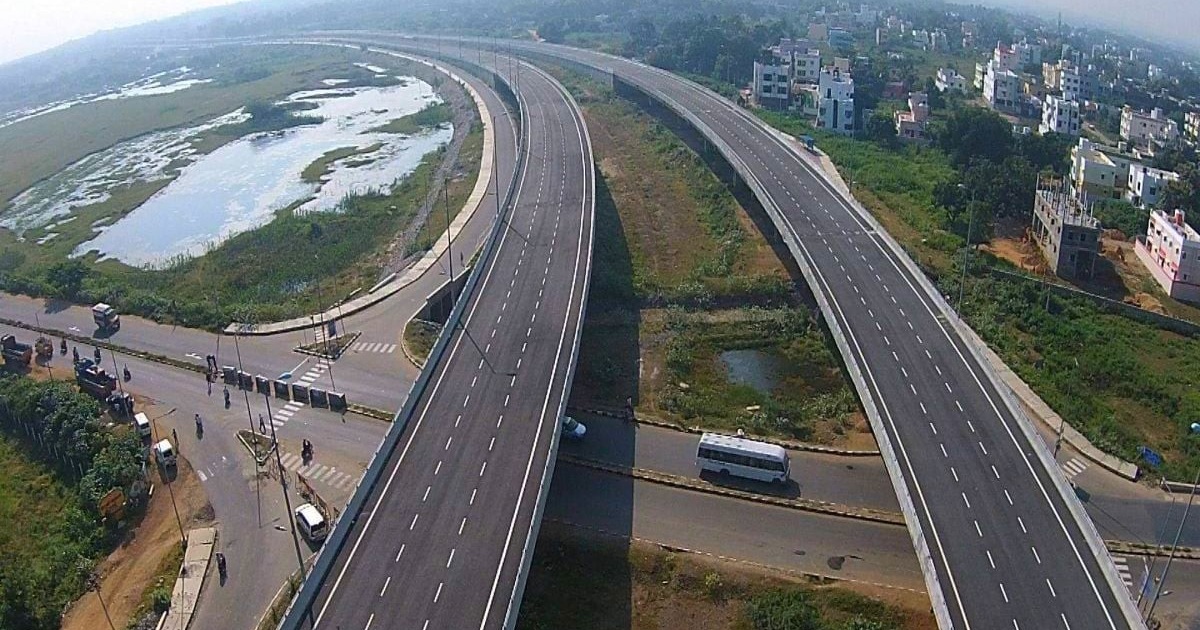
Pune is approaching a critical inflection point in its urban transport strategy as the first phase of the Pune Outer Ring Road moves closer to execution readiness, signalling a shift in how one of India’s fastest-growing cities manages congestion, freight movement and peripheral growth. Planned as a high-capacity, access-controlled corridor around the metropolitan area, the project is expected to recalibrate daily commutes while reshaping long-term land use patterns. Designed and implemented by the state road development agency, the Pune Outer Ring Road is structured as a continuous loop formed by eastern and western alignments skirting the city’s expanding edges.
The objective is straightforward but consequential: separate local urban traffic from long-distance and commercial vehicles that currently funnel through Pune’s arterial roads, adding to congestion, travel delays and accident risk. Urban planners involved in the project note that the ring road’s controlled-entry design allows traffic to move without interruptions caused by junctions, traffic signals or mixed-use access points. This approach, widely used in mature metropolitan regions, is expected to significantly cut travel time for logistics operators while freeing up inner-city road capacity for public transport, cyclists and pedestrians. Preparatory work has progressed steadily. Land surveys, alignment finalisation and statutory clearances are largely in place, according to officials overseeing the programme.
Construction activity has begun in sensitive stretches near reservoirs and uneven terrain, where bridges and tunnels are being built to maintain ecological continuity while ensuring uninterrupted vehicular movement. Engineers say these structures are essential for navigating Pune’s topography without fragmenting natural water systems. Beyond traffic management, the Pune Outer Ring Road carries broader environmental implications. Transport analysts point out that rerouting heavy vehicles away from dense neighbourhoods could lower vehicular emissions in residential zones, contributing to improved air quality. Reduced idling and smoother traffic flow also translate into fuel efficiency gains, aligning the project with low-carbon mobility objectives without explicitly positioning it as a climate intervention. The ring road’s integration with national and state-level corridors, including proposed greenfield expressways, strengthens Pune’s role as a regional economic node. Faster freight movement is expected to benefit manufacturing clusters, warehousing hubs and peri-urban industrial zones, while also improving supply chain reliability for businesses operating within the city.
Equally significant is its impact on urban form. Real estate and planning experts caution that while improved connectivity can unlock development potential along the periphery, it must be guided by zoning discipline, public transport access and basic services. If managed carefully, the corridor could enable decentralised employment centres and reduce pressure on Pune’s already saturated core. As construction advances, the success of the Pune Outer Ring Road will ultimately be measured not only by speed and capacity, but by how effectively it supports safer streets, cleaner air and more balanced urban growth in a city that continues to expand outward as much as it grows upward.