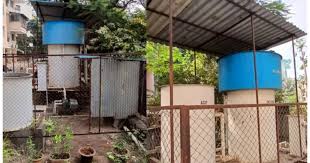
Pune Housing Societies To Install Sewage Treatment Sensors
Pune’s civic administration has taken a decisive step to enforce operational accountability for wastewater infrastructure in private housing complexes, mandating sensor‑based monitoring of sewage treatment plants (STPs) in large residential societies across the city. The move is designed to curb untreated effluent release that undermines river health and urban sanitation standards. Nearly 750 societies with more than 100 dwelling units each will now be required to install digital sensors that feed performance data into a central municipal dashboard.
Urban planners and environmental specialists warn that rapid urbanisation in Indian cities often strains ageing sanitation networks, with untreated wastewater contributing to river pollution and public health risks. In Pune, authorities have struggled with incomplete effluent capture and societies intermittently shutting down STPs to cut costs, a practice that allows raw or poorly treated sewage to enter drains and downstream waterways. The new sensor regime seeks to provide real‑time visibility into plant operations, flagging failures in treatment efficiency or non‑operation and enabling quicker enforcement by civic engineers.
Officials say the initiative builds on digital platforms already deployed under the broader Mula‑Mutha River Pollution Abatement Project, where sensors are used on municipal facilities to help track compliance with discharge standards. The current expansion to private infrastructure signals a shift toward city‑wide digital water governance that relies on data streams rather than periodic manual inspections, a model increasingly adopted in progressive urban sanitation frameworks. Experts highlight that robust monitoring not only helps prevent untreated discharge but also supports efforts to recycle treated water for non‑potable urban uses, thereby relieving pressure on freshwater supplies.
Beyond sensor deployment, Pune’s water management strategy includes a planned upgrade of six municipal STPs situated along key river corridors and the construction of 11 new treatment facilities, expanding overall city treatment capacity. These actions are part of a larger effort under central urban development schemes to foster climate‑resilient infrastructure that mitigates pollution risk while supporting equitable access to sanitation services.Critically, the sensor mandate also reflects an emerging governance trend where citizens and civic bodies demand greater transparency and performance tracking for essential urban systems. For Pune’s residents — particularly those living downstream of dense residential clusters — the rollout could mean tangible improvements in local water quality and fewer contamination events linked to wastewater mismanagement. Going forward, success will depend on how effectively the municipal corporation integrates sensor data into enforcement routines and encourages societies to adopt maintenance‑focused practices rather than intermittent operation.