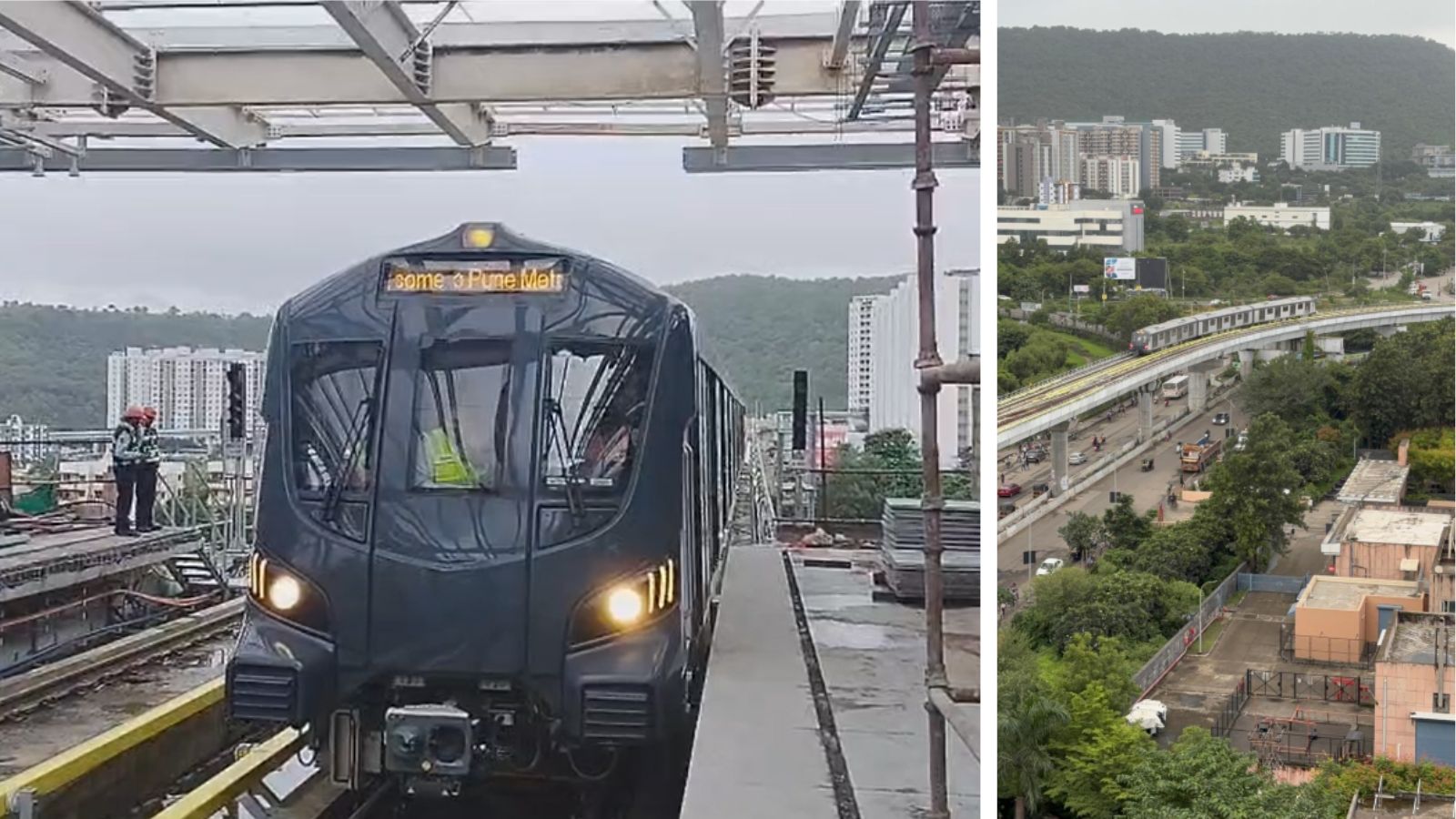
Pune’s long-awaited Hinjawadi–Shivajinagar Metro corridor has moved significantly closer to carrying passengers after completing a critical safety and technical assessment, marking a decisive moment for one of the city’s most consequential urban transport projects. The development matters not just for daily commuters, but for Pune’s broader push towards low-carbon mobility, decongested roads and balanced urban growth between its historic core and fast-expanding technology hubs.
The inspection was conducted by the national rail systems certification authority responsible for validating operational readiness across metro networks in India. Such clearances are mandatory before any urban rail system can transition from construction to public service. With this stage concluded, the Pune Metro Line 3 corridor has entered the final stretch that typically precedes trial operations and phased commissioning. Industry experts note that the Hinjawadi–Shivajinagar alignment holds strategic importance for Pune’s economy. By directly linking the city’s central business districts with its largest IT and employment cluster, the line is expected to significantly cut commute times for thousands of daily workers. Urban planners see this as a corrective step to years of road-led growth that left western Pune heavily congested and increasingly car-dependent.
On-ground progress reflects this momentum. Station structures along the corridor are nearing completion, with platforms, access points and passenger circulation areas being readied in parallel. Systems integration including signalling, power supply and communications is underway alongside finishing works such as interiors, accessibility features and safety installations. Officials overseeing the project indicate that multiple agencies are now working in close coordination to align civil, electrical and operational milestones. Rolling stock availability has also advanced steadily. A majority of the metro trainsets planned for the corridor have already arrived, allowing operators to begin system compatibility checks and preparatory runs. Transport analysts highlight that early delivery of trains reduces commissioning risk and helps compress the timeline between trials and commercial launch.
As per the current project roadmap, most stations on the corridor are targeted to open to passengers by the end of March. Before that, authorities will undertake phased trial runs, stress-testing systems under varying conditions to ensure reliability and safety. These steps, while time-consuming, are seen as essential for building long-term public confidence in mass transit. Beyond mobility, the corridor is expected to reshape land use patterns. Real estate consultants point out that improved metro access typically drives demand for mixed-use development around stations, encouraging denser, transit-oriented growth rather than outward sprawl. For Pune, this aligns with climate resilience goals by reducing emissions from private vehicles and promoting walkable neighbourhoods.
The coming months will therefore be critical. Successful commissioning of Metro Line 3 could signal a shift in how Pune manages growth moving from reactive road expansion to planned, people-first public transport. The challenge ahead lies in ensuring seamless last-mile connectivity and affordable access so that the benefits of this infrastructure investment are widely and equitably shared.
Pune Hinjawadi Shivajinagar Metro enters final phase