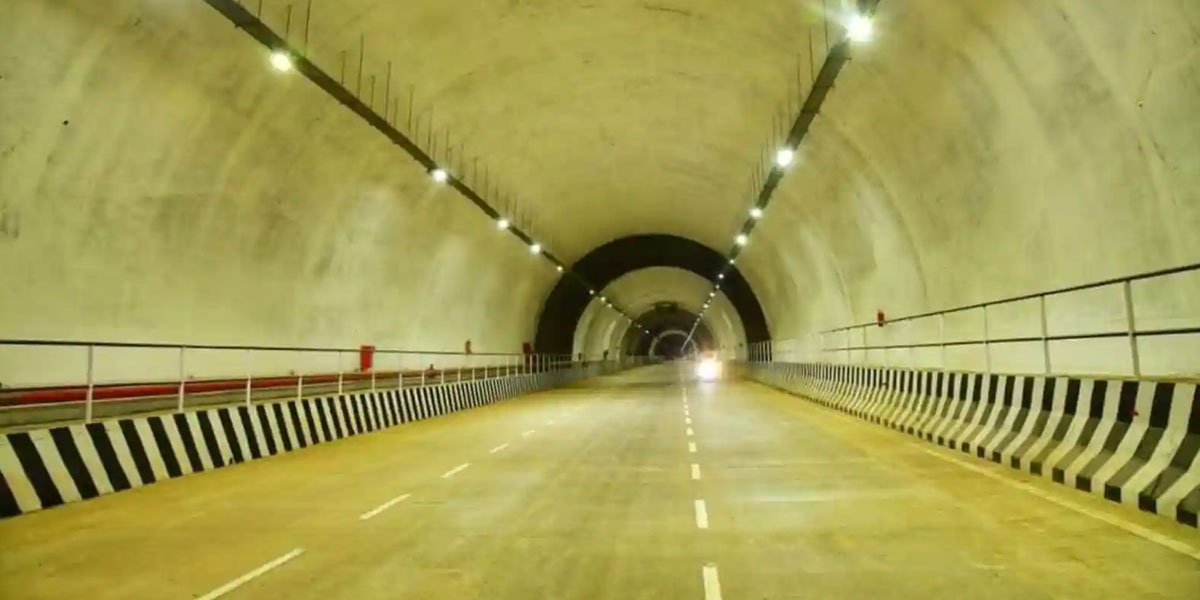
A long-awaited highway tunnel beneath the Khambatki Ghat on the Pune–Satara corridor is nearing completion, with transport authorities indicating a public opening around mid-2026. The project is expected to transform one of western Maharashtra’s most difficult hill stretches by sharply reducing crossing time and improving safety on a route that carries thousands of daily commuters, freight vehicles, and intercity buses. For a corridor linking industrial clusters, agricultural markets, and growing residential belts, the shift could have lasting economic and urban implications.
The Khambatki Ghat Tunnel forms part of a broader effort to modernise legacy highway infrastructure that has struggled to keep pace with rising vehicle ownership and logistics demand. Urban planners note that hill sections with steep gradients and blind curves often become bottlenecks during peak tourism seasons and monsoon months, increasing fuel consumption, emissions, and accident risks. By diverting through-traffic into a controlled underground alignment, the Khambatki Ghat Tunnel is positioned to deliver both time efficiency and environmental benefits through smoother vehicle movement and reduced idling.
Project engineers have integrated structural features such as an elevated viaduct and grade-separated underpasses to maintain uninterrupted flow and minimise localised congestion. Transport officials indicate that the alignment has been designed to handle projected traffic volumes for the next two decades, a critical factor as satellite townships expand along the Pune–Satara belt and freight corridors intensify. Advanced monitoring systems, surveillance cameras, and emergency response infrastructure are also being installed to align with modern highway safety norms. Beyond intercity travel, the tunnel is expected to reshape local mobility patterns. Service roads and redesigned access points may help separate regional traffic from village-level movement, improving pedestrian safety and reducing heavy-vehicle intrusion into residential pockets. Urban development experts suggest that such infrastructure, when planned with people-centric access and last-mile connectivity, can support more balanced regional growth rather than simply accelerating car-dependent expansion.
From a sustainability perspective, shorter travel durations and fewer stop-start cycles can contribute to lower vehicular emissions, particularly on freight-heavy routes. While tunnels are energy-intensive assets, planners argue that efficient ventilation systems, LED lighting, and digital traffic management can offset operational footprints over time. The Khambatki Ghat Tunnel therefore represents not only a mobility upgrade but also a test case for integrating climate-responsive design into legacy highway corridors. As final safety audits and technical trials progress, stakeholders will be watching how effectively the project balances speed, safety, and environmental performance. If managed well, the corridor could emerge as a template for upgrading other mountainous transport links across India’s rapidly urbanising regions.