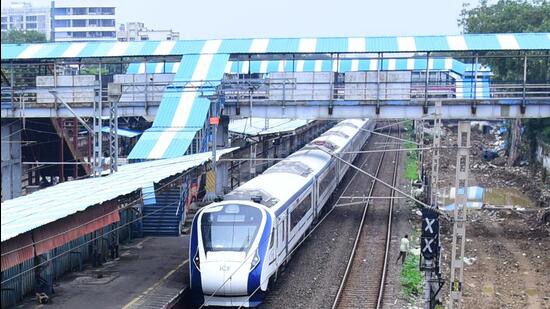
Pune’s regional rail system is entering a decisive stage as a newly constructed corridor between Daund and Kashti undergoes intensive high-speed testing and statutory safety checks later this month. The exercise marks a critical step toward operational clearance, with implications that extend beyond train speeds to regional mobility, freight efficiency, and long-term urban resilience across western Maharashtra.
Railway authorities have scheduled controlled high-speed movements along the Daund–Kashti section during a full-day inspection window, ahead of opening the line for regular services. The trials are designed to test track stability, signalling systems, and overhead electrification under higher operational loads. A statutory safety review by the national rail safety regulator will run concurrently, forming a mandatory prerequisite for commissioning. From an urban infrastructure perspective, the development reflects a broader recalibration of India’s conventional rail network rather than a standalone project. The Daund–Kashti stretch is part of capacity augmentation works on the Daund–Manmad corridor, a route that plays a dual role in passenger movement and bulk freight flows linking Pune with northern Maharashtra and central India. Rail planners note that incremental upgrades like doubling and alignment improvements often deliver faster, lower-carbon gains than entirely new corridors.
Public authorities have issued advisories urging communities along the alignment to avoid tracks and adjoining land during the trials. The emphasis on safety highlights a persistent challenge in peri-urban and rural rail zones, where informal crossings and agricultural activity intersect with high-speed infrastructure. Urban planners say such moments offer an opportunity to strengthen long-term solutions, including fenced corridors, designated crossings, and community engagement to reduce accident risk as train speeds increase. For Pune’s expanding metropolitan economy, improved rail reliability carries tangible benefits. Faster and more predictable services can ease pressure on highways, cut logistics costs, and support workforce mobility between satellite towns and employment hubs. Industry experts argue that strengthening conventional rail also aligns with climate objectives, as rail-based travel and freight emit significantly less carbon per passenger or tonne-kilometre than road transport.
The Pune high speed rail testing phase also underscores a shift in how infrastructure readiness is communicated. Authorities are using local media and outreach channels to prepare residents for temporary disruption, signalling a more transparent approach to managing the social footprint of large transport projects. Once safety clearance is granted, the upgraded section is expected to be integrated into regular operations, contributing to network resilience rather than headline-grabbing velocity alone. As cities like Pune balance growth with sustainability, such projects demonstrate how incremental rail modernisation can support inclusive mobility, regional equity, and a gradual transition toward lower-emission urban transport systems. The coming weeks will determine how swiftly this corridor moves from trial runs to everyday use.