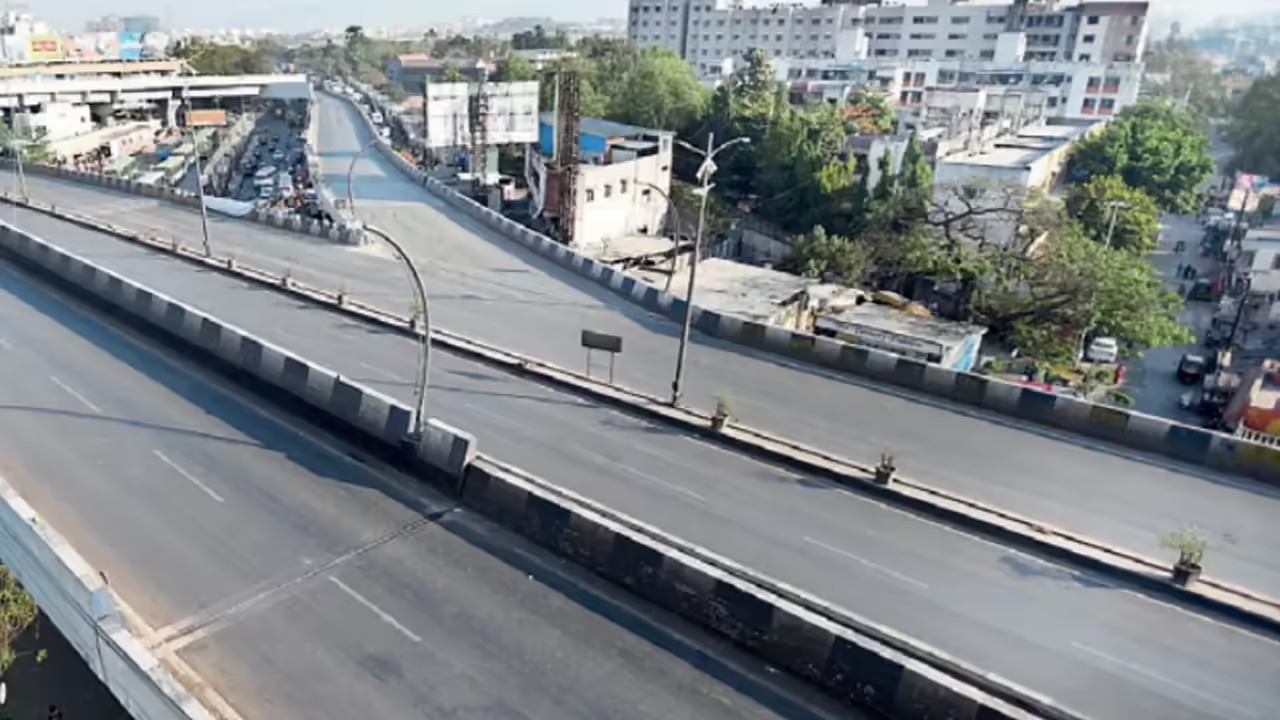
Two prominent flyovers in east Pune could be dismantled as part of a sweeping plan to build a 40-km elevated transport spine along the Solapur Highway, signalling a major shift in how the city approaches long-term mobility planning. The proposal, now under technical consideration, forms part of a larger Multilevel Flyover Project that seeks to integrate road and Metro infrastructure on a single corridor.
Consultants advising on the scheme have indicated that existing grade separators at Hadapsar Gadital and Magarpatta Chowk may need to be cleared to accommodate the new elevated alignment. The proposed stretch runs from Bhairoba Nullah towards Yavat and is designed to ease mounting congestion along one of Pune’s busiest growth corridors. Officials familiar with the planning process say the Multilevel Flyover Project is being structured as a centrally driven initiative, with execution expected through the national highways authority. The corridor will combine a six-lane elevated roadway with a parallel Metro line, creating a stacked mobility network intended to separate through-traffic from local movement.
The move follows earlier infrastructure rationalisation at key junctions in the city, where older flyovers were removed to facilitate broader transport upgrades. Urban transport experts note that such decisions are often contentious, particularly when relatively new structures are affected. However, they argue that piecemeal infrastructure can obstruct integrated systems if not aligned with future capacity needs. Engineering assessments reportedly suggest that retaining the two existing flyovers could constrain the geometry of the proposed corridor. In dense urban nodes such as Hadapsar, where residential towers, IT parks and retail hubs have expanded rapidly, vertical layering of transport infrastructure is increasingly viewed as the only viable option.
For commuters, the immediate impact could mean prolonged construction activity and traffic diversions. Yet planners contend that the completed Multilevel Flyover Project would reduce bottlenecks on Solapur Road, improve freight movement and cut travel times for residents commuting between east Pune and the city core.
The corridor also intersects with Pune’s broader urban growth trajectory. Hadapsar and surrounding micro-markets have seen sustained real estate development over the past decade. Transport reliability directly influences property values, commercial occupancy and labour mobility.
A seamless elevated network could reshape commuting patterns, though its environmental footprint and long-term sustainability will require careful oversight.
Urban policy specialists caution that elevated corridors, while effective in decongesting arterial roads, must be complemented by strong public transport integration and pedestrian connectivity.
Without that balance, induced traffic demand can offset congestion gains over time. Authorities have indicated that consultations will continue before a final decision is taken on dismantling the existing flyovers. As Pune weighs short-term disruption against long-term mobility gains, the outcome will test how the city manages infrastructure renewal in an era of rapid expansion and climate-sensitive planning.
Pune Hadapsar Flyovers Face Redevelopment Push