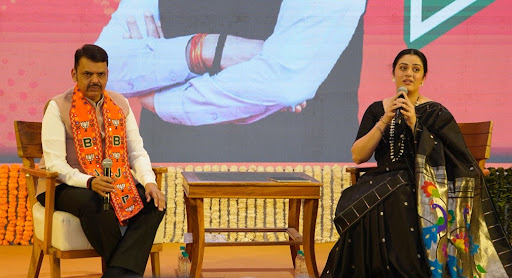
An expansive economic and urban transformation roadmap for Pune was outlined this week, positioning the city-region as a multi-sector growth engine with an estimated long-term output of ₹23 lakh crore. Presented at a public interaction in the run-up to municipal elections, the plan frames Pune’s future around integrated regional planning, large-scale mobility upgrades and climate-aligned development an approach that could significantly influence how India’s second-tier metros evolve.
At the centre of the proposal is the Pune Growth Hub, envisaged as a coordinated economic zone spanning Pune, Pimpri-Chinchwad and the wider metropolitan authority area. According to senior state officials, Pune already accounts for a substantial share of Maharashtra’s economic output, driven by manufacturing, technology services and higher education. The next phase of growth, they argue, will depend on whether infrastructure, housing and environmental capacity can keep pace with rising investment and population pressures. Transport emerged as a critical pillar of the plan. Authorities highlighted a layered mobility strategy combining metro rail, electric buses, ring roads and grade-separated corridors to ease chronic congestion. Urban transport specialists note that Pune’s mobility challenge is less about vehicle ownership alone and more about fragmented networks. Proposals such as an integrated ticketing system across metro and city buses, and a major expansion of the electric bus fleet, signal a shift towards lower-emission mass transit an essential step for a city struggling with air quality and commute inefficiencies.
Water management and urban services also featured prominently. Officials acknowledged that supply constraints are compounded by high leakage levels in ageing pipelines rather than absolute scarcity. Ongoing network replacement and equalised distribution projects are expected to reduce losses and stabilise supply. From a sustainability perspective, planners see wastewater reuse and diversified sources as necessary to support future residential and commercial expansion without over-stressing regional rivers. The Pune Growth Hub narrative extends beyond infrastructure into land use and ecology. State representatives reiterated that surrounding hill systems and green buffers would be protected, with a focus on removing illegal encroachments while rehabilitating affected communities. Environmental economists point out that safeguarding these natural assets is not only about conservation, but also about maintaining flood control, microclimates and long-term real estate value.
Equally significant is Pune’s positioning as a destination for Global Capability Centres and advanced services. Industry experts say the city’s talent base and liveability give it an edge, but caution that investors increasingly scrutinise governance quality, transit reliability and climate risk before committing capital.
As Pune approaches civic polls, the scale of the vision has inevitably entered public debate. Whether the Pune Growth Hub becomes a deliverable roadmap or remains an aspirational framework will depend on execution, inter-agency coordination and municipal capacity. For residents and businesses alike, the coming years will reveal if long-term planning can translate into a more liveable, resilient and economically inclusive urban region.
Pune Growth Hub roadmap targets long term expansion