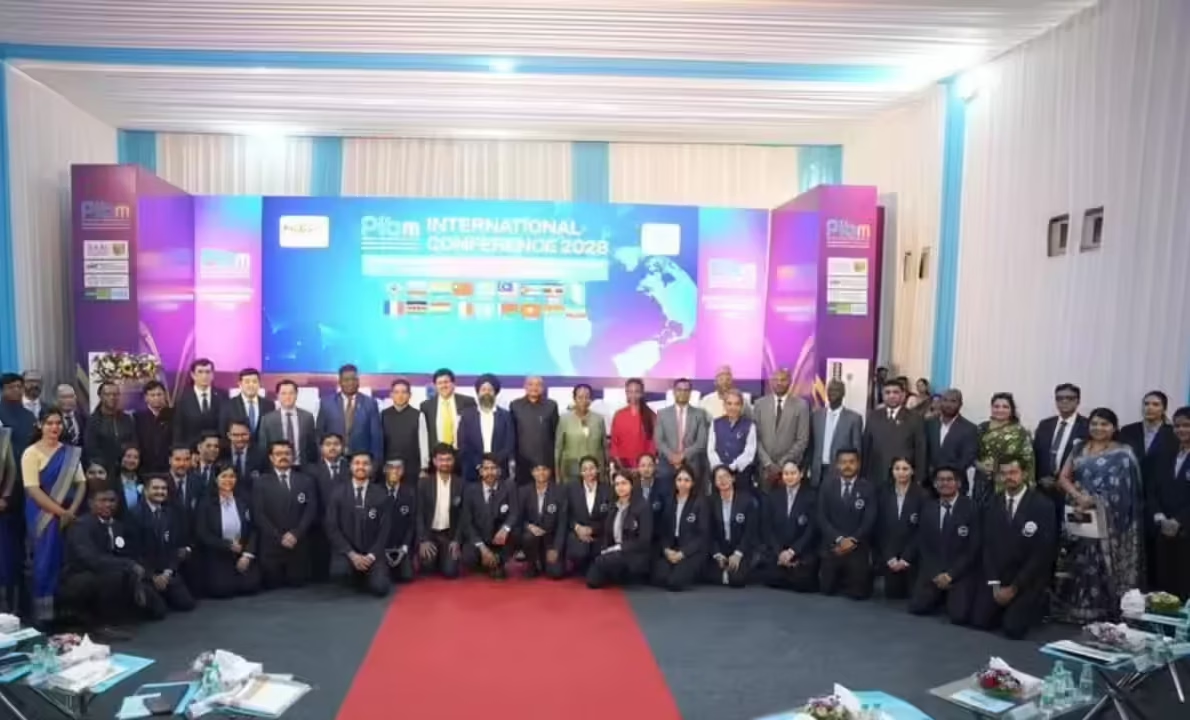
A global education and policy forum held in Pune this week brought together diplomats, industry representatives and academic leaders to examine how countries can better prepare young populations for a rapidly transforming global labour market. The conference, centred on the theme of future ready youth, explored strategies to connect education systems with evolving employment needs across emerging and developed economies.
Hosted at a leading management institute in the city, the gathering saw participation from representatives of several countries across Asia, Africa, Europe and Latin America. Discussions focused on the widening disconnect between traditional academic pathways and the skills increasingly required by technology-driven industries. Experts at the forum noted that demographic shifts are intensifying the urgency of workforce transformation. India, with one of the world’s largest youth populations, faces both a challenge and an opportunity in aligning education systems with global economic demands. Government officials present at the event highlighted that preparing future ready youth requires a stronger emphasis on technical competencies, entrepreneurship and global exposure rather than purely academic achievement.
Participants also pointed to the growing influence of emerging technologies such as artificial intelligence, automation and advanced analytics in shaping future employment. As these technologies reshape sectors ranging from manufacturing to finance, education institutions are under pressure to redesign curricula to equip graduates with digital literacy and problem-solving capabilities.
Industry analysts said the issue is particularly significant for developing economies where small and medium enterprises play a central role in job creation. Research insights shared during the discussions suggested that SMEs and mid-sized businesses contribute a significant share of national output in most economies. However, the productivity gap between developed and developing markets often stems from differences in workforce training and technological adoption.
Several speakers emphasised that workforce development strategies should not only focus on elite segments of the labour market. While global corporations recruit from a small pool of highly competitive candidates, the majority of the workforce is employed by mid-sized businesses and local enterprises. Ensuring that this broader workforce becomes future ready youth through accessible training and skill-building initiatives could have a direct impact on national economic growth. International collaboration was another key theme during the event. Education specialists proposed cross-border knowledge-sharing platforms that allow countries to exchange expertise in sectors such as manufacturing, technology and services. Such partnerships could help institutions develop industry-aligned programmes while allowing students exposure to global professional practices.
The role of cities in enabling these ecosystems was also highlighted. Urban centres like Pune, widely recognised as an educational and technology hub, host large numbers of domestic and international students. Experts believe that cities with strong academic networks, research facilities and innovation clusters can become critical drivers of workforce transformation. Participants concluded that building future ready youth requires coordinated efforts between governments, universities and industry. As economies become more interconnected and technology reshapes traditional employment models, education systems may need to move faster to ensure young people are equipped with the skills required to participate in a sustainable and inclusive global economy.
Pune Global Forum Discusses Future Ready Youth Skills