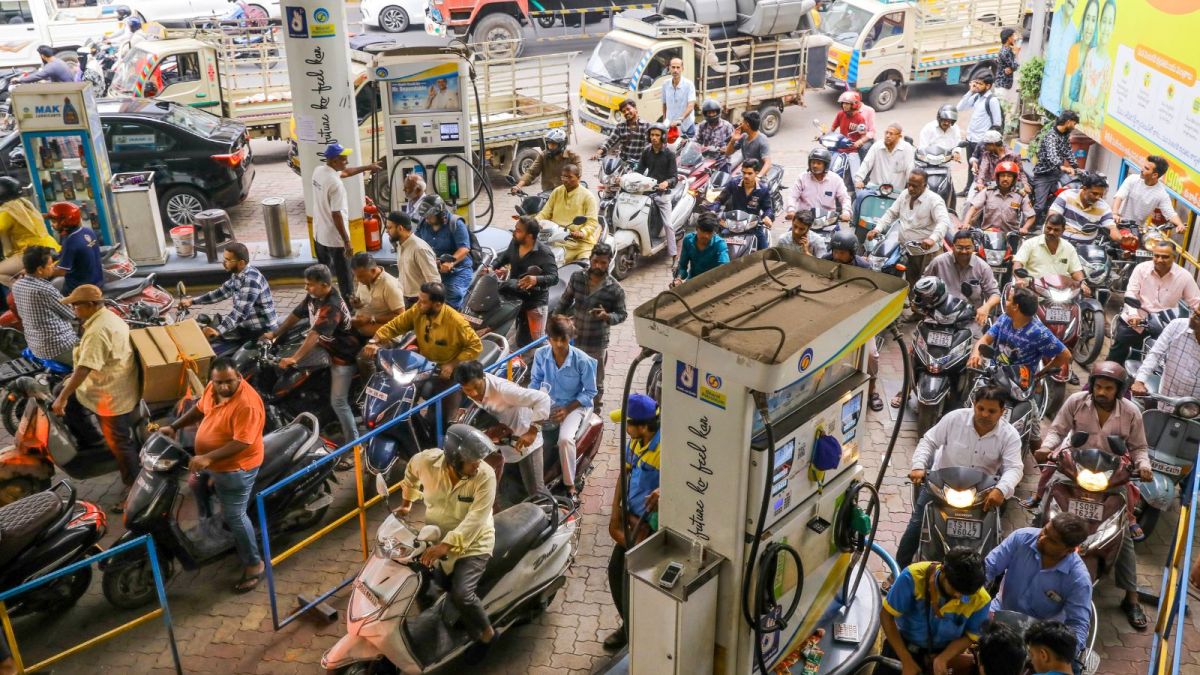
Fuel stations across Pune witnessed unusual disruptions this week as a surge in consumer demand temporarily outpaced supply at several outlets, despite assurances that stock availability remains stable. The episode, driven largely by panic-led purchasing, underscores the fragility of urban supply systems when behavioural responses amplify perceived shortages.
Industry representatives indicate that fuel consumption at many outlets rose sharply within a short span, with volumes significantly exceeding routine daily demand. This sudden spike led to intermittent dry-outs at select pumps, particularly in peripheral areas where replenishment cycles are typically longer. However, supply chain operators maintain that refinery output and distribution flows into the city remain unaffected.
The disruption appears to be rooted in a mix of consumer sentiment and structural adjustments within the fuel retail ecosystem. Reports of shortages in other regions, amplified through broadcast and digital media, triggered precautionary buying among motorists. At the same time, a recent shift in procurement practices—requiring dealers to pay upfront before lifting fuel—has added financial pressure on operators, limiting their ability to immediately scale up orders in response to unexpected demand.
For urban economists, the Pune fuel panic buying episode illustrates how demand-side shocks can destabilise otherwise functional supply chains. Even when inventories are adequate at the macro level, localised shortages can emerge if retail infrastructure is not calibrated to absorb sudden consumption spikes. Storage constraints at fuel stations further compound the issue, as underground tanks have fixed capacities that cannot accommodate abrupt surges. Logistics dynamics also play a role. Tanker movement is typically optimised for predictable consumption patterns, with vehicles often servicing multiple outlets on scheduled routes. When demand escalates simultaneously across locations, the system struggles to adjust in real time, leading to delays in replenishment. This creates a feedback loop, where visible shortages fuel further panic, intensifying the demand surge.
Beyond immediate inconvenience, such episodes have wider implications for urban resilience. Dependence on fossil fuel distribution networks makes cities vulnerable to both perception-driven disruptions and operational bottlenecks. The Pune fuel panic buying trend also highlights the importance of transparent communication from authorities and suppliers to prevent misinformation from influencing public behaviour.
From a sustainability perspective, the incident serves as a reminder of the risks associated with over-reliance on conventional fuel systems. As cities pursue cleaner mobility transitions, including electric vehicles and public transport expansion, reducing dependence on volatile fuel supply chains could enhance both environmental outcomes and system stability.
In the near term, industry stakeholders are expected to stabilise supply through increased tanker dispatches and improved coordination with dealers. Over the longer horizon, experts suggest that diversifying urban energy systems, strengthening last-mile logistics, and adopting demand forecasting tools could help mitigate similar disruptions. For Pune, the challenge lies not in fuel availability, but in aligning supply mechanisms with evolving consumption patterns in a rapidly growing city.
Pune Fuel Panic Buying Disrupts Urban Supply