


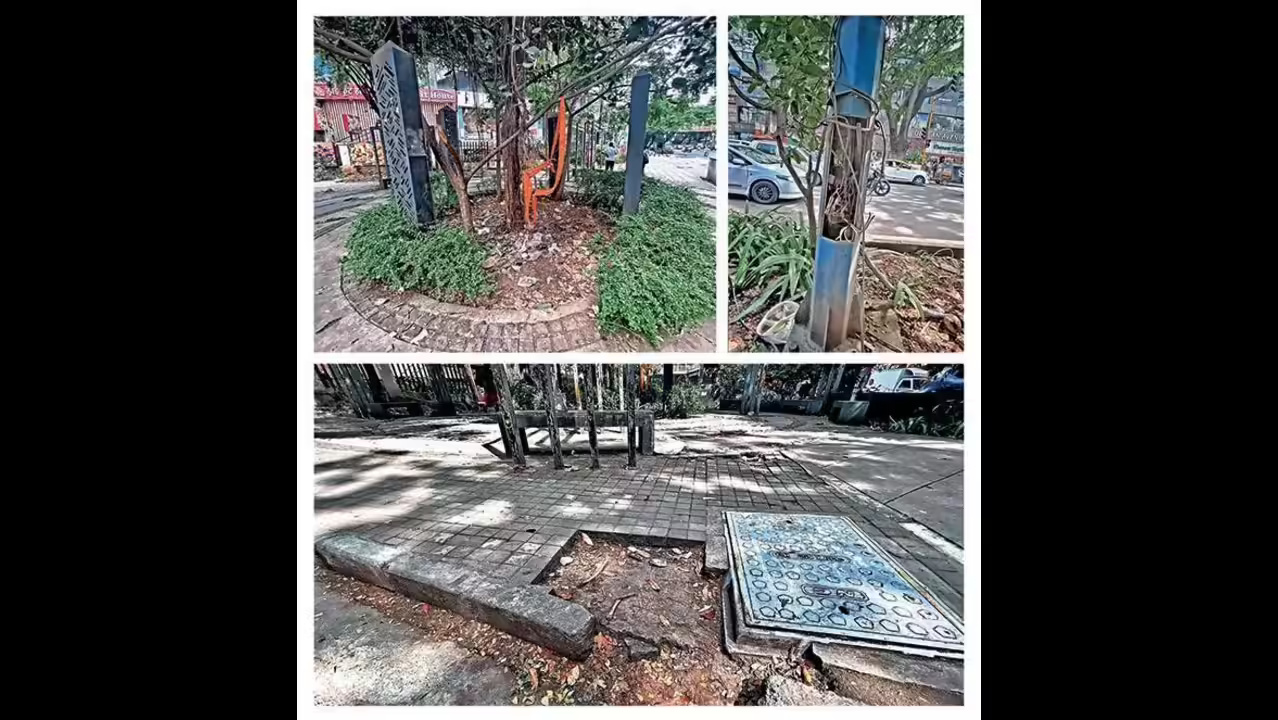
Pune’s efforts to modernise urban pedestrian infrastructure are facing scrutiny as a recently upgraded footpath on Jangli Maharaj Road (JM Road) shows visible signs of decay, highlighting challenges in maintenance and citizen engagement. Despite being part of the Pune Municipal Corporation’s (PMC) ‘Smart Footpath Campaign’, the section near Prayag Hospital has deteriorated within weeks of completion, raising questions about long-term sustainability of civic projects.
Residents report broken paver blocks, exposed wiring, and accumulated waste along the walkway, undermining both safety and the aesthetic value intended by the project. Posters plastered on street fixtures and visible spit stains further contribute to the sense of neglect. Citizens have pointed out that while PMC invests significantly in urban beautification, consistent upkeep is often missing. “I walk here daily and see new garbage added to what already lies there. Cleaning should be regular to maintain these spaces,” said a local resident. Experts note that urban public spaces require collaborative responsibility between civic authorities and communities. “Beautification without a maintenance framework is ineffective. Citizens must also be aware of preserving shared urban assets, or such initiatives lose their impact,” explained a sustainability consultant. Footpaths and public spaces are critical not only for mobility but also for fostering equitable, walkable, and zero-carbon urban environments.
PMC officials acknowledge the gaps and have started repair and reconstruction works on several city roads, including JM Road, citing upcoming events such as international cycling competitions as a driver for accelerated maintenance. “We are undertaking repairs to ensure safe and functional roads and footpaths ahead of major events,” said a chief engineer from the PMC Road Department. Urban planners emphasise that beyond event-driven repairs, city administrations need a long-term, systematic approach to infrastructure maintenance. Integrating routine inspections, citizen reporting mechanisms, and sustainable materials can reduce wear and tear while enhancing usability. Moreover, creating pedestrian-friendly streets aligns with Pune’s broader sustainable city goals, encouraging walking, reducing vehicle dependence, and improving public health outcomes.
As the city expands its smart urban infrastructure, stakeholders suggest balancing investment in visible upgrades with less glamorous but essential maintenance. Ensuring functional, safe, and clean footpaths is critical not only for everyday mobility but also for enhancing public trust in urban governance.
Also Read: Pune Ajni Vande Bharat Achieves Rs 2.63 Crore Revenue Eleven Days
