


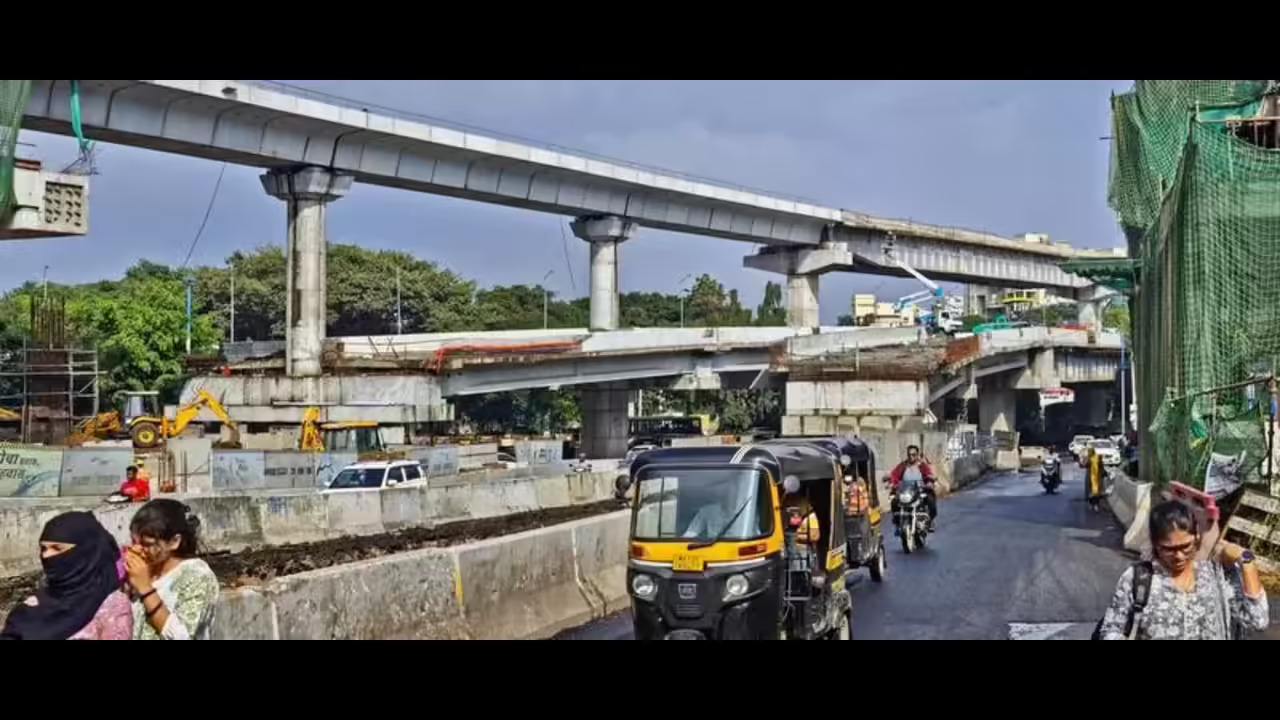
Commuters navigating Pune’s congested Ganeshkhind Road are likely to see long-awaited relief soon, with the Baner–Shivajinagar arm of the Ganeshkhind flyover expected to open by November. The project, which has faced several delays, is now in its final stages, offering a glimpse of smoother traffic flow through one of the city’s most critical corridors.
Officials confirmed that the Baner–Shivajinagar arm will be the second segment to open, following the Aundh–Shivajinagar wing that became operational earlier this year. The remaining two wings—serving traffic towards Pashan and Baner from Shivajinagar—are targeted for completion by December. Once fully commissioned, the flyover will form a continuous elevated link easing pressure on University Chowk, where daily congestion has long plagued commuters. Thousands of vehicles traverse this arterial route every day, and the combination of roadworks, metro construction, and other civic projects has worsened traffic conditions over the past few years. The Pune Metropolitan Region Development Authority (PMRDA) is executing the flyover work, while the Pune Municipal Corporation (PMC) is simultaneously widening adjoining stretches to accommodate the growing traffic load.
A senior civic official said that civil work for all four wings has reached an advanced stage and that the focus is now on completing surfacing, signage, and safety installations. “Once all arms of the flyover are open, vehicular pressure at University Chowk and on Senapati Bapat Road will reduce significantly,” the official said. For commuters who have endured long diversions and slow movement through the corridor, the upcoming completion brings optimism. Regular users noted that although the opening of one wing earlier this year provided partial relief, full benefits can only be realised once the entire structure becomes operational.
In parallel, the PMC has also revived plans to widen the remaining stretch of Ganeshkhind Road—from RBI Chowk to Sancheti Hospital. Land acquisition for this phase is under progress, with the civic body already in possession of several plots. Discussions are ongoing with private landholders and government departments to acquire the remaining parcels. City planners argue that the project, once complete, will not only enhance connectivity between key zones such as Aundh, Baner, and Shivajinagar but also improve road safety and reduce travel time. However, they emphasised the need for strict adherence to deadlines and better coordination between PMC and PMRDA to prevent further delays that disrupt the city’s mobility network.
The Ganeshkhind corridor remains central to Pune’s evolving transport infrastructure. As the flyover nears completion, it represents both the promise of smoother urban movement and a reminder of the challenges in synchronising large-scale civic and regional projects in a rapidly growing metropolis.
Also Read : Maharashtra Approves Relief Package For Fishermen Hit By Monsoon Losses
