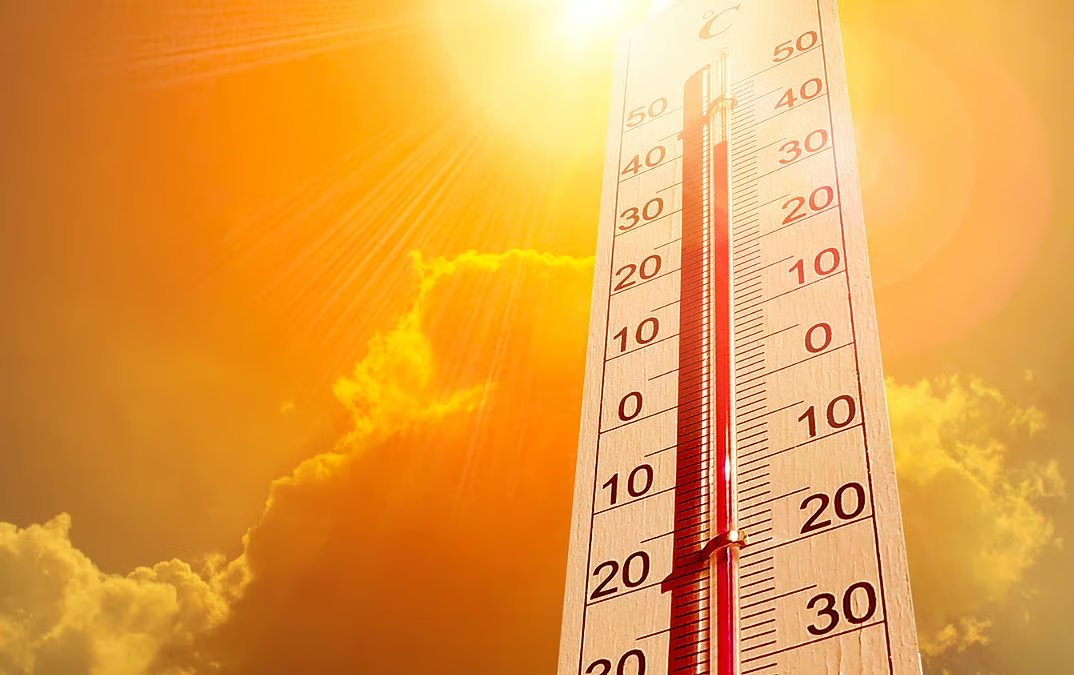
Pune’s night-time heat has intensified unusually for February, with the city recording a minimum of 19.2°C at its Shivajinagar observatory on 22 February among the highest February lows in over a decade. The spike in the Pune February minimum temperature signals an early shift towards summer-like conditions and raises fresh concerns about urban heat stress in one of India’s fastest-expanding metropolitan regions.
Meteorological data show that this is the first time since 2020 that the city’s February night temperature has touched 19°C, and it stands just below the highest February minimum recorded in the past ten years. More significantly, the reading was nearly 6°C above the seasonal norm, extending a week-long trend of above-average night temperatures. The warming has not been confined to the city core. Lohegaon reported a minimum of 23.3°C almost 10°C above normal while Chinchwad registered 22°C. Daytime readings have also remained elevated, with maximum temperatures in the 34–35°C range across several monitoring stations. Together, the pattern reflects compressed winter conditions and a faster-than-usual transition into pre-summer heat.
According to officials at the India Meteorological Department’s Pune centre, synoptic weather systems over the Bay of Bengal are influencing conditions across peninsular India. A well-marked low-pressure area over the southwest Bay of Bengal, along with an associated trough extending towards southern Maharashtra, has altered wind patterns and reduced night-time cooling. Clear skies during the day combined with moisture advection are contributing to warmer evenings.
For urban planners and public health experts, a rising Pune February minimum temperature is more than a statistical anomaly. Warmer nights limit the body’s ability to recover from daytime heat, increasing risks for vulnerable populations including the elderly, outdoor workers and residents in high-density housing with limited ventilation. Energy demand for cooling may also rise earlier in the season, placing additional pressure on power infrastructure.
Pune’s rapid urbanisation compounds the challenge. Expanding built-up areas, reduced tree cover and heat-absorbing surfaces amplify the urban heat island effect, trapping warmth after sunset. Researchers have observed that minimum temperatures in growing Indian cities are rising faster than daytime highs, a trend consistent with broader climate change projections. Real estate developers and infrastructure planners are increasingly factoring passive cooling design, reflective materials and green cover restoration into projects. Climate-responsive building standards and urban greening initiatives are emerging as practical responses to recurrent warm spells outside peak summer months.
Forecasts suggest temperatures will remain on the higher side in the coming days, with largely clear skies and occasional cloud cover. If the trajectory persists, Pune could approach or surpass its recent February night-time records before the month ends. As the city prepares for a longer and potentially harsher warm season, the current spike underscores a wider imperative: integrating climate resilience into transport, housing and energy planning to safeguard both economic productivity and public wellbeing.
Pune February Minimum Temperature Near Record