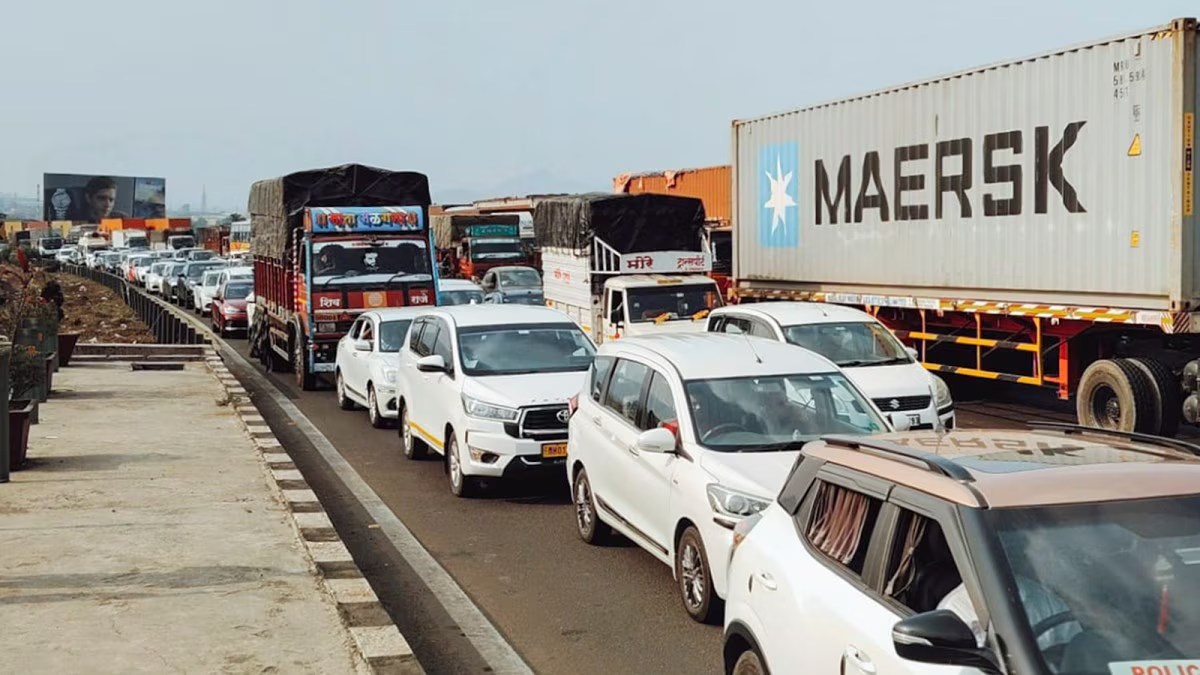
A hazardous gas spill on the Mumbai–Pune Expressway brought one of western India’s busiest corridors to a near standstill this month, stranding thousands of passengers and freight vehicles for over 30 hours and exposing systemic gaps in emergency preparedness on high-speed toll roads. The disruption began on 3 February when a tanker transporting propylene overturned near the Adoshi tunnel along the Khandala ghat section. The crash damaged critical fittings, triggering a gas leak and forcing authorities to halt traffic across a 15-km stretch.
Though the physical blockage was limited, congestion extended far beyond, paralysing movement between Mumbai and Pune and affecting an estimated 100,000 vehicles that use the route daily. The episode has placed renewed scrutiny on hazardous freight movement along the Mumbai–Pune Expressway, particularly across steep gradients and sharp curves. Emergency teams cordoned off the area due to the risk of combustion, but clearance was delayed as officials sought specialised equipment to safely transfer the remaining gas. Traffic was restored only in the early hours of 5 February.
For commuters, the experience was gruelling. Families, senior citizens, and patients remained trapped overnight in vehicles without structured relief arrangements. Police units facilitated water and basic supplies, but the absence of a coordinated on-site crisis command raised questions about contingency planning on tolled infrastructure designed for uninterrupted transit. The economic fallout is equally significant. Thousands of trucks carrying industrial inputs, agricultural produce and consumer goods were immobilised. Logistics operators reported missed delivery schedules, supply chain delays and fuel losses from prolonged idling. Industry observers estimate that the combined productivity impact could run into hundreds of crores, though official assessments are awaited.
Urban mobility experts say the incident underlines a broader policy blind spot. Hazardous materials continue to move by road across dense, mixed-traffic corridors, even as vehicle speeds increase and traffic volumes rise. On high-speed expressways, a stationary tanker poses extreme secondary collision risks. India already records among the world’s highest road accident fatalities annually, intensifying concern over hazardous cargo regulation. Authorities have since ordered a review of emergency response protocols and accelerated work on the long-pending missing link project intended to ease congestion on the ghat section. The alternate alignment is expected to reduce travel time and provide operational redundancy during future incidents.
Yet planners argue that infrastructure fixes alone will not mitigate systemic risk. Rail corridors, which operate on segregated tracks and carry larger volumes under controlled conditions, offer a safer alternative for long-distance hazardous cargo movement. A modal shift could also lower emissions and align with national decarbonisation goals. As India expands expressways and industrial corridors, the Mumbai–Pune Expressway disruption serves as a reminder that speed and scale must be matched with resilience planning. For cities like Pune, whose economic vitality depends on seamless connectivity, the cost of inaction extends far beyond a traffic jam.
Pune Expressway Hazardous Transport Crisis