


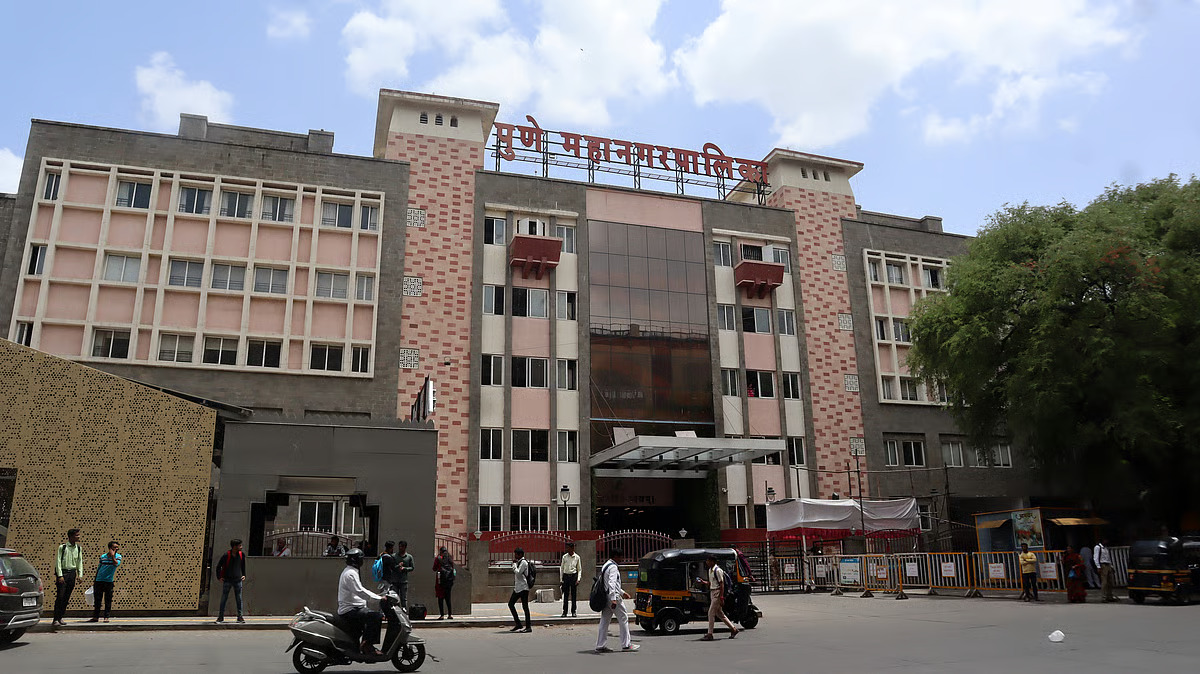
Maharashtra Legislative Council, the state government ruled out any immediate plans to form a separate municipal corporation for the 23 villages merged into the Pune Municipal Corporation (PMC). This statement, issued by senior state officials, directly addresses growing calls from residents and political representatives who argue that the current civic infrastructure is inadequate for the newly integrated zones.
The state clarified that instead of bifurcating the PMC, funds have been allocated to upgrade essential services in the merged areas. These include over Rs 250 crore for water supply projects, Rs 130 crore for drainage improvements, and an additional Rs 160 crore for road development. A draft Development Plan (DP) is also being prepared for these merged areas to ensure long-term planning and equitable service delivery. This decision comes at a time when the PMC’s jurisdiction has already expanded to 518.77 sqkm following the merger of 32 surrounding villages. While this expansion has made PMC the largest municipal corporation in Maharashtra, it has also intensified concerns over civic strain. Officials acknowledged that the growing demands on manpower, infrastructure, and public services have put the PMC under significant operational stress.
Voicing the concerns of the merged areas, elected representatives highlighted how local populations continue to face challenges in accessing basic services such as clean water, paved roads, and sewage systems. Some of the most impacted areas include Hadapsar, Wagholi, Manjri, and Mundhwa, where rapid urbanisation has outpaced civic provisioning. Despite inclusion into PMC limits in 2021, these areas have witnessed patchy infrastructure development, triggering dissatisfaction among residents. Interestingly, two villages—Uruli and Phursungi—were demerged from PMC jurisdiction in 2024 after local agitation and administrative review revealed persistent lapses in civic services. The move was seen as a precedent by many stakeholders pushing for separate governance models that could ensure more accountable and tailored service delivery.
Despite these developments, the state continues to back a unified PMC model. Officials insist that rather than complicating urban governance through administrative bifurcation, it is more prudent to reinforce the capacity of the existing civic body. This includes focused investment in utility upgrades and a streamlined Development Plan that accounts for demographic growth, urban sprawl, and sustainability imperatives. Senior officials reiterated that the government is committed to ensuring that the newly added zones are not treated as peripheral in terms of policy focus. They cited the deployment of Project Management Consultants and accelerated infrastructure works as proof of intent. Furthermore, the state has pledged ongoing budgetary support to PMC to manage its expanded role.
Meanwhile, cross-party leaders in Pune’s political circles, including those in opposition, continue to argue that a dedicated municipal corporation for the merged areas would decentralise governance and increase accountability. The argument gains weight in light of delays in project execution and grievances over uneven service delivery. The state’s stand also intersects with ongoing urban planning efforts in Pune, such as the rollout of a comprehensive transport plan. Announced by senior officials in the urban development department, the plan seeks to address the city’s mounting traffic woes through better coordination across public transit systems. Officials have confirmed that suggestions from residents and stakeholders will be solicited before the finalisation of the plan.
Separately, the PMC has also come under scrutiny for shutting down the Kondhwa abattoir following complaints by the Maharashtra Pollution Control Board (MPCB). The closure, officials said, is temporary and intended to address violations related to pollution control. Operations will resume once corrective measures are implemented. This includes repairs to the effluent treatment system that was installed in 2019 and had previously cleared MPCB norms. With PMC now operating across the largest municipal footprint in the state, questions remain about how it will balance legacy urban issues with the demands of newly integrated zones. While the government’s current position avoids administrative fragmentation, the success of this strategy will ultimately hinge on execution, equity, and transparency.
As Pune navigates its evolving civic landscape, the administration faces a dual challenge: managing urban expansion while ensuring no area is left behind in the development journey. The coming months will be critical in shaping public sentiment, particularly in the newly merged areas, where patience with bureaucratic timelines is running thin.
Also Read : IMD Warns Heavy Rain Across Rajasthan Maharashtra Karnataka
