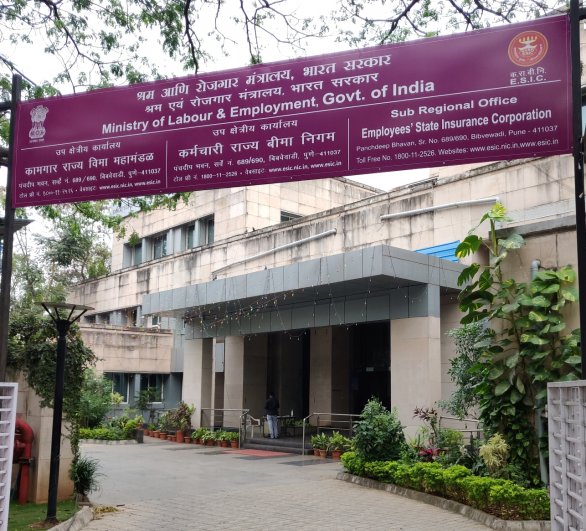
Pune ESIC Hospital Plan Boosts Industrial Health Access
The western Maharashtra industrial belt is poised for a substantial expansion of healthcare infrastructure with the Employees’ State Insurance Corporation (ESIC) initiating plans for its first 350-bed hospital in the Chakan MIDC corridor, a development that could strengthen medical access for a rapidly growing insured workforce. This move comes as ESIC secures a strategically located 8.5-acre site from the Maharashtra Industrial Development Corporation (MIDC) after long-standing demands from labour groups and industry stakeholders for dedicated medical facilities in the region.
Chakan, part of the Pune metropolitan industrial cluster, is home to nearly seven lakh insured workers under the ESIC scheme — a demographic that has historically depended on distant or inadequate medical services. Currently, ESIC operates only a limited number of hospitals in western Maharashtra, including facilities at Bibvewadi in Pune and Kolhapur, while additional state-run ESIC hospitals lack advanced treatment capabilities. Workers often turn to empanelled private or government hospitals outside the ESIC network, adding cost and travel burdens for essential care.The new facility, designed to provide comprehensive inpatient care, addresses both industrial health needs and equitable access to medical services — key priorities in a region where industrial growth has historically outpaced public health provisions. Industrialists and labour representatives have welcomed the plan, underscoring that expanded healthcare capacity will reduce absenteeism, improve workplace safety outcomes, and reduce pressure on peripheral government hospitals.
In parallel, ESIC is laying groundwork for additional 100-bed hospitals at Baramati and Satara, extending the network’s reach to smaller industrial towns with rising insured populations. These satellite facilities are expected to decentralise care delivery, reduce referral burdens on larger hospitals, and shorten critical response times for emergency and specialist services.Healthcare planners highlight the potential ripple effects of this expansion on regional development. Enhanced medical infrastructure near industrial estates can attract higher-value investment by signalling improved quality-of-life amenities for workers and employers alike. This is particularly relevant as industrial clusters in Maharashtra seek to integrate sustainability and social infrastructure into long-term growth plans, rather than solely prioritising physical capital and logistics.
Yet experts caution that hospital construction must be accompanied by investments in specialised care, workforce training, and health technology to achieve lasting impacts. ESIC’s broader national strategy, which includes numerous new hospital approvals over the past decade and collaborations with public and private providers to expand service delivery, offers a framework for systemic improvement.
For Chakan and surrounding districts, the planned ESIC hospital could mark a turning point in industrial healthcare provisioning — transitioning from patchwork, location-dependent services to a more integrated network capable of meeting diverse medical needs. The focus now shifts to effective execution, recruitment of qualified personnel and ensuring that expanded capacity translates into sustainable health outcomes for workers and their families.