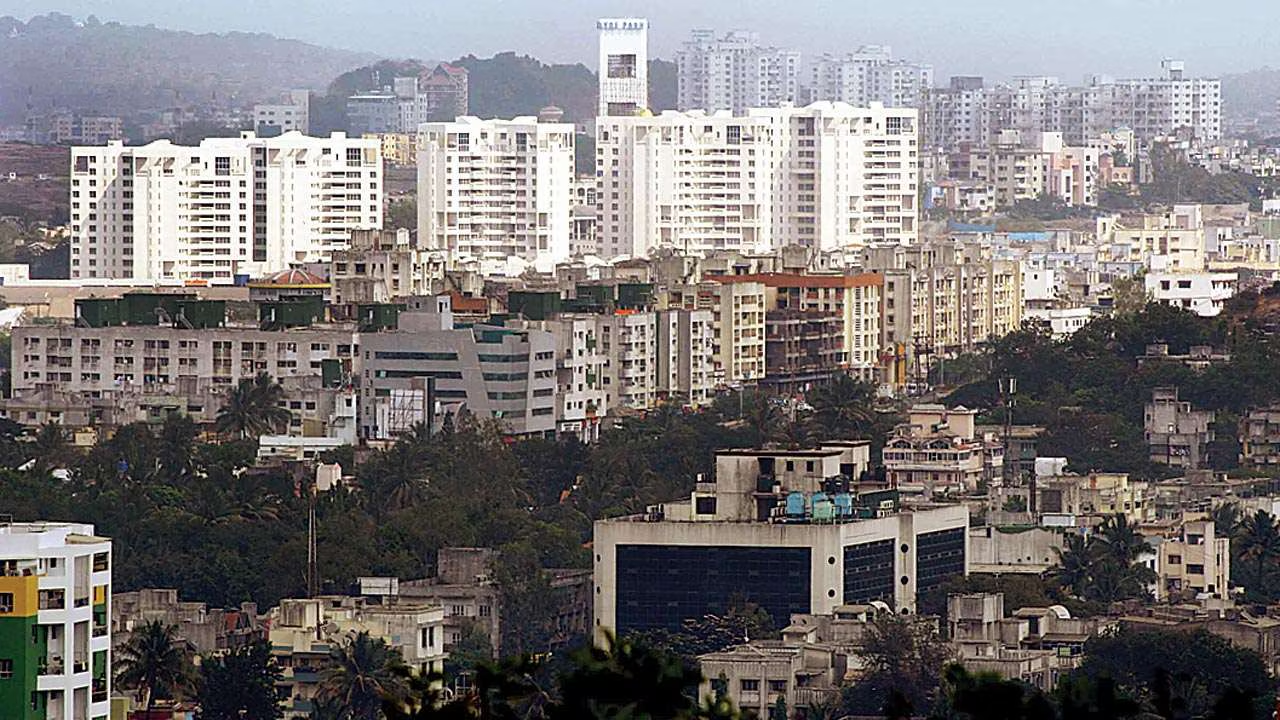
Pune has overtaken traditional metropolitan leaders to emerge as India’s most liveable city in the latest Ease of Living Index 2025, released as part of the Economic Survey 2025–26 by the Ministry of Housing and Urban Affairs. The milestone is significant not just for municipal pride but for what it reveals about shifting urban quality-of-life dynamics amid rapid growth and mounting infrastructure pressures.
The index — a composite measure designed to assess how effectively cities deliver services that shape everyday life — ranks Pune ahead of larger cities such as Bengaluru, Mumbai and Hyderabad. Evaluators weigh outcomes in governance, mobility, sustainability, physical infrastructure and service delivery to determine where residents enjoy the highest quality of life.Urban planners argue that Pune’s rise reflects both structural strengths and emerging challenges in India’s urban hierarchy. Once seen as a secondary urban centre, Pune’s diversified economy — anchored in manufacturing, information technology, education and research — coupled with relatively better air quality and an expanding public transport network, appears to have bolstered its liveability credentials. These factors resonate with longer-term trends favouring cities that balance economic opportunity with environmental and social performance.
Pune’s climb also underscores shifting urban expectations. Cities across India are grappling with congestion, pollution and service deficits that erode daily life even as economic output grows. Recent traffic data, for instance, shows Pune among the nation’s more congested cities — illustrating that high rankings in liveability are not immune to infrastructure stressors. Such dualities reflect how quality-of-life measures increasingly balance access to opportunity with day-to-day functionality in dense urban environments.The new ranking has broader implications for policymakers and investors. Cities that top ease-of-living indices often attract talent, corporate relocations and real estate interest — trends that could further accelerate Pune’s growth trajectory. For regional planners, the findings send a clear message: sustained investment in water, wastewater, public transport and green infrastructure is central to upgrading urban ecosystems that support both inclusive growth and climate resilience.
However, experts caution against viewing any single index as a definitive measure of living conditions. Relative performance can be shaped by procedural factors and data availability, especially in fast-changing metros. While Pune’s overall score places it at the summit of the index, city-specific challenges remain — from peak-hour mobility bottlenecks to uneven area-wise service delivery — suggesting that liveability is a continuum rather than a fixed state.For larger metros like Mumbai and Bengaluru, which have historically led economic rankings, the rise of Pune highlights how growth and livability must go hand in hand. Investment priorities are shifting toward outcomes that benefit everyday citizens — safe streets, reliable transit, affordable housing and healthy environments — dimensions that will shape how Indian cities compete on the national stage in the coming decade.
Moving forward, aligning infrastructure expansion with quality-of-life outcomes will be crucial for Pune to sustain its lead, and for other cities to narrow the gap. Strategic planning embedded within climate-aware, people-first frameworks could help replicate this success in diverse urban settings across India.